


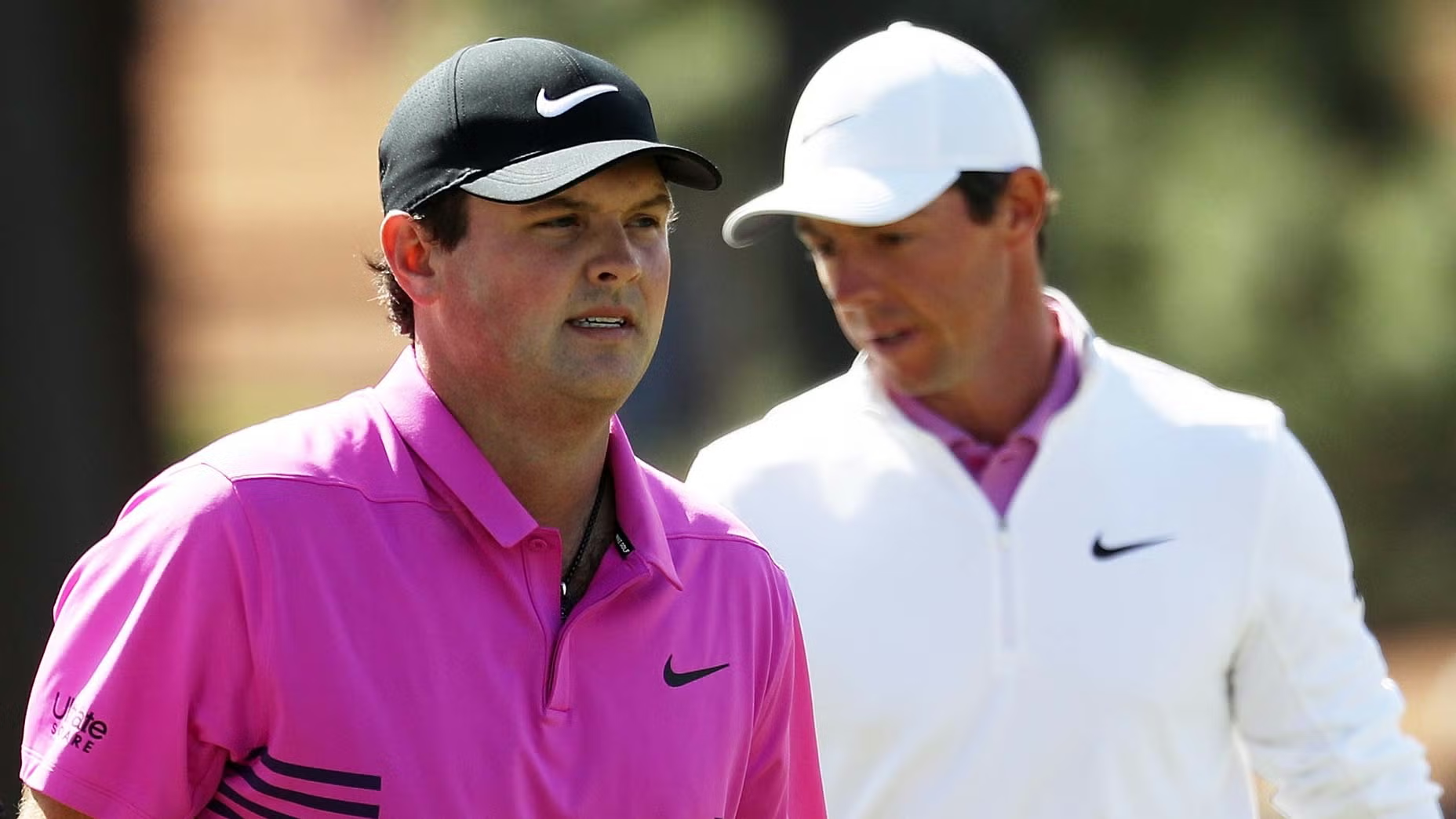
The Rivalry That Reminds Us Why Golf Matters: Lessons from McIlroy and Reed
There’s something deeply human about a good rivalry. Not the manufactured kind you see in social media beef or celebrity feuds, but the genuine, complicated kind where two fiercely competitive people have shared history—wins and losses, respect and resentment, handshakes and, well, thrown tees.
I’ve been covering golf long enough to know that the McIlroy-Reed saga isn’t really about golf. Sure, on the surface it’s about Race to Dubai points and Masters victories and who can play better under pressure. But beneath that, it’s about two men trying to cement legacies while navigating the messiest part of competition: what happens when personal principles clash with professional ambition.
And honestly? Their story has something to teach all of us about resilience, comebacks, and what it means to move forward when things get awkward.
The Complexity of Respect
Let me set the stage: McIlroy and Reed have always had a relationship that defied easy categorization. They’ve battled on golf’s biggest stages, celebrated victories, and defended each other publicly. When Reed faced criticism over a rules incident, McIlroy’s response was measured and generous. He saw a peer getting kicked while down and spoke up.
That’s the kind of sportsmanship we celebrate. The kind that transcends competition.
Then came the lawsuits, the Christmas Eve subpoena served at McIlroy’s home, and the Dubai driving range incident where a greeting went unanswered and a tee went airborne. Suddenly, the narrative shifted from collegial rivals to something more fractured.
“I’m living in reality, I don’t know where he’s living. If I were in his shoes, I wouldn’t expect a hello or a handshake.”
McIlroy’s words stung because they were honest. They weren’t angry—they were disappointed. And that’s actually more revealing about how we handle conflict in competitive environments. McIlroy didn’t need to throw a tee back. He could have responded with anger or dismissal. Instead, he articulated a boundary. He said: your actions have consequences, and I’m not going to pretend they don’t.
Reed’s response showed his own brand of honesty:
“He saw me and he decided not to react. It’s unfortunate. But it is one of those things: if you’re going to act like an immature little child then you might as well be treated like one.”
Here’s where it gets real: both men were calling out something true about the other’s behavior. Neither was wrong. And neither was entirely right. That’s what actual conflict looks like—not villains and heroes, but two flawed people with legitimate grievances trying to navigate a broken moment.
The Comeback Arc We Don’t Talk Enough About
Fast forward to today, and Reed’s redemption narrative is quietly unfolding. He’s left LIV, he’s returning to the PGA Tour, and—most importantly—he’s playing with the kind of fire that reminds you why he won a Masters. Three wins-or-near-wins in as many months in the Middle East. Currently leading the Race to Dubai. Moving up in the world rankings.
This matters beyond the leaderboard. Reed’s comeback is what happens when someone gets knocked down and chooses to let their game do the talking. No grand interviews about personal growth (though those are fine). No elaborate social media apology tour. Just: I’m going to play better golf and prove this was temporary.
And the lifestyle lesson here applies to all of us, not just tour professionals. How often do we find ourselves in McIlroy’s position—holding a justified grudge, drawing a line in the sand? How often do we find ourselves in Reed’s position—needing to rebuild trust after a misstep?
The answer is probably: more often than we’d like.
What Resilience Actually Looks Like
Reed’s current form isn’t accidental. It’s the product of what we know about high-level golf performance: meticulous preparation, mental clarity, and a refusal to be defined by your worst moment. After years of being painted as golf’s villain—the guy people love to criticize—he’s channeling that narrative into fuel.
“It’s always been a dream of mine to be an American who wins the Race to Dubai and we’re off to a fast start.”
Notice the tone there: not defensive, not angry. Just clear intention. That’s the mindset shift that matters. Reed isn’t trying to prove something to McIlroy anymore. He’s trying to achieve something for himself.
For everyday golfers, the takeaway is this: your rivals—whether they’re your club champion or your foursome buddy who always seems to one-up you—they’re not your enemy. They’re your metric. They’re what makes you better. And when things get weird between you (and they will), the question isn’t how to win a moral argument. It’s how to channel that friction into improvement.
The Season Ahead
Here’s what fascinates me about this 2026 storyline: McIlroy is chasing Colin Montgomerie’s all-time Race to Dubai record. He’s won it four consecutive years. That’s legacy-defining stuff. Meanwhile, Reed is hungry and positioned to make this race genuinely competitive again.
They’ll meet at the Masters. They’ll potentially cross paths at the Scottish Open. And they’ll almost certainly find themselves in Dubai in November, both with a chance to claim the season-long title.
Will they be friends again? Probably not in the near term. Will they have learned something from each other? Almost certainly yes. McIlroy will have learned that even people you respect can make choices you can’t support. Reed will have learned that consequences are real, and comebacks require more than just good golf—they require humility.
That’s the story worth following. Not the points or the trophy, but two athletes learning what it means to coexist with tension, to compete with respect, and to come back when it would be easier to stay away.
That’s the golf lifestyle that actually matters.
