


As the Equipment Editor for The Daily Duffer, I’ve seen countless golfers, from weekend warriors to touring pros, try just about anything to shave strokes off their game. Usually, the focus is on the long game – a new driver promising more ball speed, irons with enhanced MOI. But every now and then, a player’s struggles on the greens put the spotlight squarely on the flatstick, and the lengths they’ll go to find consistency.
Keith Mitchell’s mid-tournament putter switch at the AT&T Pebble Beach Pro-Am is a prime example. After ranking a dismal 74th in Strokes Gained: Putting for the first three rounds, Mitchell decided enough was enough. Forget incremental adjustments; he went for a complete overhaul, not just a new putter but also a radical grip change. It’s the kind of move I’ve seen in my fitting bay when a golfer is at their wit’s end, and frankly, sometimes it’s exactly what’s needed.
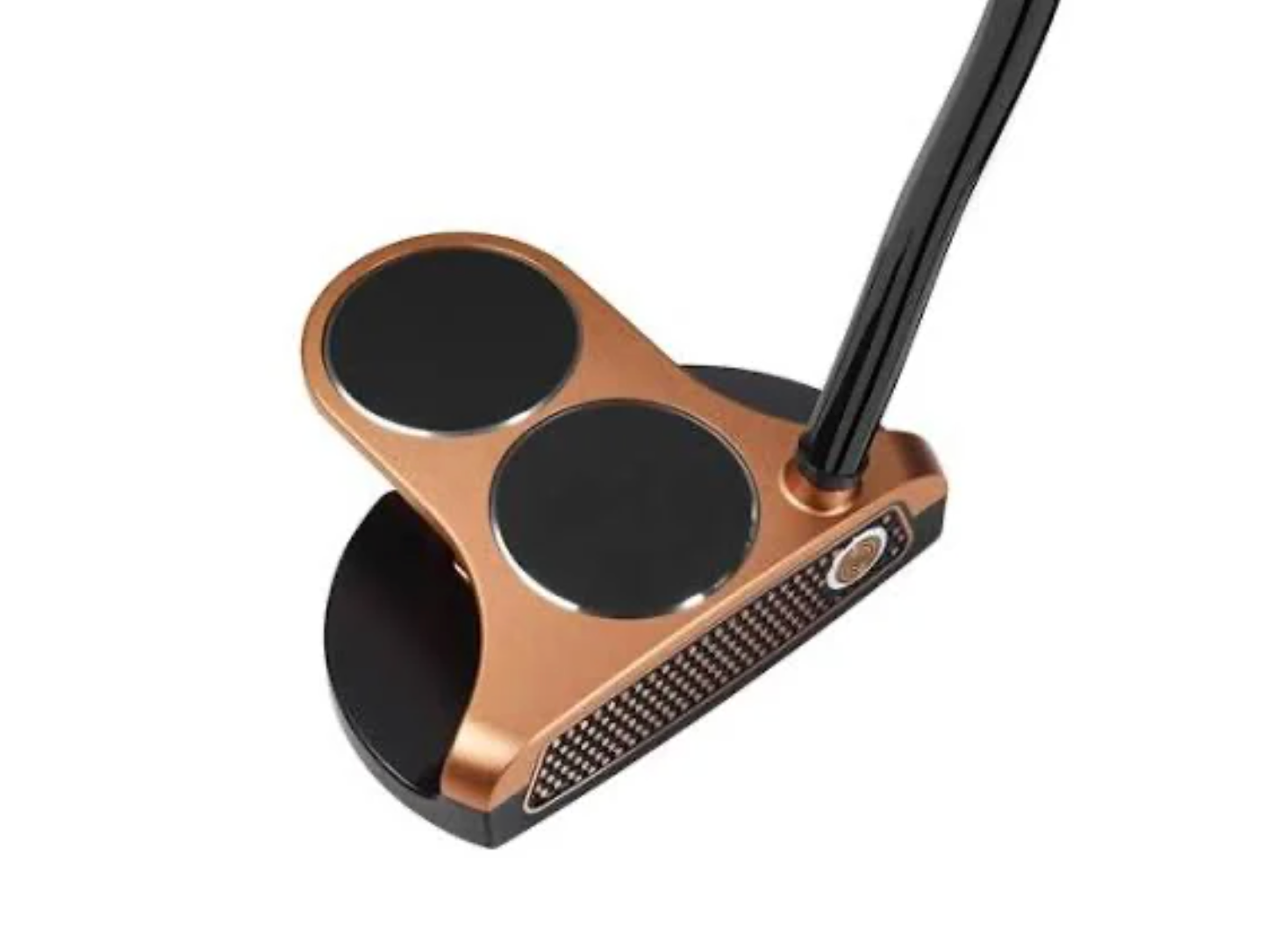
Mitchell swapped out his custom Scotty Cameron for an Odyssey Exo Seven. Now, let’s talk about the Exo Seven. This isn’t some brand-new, unproven technology. The Exo line, specifically the Seven, was a fantastic release in 2018, known for its high MOI and excellent stability. The two large fangs on the back, a design Odyssey has utilized successfully for years, push weight to the perimeter. From a pure engineering standpoint, this significantly increases the Moment of Inertia (MOI). What does that mean for you? Less twisting on off-center strikes, leading to much more consistent distance control and a tighter dispersion pattern. When I’ve put this putter on the launch monitor, the data consistently shows a higher smash factor across the face compared to traditional blade-style putters, especially heel and toe misses. For golfers struggling with consistency on their putts – the ones where a slight mishit costs them three feet of roll – an MOI putter like the Exo Seven can be a game-changer.
The move from a custom Cameron, likely a blade or smaller mallet, to a high-MOI mallet like the Exo Seven is a shift towards stability and forgiveness. It’s a design choice that prioritizes straight-back-straight-through stroke mechanics and minimizes the impact of human error. It’s not necessarily about making more putts, but about reducing the number of truly bad putts. And for a pro like Mitchell, who was 74th in SG: Putting, reducing those really bad misses can make a huge difference in cumulative strokes.
But the gear change was only half the story. Mitchell also adopted a left-hand-low putting grip. This is not a subtle adjustment; it’s a fundamental change to putting mechanics. The left-hand-low (or cross-handed) grip is designed to take the hands out of the stroke, promoting a more shoulder-driven motion. In my fitting experience, many golfers who struggle with an active right hand (for right-handed players) or inconsistent clubface rotation at impact find immediate benefit from this grip. The lead wrist tends to stay flatter, and it can help prevent the clubface from opening or closing excessively through the stroke. On the QuantaSpin and SAM PuttLab, I’ve seen golfers dramatically reduce their face angle deviation at impact after switching to left-hand-low, leading to a much straighter ball path.

So, was it a moment of desperation or a calculated decision? As one GolfWRX member, stratgolf, put it:
“Stats are very dire. Nothing like wasting good golf with one particular area of your game holding you back. I wonder how long until he might consider a broom, or something drastic.”
This sentiment perfectly encapsulates the frustration that drives such significant changes. When putting is holding you back, and the data is screaming for a fix, drastic measures can feel like the only way out. Another member, TheMoneyShot, suggested:
“Probably just looking for some mojo to take into the next tournament since he is out of this one.”
While mojo might play a psychological role, the underlying technical adjustments in both the putter and the grip have tangible effects on performance. The data I’ve gathered over hundreds of fittings supports the idea that a high-MOI putter provides forgiveness, and a left-hand-low grip can stabilize the face. It’s not just “mojo”; it’s applying proven principles of equipment design and biomechanics to a struggling part of the game.
The Odyssey Exo Seven is a five-year-old model, which also tells you something important: good technology doesn’t have an expiration date. While manufacturers push new iterations annually, a well-designed club from a few years ago can still perform exceptionally well. For the average golfer, this is fantastic news. You don’t always need the latest and greatest to improve your game. A well-fitted, higher-MOI putter from a previous generation, perhaps picked up at a significant discount, can offer similar performance benefits in terms of stability and forgiveness as a brand new model.
My advice for golfers struggling on the greens is this: don’t immediately reach for the latest shiny object, but certainly don’t be afraid to experiment with different putter styles and grip techniques. Get on a launch monitor, ideally with a skilled fitter, and analyze your stroke. Are you consistently missing heel or toe? Is your face angle at impact inconsistent? If so, a high-MOI putter, like the Exo Seven, could significantly benefit you. And if your hands are too active, leading to pulls or pushes, exploring a left-hand-low or claw grip might be the mechanical adjustment needed. It’s about finding the right tools and techniques that minimize your own personal tendencies and help you roll the ball more consistently on your intended line. Mitchell’s bold move might not have instantly turned his week around, but it’s a testament to the fact that sometimes, shedding old habits and embracing new equipment and techniques is the only way forward.
Here are some reactions from members reacting to Mitchell’s change of strategy on Sunday:
- TheMoneyShot: “Probably just looking for some mojo to take into the next tournament since he is out of this one.”
- wam78: “I think Lowry played one of these for a few years including his Open title.”
- stratgolf: “Stats are very dire. Nothing like wasting good golf with one particular area of your game holding you back. I wonder how long until he might consider a broom, or something drastic.”
