


Ryo Hisatsune’s Tough Lesson at the Australian Open: A Riveting Golf Story
In the competitive world of professional golf, players face a myriad of challenges. For Ryo Hisatsune during the recent Australian Open, a seemingly straightforward chip shot turned into an unforgettable lesson on the course. His journey at the historic Royal Melbourne Golf Club was marred by an unexpected mishap that served as a glaring reminder that golf is often as much about mental discipline as it is about skill.
The Context of the Australian Open
The Australian Open, a premier event on the golf calendar, draws top talent from around the globe. Set against the stunning backdrop of Royal Melbourne, known for its unique layout and demanding conditions, this tournament is a true test of skill and focus. This year, players were greeted with firm lies and tricky greens, making every shot vital. Amid this pressure, Hisatsune, like many others, sought to improve his score while navigating the grueling 72 holes of competition.
The Challenge of the 8th Hole
As Ryo reached the 8th hole, a long par-4, the reality of the day began to sink in. This hole, featuring a classic Australian sandbelt design, presented golfers with a formidable challenge. The greens were protected by significant swales and required precision on approach shots. For many players, it’s the type of hole where strategy meets skill, and every shot counts, especially when fatigue from a long week sets in.
The Critical Moment
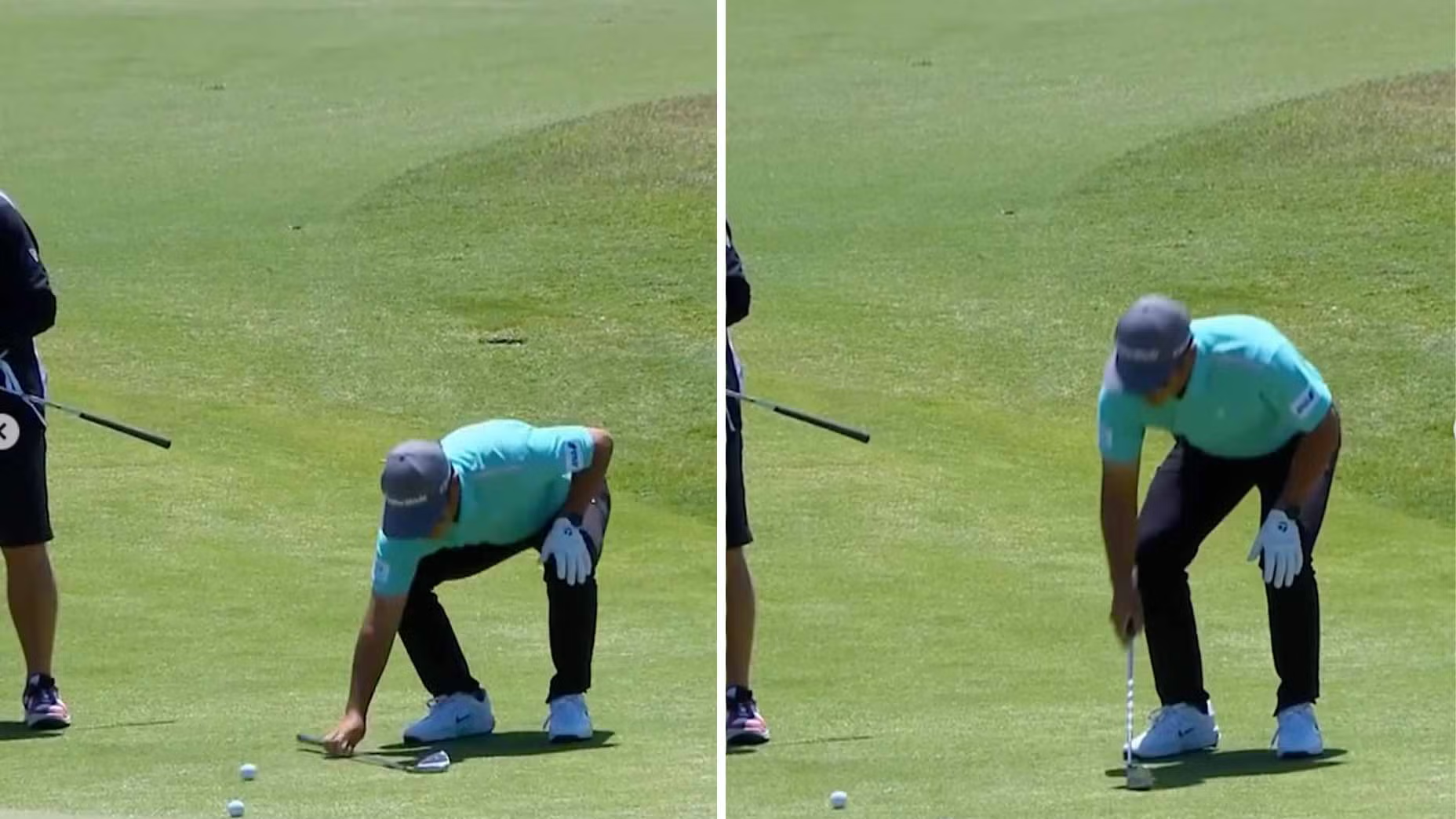
Hisatsune’s round turned dramatic when he prepared to make his crucial pitch shot. His caddie, Taiga Tabuchi, handed him his 56-degree wedge just moments before the mishap occurred. Unfortunately, as Hisatsune stepped into his stance, the club slipped through his fingers. The unintended consequence? The club made contact with the golf ball, propelling it in an unintended direction and complicating an already challenging situation.
A Lesson in Golf Rules
Golf, known for its intricate rules, can be unforgiving in situations like Hisatsune’s. Under Rule 9.4 of the Rules of Golf, players can replace their ball without penalty in specific circumstances. However, Hisatsune’s case was not one of them. The incident was ruled a penalty, which meant he would incur a one-shot deduction, adding pressure to his already tense situation.
The Penalty’s Impact
Having been assessed a penalty, Hisatsune found himself in a precarious position. After consultation with a rules official, he had to return the ball to its original position. This added a layer of complexity to what was already a challenging chip shot. His initial frustration was palpable, but the rules of golf are meant to ensure fairness and integrity, even in unfortunate circumstances.
The Aftermath of the Fumble
Following the incident, the reality of the penalty became strikingly clear. Hisatsune managed to chip onto the green, but the resultant double-bogey 6 on the card was hardly ideal. This marked the beginning of a tough final round for Himatsune, who ultimately finished the tournament at 6 over par and tied for 51st. Such outcomes, albeit disappointing, are part and parcel of the professional golf experience.
Overcoming Adversity
Despite the setback, Hisatsune demonstrated resilience. Golf is notorious for demanding mental toughness, and this moment served as an unexpected lesson. It reminded him—and his numerous fans—about the importance of maintaining composure, regardless of the circumstances. After all, the nature of the game often provides moments of both triumph and trial, calling for the highest levels of concentration and adaptability.
Moving Forward
As he continues on his journey, both on and off the course, Ryo’s unfortunate experience may strengthen his resolve. Learning to handle unforeseen challenges is critical in golf, and there’s no doubt that this episode will serve as a catalyst for improvement. The ability to internalize lessons from adversity is what propels champions forward—setting the stage for future success.
Concluding Thoughts
Ryo Hisatsune’s experience at the Australian Open serves as a poignant reminder of the complexities involved in the game of golf. Every player faces unique challenges and experiences, but it’s how one responds to such trials that often defines their career. As Hisatsune reflects on the past week, one can only hope he carries this valuable lesson with him, inspiring not just himself but also the countless aspiring golfers who watched his journey unfold.
Through resilience, discipline, and an unwavering commitment to improvement, Ryo Hisatsune is undoubtedly poised to rise again, reminding us all that the unpredictable nature of golf is what makes it both thrilling and deeply rewarding.
