


Welcome back to The Daily Duffer, where we explore the many facets of golf as a lifestyle, not just a sport. Today, I want to dive into something incredibly relatable to every single one of us who’s ever teed it up: the rhythm of the game, and how it impacts not just our scores, but our entire experience on the course.
I’ve always believed that golf is a beautiful dance between skill, strategy, and self-awareness. But what happens when that dance is thrown off by an external force? More specifically, by pace of play. We’ve all been there, standing on a tee box, watching the group ahead take their sweet time, feeling our focus drift, our enthusiasm wane. It’s like trying to enjoy a perfectly prepared meal when the service is excruciatingly slow, isn’t it?
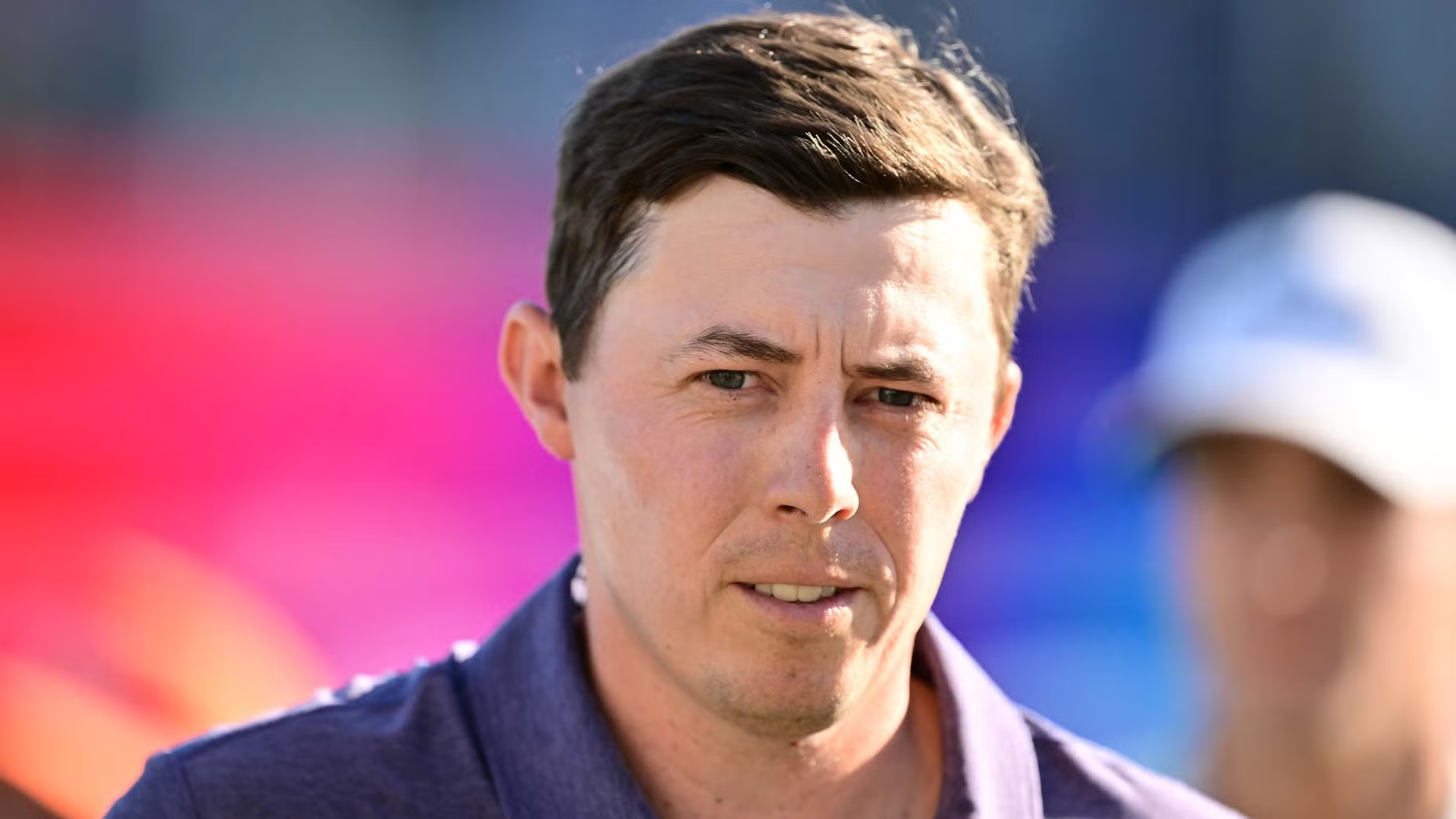
This past weekend, Matthew Fitzpatrick, a player I admire for his consistent grind and thoughtful approach to the game, found himself grappling with this very issue during his impressive win at the Valspar Championship. And honestly, his frustration resonated deeply with me, and I’m sure, with many of you.
The Human Element of the Clock
Fitzpatrick, while celebrating a fantastic victory, couldn’t help but address the elephant in the room: his playing partner’s deliberate (and, let’s be honest, *glacial*) pace. He chose his words carefully, mindful of a fellow competitor, but the sentiment was clear. This wasn’t just about a few extra minutes; it was about the mental toll it took.
“That was really frustrating. It was slow today. I felt like there was a lot of stop-start,”
He continued, drawing a crucial distinction between making a high score (which happens to the best of us!) and playing slowly while doing so.
“When you’re not ready to play a golf shot it gets frustrating after awhile. Particularly when you playing well yourself or you’re in contention or whatever it is. It definitely knocks you out of your rhythm. Because you hit, you walk to it, you kind of think about it, you hit again, and you go.”
This isn’t just a “pro golfer” problem. Think about your own weekend rounds. How often has a slow group ahead disrupted your flow? You’re trying to find your swing, get into a groove, maybe even practice that new tip you saw online, and suddenly, you’re waiting, cooling down, losing that essential focus. It’s a complete buzzkill for the wellness aspect of the game – that meditative walk, the connection with nature, the camaraderie with your playing partners.
)
A week after heartbreak, Matt Fitzpatrick roars to Valspar victory
A Lifestyle Choice: Being Ready to Play
Fitzpatrick’s comments offer a powerful takeaway for all of us, from the weekend warrior to the aspiring club champion. It’s not just about playing fast; it’s about being *ready* to play.
“It definitely knocked me out of rhythm I felt like for the next two, three holes. I was kind of chasing my tail, because I’m trying to speed up and trying to keep us or get back in position, and at the same time you’re obviously trying to win a golf tournament.”
This “chasing your tail” feeling is something we all want to avoid. Golf is supposed to be enjoyable, a release, a chance to be present. When pace becomes an issue, it steals that joy.
So, what can we, as everyday golfers, learn from this? It’s about cultivating awareness and respect, which are cornerstones of a great golf lifestyle.
Actionable Takeaways for Your Next Round:
- Walk with Purpose: As soon as you hit your shot, start walking towards your ball. Don’t dawdle, but don’t rush either. Use the walk to mentally prepare for your next shot.
- Pre-Shot Routine, Simplified: While waiting for others, identify your yardage, pick your club, and visualize your shot. When it’s your turn, step up and execute. This doesn’t mean rushing; it means being efficient.
- Cart Etiquette: If you’re in a cart, drop off your playing partner at their ball and drive to yours. Then, retrieve your partner. This simple act saves valuable minutes.
- Be Prepared on the Green: While others are putting, line up your putt, even if it’s just partially. Be ready to step up and take your turn when it arrives.
- Help Lost Balls (Strategically): We all want to help, but after a minute or two, encourage your playing partner to drop and move on, especially if there’s a group behind.
- Keep Conversation Moving: Chatting is part of the fun, but know when to pause the story and focus on the game at hand.
- The “Ready Golf” Mindset: If it’s safe, and you’re ready, hit your shot even if you’re not technically “away.” This can make a huge difference.
Ultimately, a good pace of play enhances everyone’s experience. It allows for better focus, a more natural rhythm, and a deeper appreciation for the course and the company. It’s a part of golf’s unwritten etiquette, a silent agreement we make with our playing partners and the groups around us.
Let’s take a page from Fitzpatrick’s playbook and not just play golf, but play golf *with intention*, respecting the flow of the game for ourselves and for those who share the course with us. After all, a smooth, unhurried (but not slow!) round is truly the ultimate luxury in golf. Until next time, happy golfing, and may your rounds be swift and satisfying!
">
