

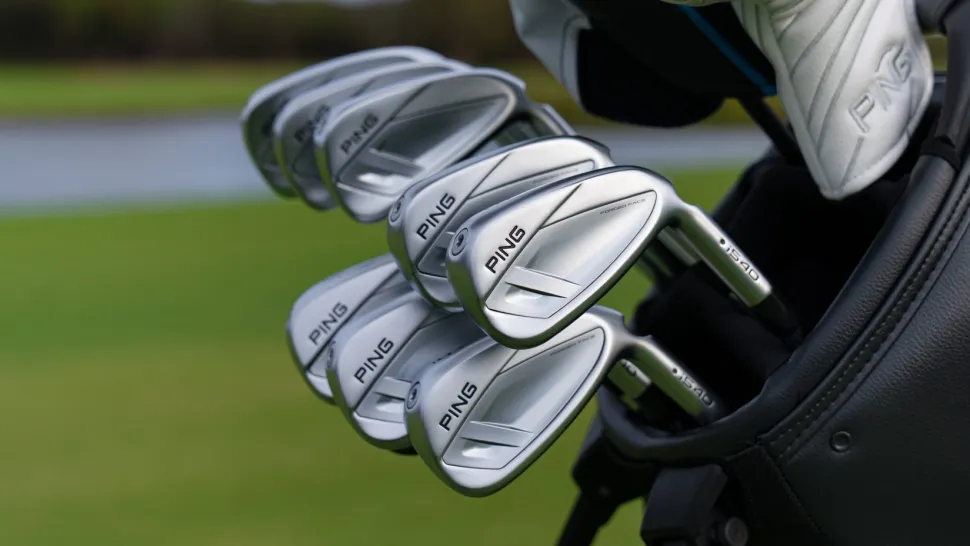

As the Equipment Editor for The Daily Duffer, I’ve seen countless iron models come and go, each promising revolutionary distance and forgiveness. The truth, as I’ve preached in these pages for years, is that genuine innovation often comes in subtle refinements. So, when Ping, a brand synonymous with consistent performance, rolls out two new iron lines like the i540 and G740, my first thought isn’t about marketing hype. It’s about the underlying engineering. Is there real meat on the bone, or just more sizzle?
My go-to approach involves extensive testing on the launch monitor, dissecting the data, and then backing that up with real-world fitting experience. I’ve fitted hundreds of golfers, from scratch players to those who regularly flirt with triple digits, and I know what truly moves the needle for different skill levels.
Ping’s 2026 iron lineup offers a clear dichotomy:
- The i540: Targeting the ever-expanding “players distance” segment.
- The G740: Aimed squarely at maximum forgiveness and ease of use in the super game-improvement category.
Let’s unpack what Ping is bringing to the table and, more importantly, what this means for your game and your wallet.
The PING i540: Distant Players’ Iron?
The i540 is designed for the golfer who craves a classic, players-style aesthetic but refuses to sacrifice ball speed and distance. Ping describes it as combining:
“A compact look with technologies more commonly found in distance-focused designs.”
From a technology standpoint, the i540 packs a punch: tungsten sole weighting in the longer irons, a forged maraging steel face, and the new inR-Air technology. Let’s break those down. Tungsten in the sole of longer irons is a proven method to lower the center of gravity (CG), which directly translates to higher launch and, ultimately, more carry distance. The forged maraging steel face, on paper, should deliver impressive ball speeds, particularly across various strike locations. This is where the launch monitor really shines. I’d be looking for a tight dispersion pattern in ball speed, even on slightly off-center strikes, indicating high MOI (moment of inertia) for a club in this category.
The “higher peak height for improved stopping power into greens” claim is crucial with strong-lofted players distance irons. Without sufficient spin and height, your approach shots will simply bound over the green. My testing would focus heavily on spin rates relative to launch angle to confirm these irons can indeed hold greens despite their distance-focused design.
The introduction of Ping’s inR-Air technology for sound and feel is interesting. Many players distance irons can feel a bit “hot” or even hollow due to the thin face construction. An internal air pocket is a clever engineering solution to dampen unwanted vibrations. But does “dampen” mean “dead”? I’d want to feel a crisp, solid impact, not a muted one. The i-Beam structure is also touted for contributing to a “solid impact experience,” which suggests Ping is serious about delivering feel alongside performance.

The three loft configurations (standard, power, retro) highlight the importance of custom fitting. This isn’t marketing fluff; it’s essential for optimizing launch, spin, and descent angle to ensure you’re getting maximum performance, not just maximum distance. For a good player, “power” lofts might get them yards, but “retro” lofts might give them better spin control into greens. It’s all about finding the right balance for your swing.

Who is the i540 for? This iron is clearly aimed at mid-to-low handicap golfers (roughly 5-15 handicap) who appreciate a tour-inspired look but need a little more help with ball speed and launch, especially in the long irons. If you’re currently playing traditional forged irons but find yourself losing a bit of carry distance or struggling with consistent flight, the i540 could be a fantastic option. Just remember, a good fitting is non-negotiable to dial in those lofts and shafts.
The PING G740: Maximum Game Improvement, Minimum Fuss?
On the flip side, we have the G740, positioned firmly in the super game-improvement category. Ping states its purpose clearly:
“designed for golfers who prioritise forgiveness, consistency and ease of launch.”

The wider, dual-camber sole is a classic design feature for game-improvement irons. It helps get the CG low and deeper in the head, which is paramount for higher launch and increased carry, especially for slower swing speeds or those who struggle to get the ball airborne. This design also significantly improves turf interaction for golfers who tend to take a ‘digger’ swing or deliver the club steeply.
A larger face, thin 17-4 stainless steel construction, and Ping’s PurFlex cavity badge are all aimed at maximizing ball speed across a larger area of the face. My experience with this type of construction is that off-center strikes still retain remarkably good ball speed, which is the definition of forgiveness. I’d be looking for a very small drop-off in ball speed and carry when shots are struck towards the heel or toe. This is where the G740 is designed to shine – turning a mishit into a playable shot.
The “Hydropearl Chrome 2.0 finish is designed to maintain consistent performance in varying conditions” is a nice touch, offering some peace of mind for those damp morning rounds or unexpected showers. While not a performance breakthrough, it speaks to Ping’s attention to detail and playability.
“Forgiveness is further enhanced through perimeter weighting and increased offset, both of which assist in launching the ball more easily and keeping shots on line.”
This is Golf Equipment 101 for game improvement. Perimeter weighting pushes mass to the edges of the clubhead, increasing MOI and resisting twisting on off-center hits. Increased offset helps square the face at impact for those who tend to leave the clubface open, resulting in straighter, higher shots. These aren’t new concepts, but Ping consistently executes them well, year after year.

Who is the G740 for? Beginner to high-handicap golfers (say, 18+ handicap) who need help getting the ball in the air, maintaining direction, and minimizing the adverse effects of mishits. If you’re a golfer who loves the game but struggles with consistent contact and launch, the G740 could be a game-changer for your confidence and enjoyment on the course. Again, that custom fitting is paramount, especially with the triple loft options.
The Real Deal: Data vs. Hype
What I appreciate about Ping’s approach is their consistent commitment to leveraging core physics principles. They’re not reinventing the wheel with these irons; they’re refining established technologies that genuinely work. The i540 is a prime example of blending player desired aesthetics with performance-enhancing internal weighting and face flex. The G740 champions forgiveness through smart CG placement and high MOI design.
My concern with any “players distance” iron, including the i540, always circles back to launch and spin. While faster ball speeds are great, if they come at the expense of control and a steep enough descent angle, you’re not gaining much on the course. I’d be looking for a 7-iron spin rate in the 6,000-7,000 RPM range with a descent angle of 45 degrees or more to ensure optimal stopping power. For the G740, the focus would be on maximizing launch for players who need it most, without simply delofting the club into oblivion.

The value proposition for both is tied intrinsically to a comprehensive fitting. Paying £200-210 per club for the i540 or £185-195 for the G740 without optimizing for your swing is like buying a high-performance sports car and only driving it in first gear. Ping’s custom fitting options, evidenced by the multiple loft configurations and shaft choices, are there FOR A REASON. Use them.
In summary, these new Ping irons appear to be genuine contenders in their respective categories. The i540 offers a compelling option for better players seeking a modern blend of feel and speed, while the G740 is poised to provide tangible improvements in consistency and launch for higher handicappers. As always, the proof is in the numbers—your numbers—on the launch monitor during a professional fitting.
