


As the Equipment Editor for The Daily Duffer, I’ve had the pleasure, and sometimes the frustration, of testing just about every piece of golf equipment that hits the market. From drivers promising 20 extra yards to irons that claim to “forgive anything,” I’ve seen it all. I’ve spent countless hours in the fitting bay, dissecting launch monitor data, and watching how different technologies truly perform for golfers of all skill levels. So, when I hear star players debating the “fairness” of a golf hole, my ears perk up, because it often boils down to factors that equipment can either compensate for or exacerbate.
The recent discussion around Riviera’s infamous 10th hole, a 315-yard par-4, caught my attention. It’s a hole that routinely sparks heated debate among the world’s best, and it highlights a critical point: sometimes, even the most technologically advanced clubs can’t overcome a truly challenging course design or a poor shot decision. While the article isn’t directly about equipment, the frustration expressed by players like Matt Fitzpatrick provides a fascinating lens through which to view club performance and player strategy.
The Data Doesn’t Lie: When Strategy Trumps Tech
Players like Rory McIlroy and Matt Fitzpatrick vocalize frustrations that, in a way, echo sentiments I hear from amateur golfers in fitting sessions. “My driver isn’t working on this hole,” or “My wedges just don’t stop the ball here.” Often, it’s not the equipment failing, but the strategy, the execution, or indeed, the design of the hole itself. Riviera’s 10th is a perfect example.
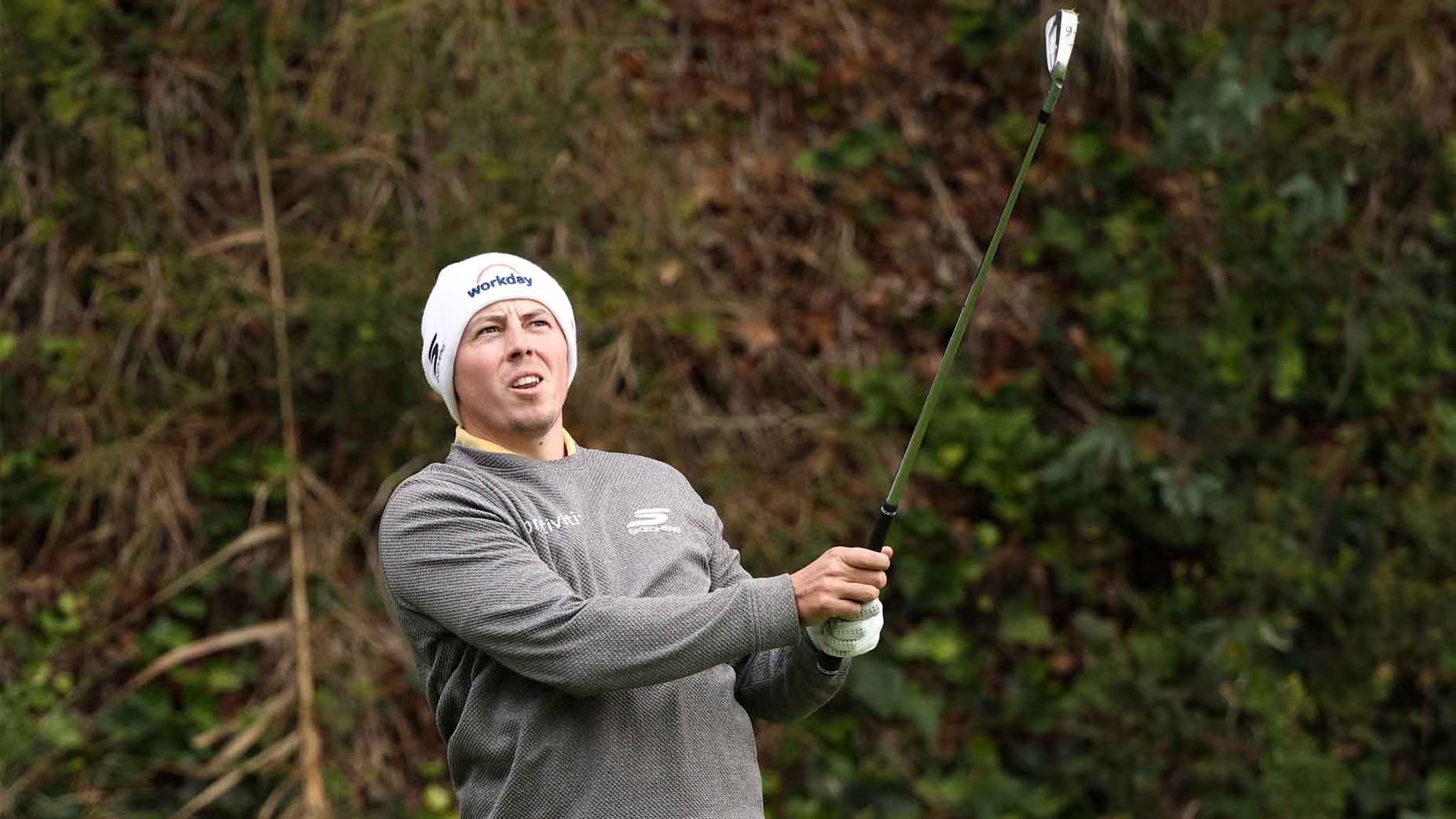
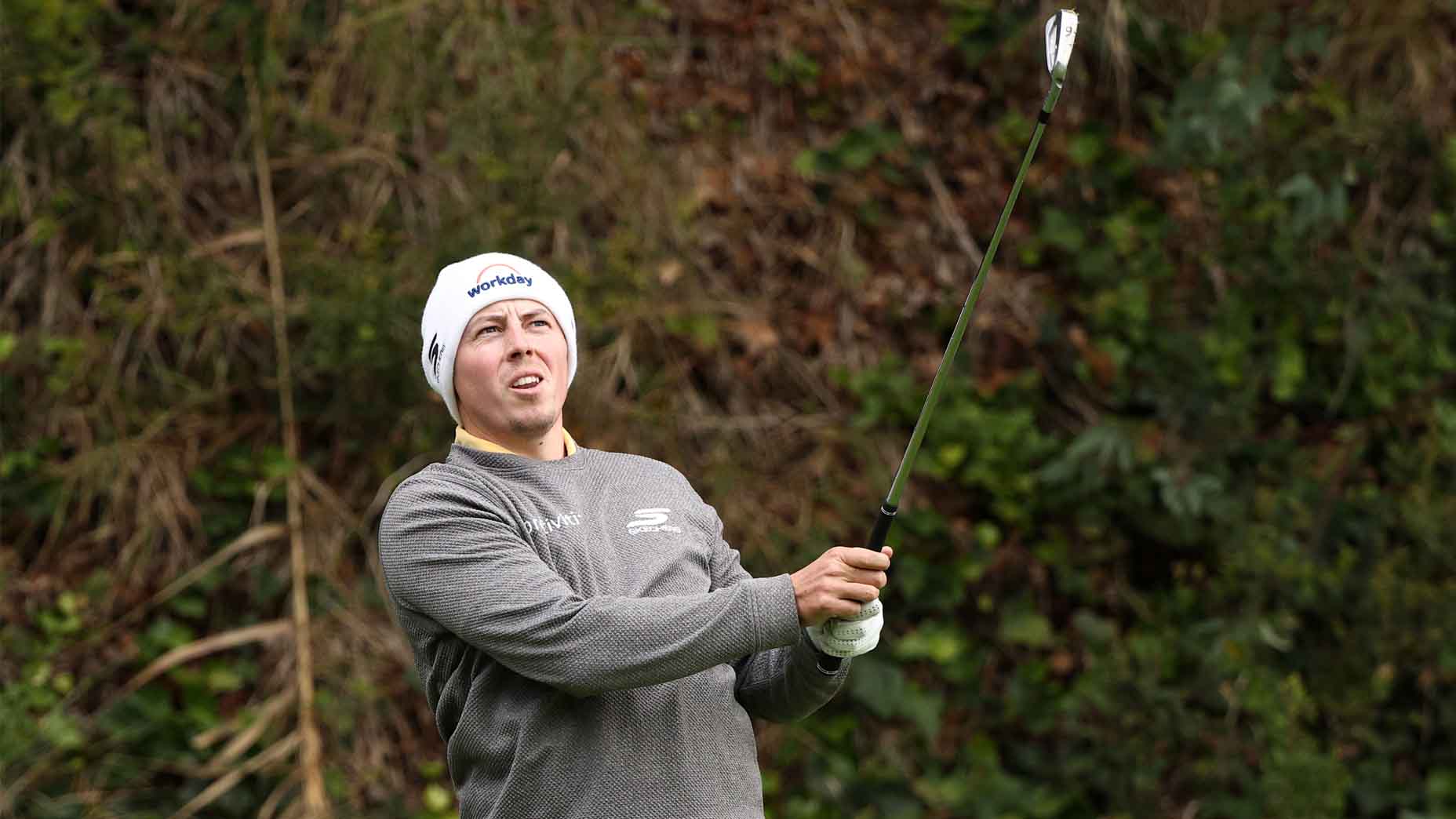
“It was a great round. Felt like I played really solid. Just bogey on 10, the world’s most impossible golf hole. I’ll leave it there,” Fitzpatrick said after his round.
Fitzpatrick, a U.S. Open champion, is using some of the best-fitted equipment on the planet – clubs meticulously selected and tuned for his swing characteristics, optimizing his launch, spin, and ball speed. Yet, even he falls victim to a hole he calls “the world’s most impossible.” This isn’t a failure of his gear to perform; it’s a testament to the strategic demands and unforgiving nature of the design, especially with certain pin placements.
Consider the scenario: a 315-yard par-4. For tour pros, this is often reachable with a driver. I’ve tested elite players who can carry a driver 300+ yards with ball speeds exceeding 180 mph, launching at 10-12 degrees with spin rates around 2200-2500 RPMs – ideal conditions for maximum distance and run. However, the article describes Fitzpatrick’s second shot from 47 yards after a lost tee shot. He’s then trying to play an approach to a middle-left pin, just three paces from the edge.
“Fitzpatrick lost his tee shot out to the right, leaving him 47 yards to the pin. After surveying his options with his caddie, Fitzpatrick elected to play his second shot well left of the pin. The thinking was that Fitzpatrick would either give himself a long birdie putt or the ball would roll down into the collection area and he’d have a chance to get up-and-down for par. But he missed his spot and ended up dumping his second into the greenside bunker.”
This situation immediately makes me think about specialized wedges. Many tour players carry multiple wedges with varying lofts, grinds, and bounces to handle different lies and course conditions. For a shot from 47 yards, especially with a tricky pin and surrounding kikuyu grass, spin control is paramount. I’ve often seen players choose a lower-lofted wedge, like a 52-degree, to produce a slightly flatter trajectory with more forward roll, or a high-lofted 60-degree wedge for maximum spin and stopping power. The data I gather on a launch monitor for a 40-50 yard shot is critical: ensuring adequate spin (often 8,000-10,000 RPMs for a full-wedge type shot) and a precise landing angle to control run-out. Fitzpatrick’s decision to play away from the pin, expecting a roll-down or long putt, suggests he understood the difficulty of holding that specific section of the green. His miss into the bunker, and subsequent blast over the green, indicates that even with top-tier equipment and skill, execution on such a demanding hole is incredibly tough.
The “Unfair” Hole: Kikuyu Grass and Green Design
McIlroy’s comments about the kikuyu grass around the green are particularly insightful from an equipment perspective.
“In 2023, McIlroy said that he believes the kikuyu grass that runs up to and around the green is the issue. He suggested either re-grassing that area so the ball can run up or making the green a bit softer. As it stands right now, in McIlroy’s view, there is no skill involved in the hole.”
Kikuyu grass is notoriously finicky. It’s thick, grabs the club, and can produce unpredictable flyers or dead shots. For wedges, this means less consistent spin and trajectory control compared to fescue or bentgrass. In a fitting, we preach consistency – optimizing MOI in irons for stability, ensuring driver face flex uniformity for consistent ball speed. But when course conditions actively work against consistent interaction, even the most forgiving clubs struggle. If the area resists the ball running up, as McIlroy suggests, it essentially creates a forced carry scenario, demanding precise shots and negating the option of a gentle bump-and-run approach, which could be a golfer’s safest play to such a precarious pin. This isn’t an equipment problem; it’s a course design and maintenance challenge that even the best clubs cannot circumvent.
Practical Takeaways for the Everyday Golfer
So, what does this mean for you, the average golfer, who might not be facing Riviera’s 10th but certainly encounters challenging hole designs?
- Course Management Over New Gear (Sometimes): While I’m the first to advocate for properly fitted clubs that match your swing, Fitzpatrick’s struggle reminds us that no club can replace sound strategy and solid execution. Understand the hole, analyze pin positions, and play to your strengths. Sometimes, laying up is the smart play, even if your new driver lets you carry it 300 yards.
- Wedge Gapping is Crucial: The 47-yard shot is a common distance for amateur golfers to struggle with. I’ve found in countless fittings that having properly gapped wedges (e.g., 46°/50°/54°/58°) and knowing your carry distances for partial swings is far more impactful than chasing another few yards with a driver. This provides the versatility needed for those in-between shots that Riviera’s 10th demands.
- Don’t Blame the Clubs First: Before you condemn your new 0.830 COR driver for a missed fairway, or your high-MOI irons for a chunked chip, consider the situation. Was it a tough lie? A risky shot choice? A truly brutal pin? Even tour pros with perfectly optimized gear make bogeys (and worse) on “unfair” holes.
The debate over Riviera’s 10th underscores that while technology in golf equipment has come incredibly far – offering unprecedented forgiveness, distance, and spin control – the game remains a complex interplay of player skill, strategy, and course design. Sometimes, even the best gear in the hands of the best players can’t save them from a truly diabolical golf hole.
“>
