



The golf industry loves a good hierarchy, especially when it comes to the “Big Five” brands. For years, that list has been pretty cemented, but a recent article has thrown a wrench in the works, suggesting that Srixon, incorporating Cleveland and XXIO, deserves a seat at the table. MyGolfSpy’s piece, “Has Srixon Officially Joined The Big Five? We Think So,” argues a compelling case, and after years of dissecting clubs and poring over launch monitor data, I’m inclined to agree – with some caveats.
My role as Equipment Editor isn’t just about reading press releases; it’s about putting clubs through their paces and seeing if the claims hold up under real-world scrutiny. I’ve tested countless Srixon drivers, irons, and, of course, Cleveland wedges. I’ve also put dozens of golfers through fittings with their gear. What I’ve consistently observed is a brand that, while perhaps not always the loudest, delivers consistent, measurable performance.
The journey Srixon has taken from “other” to legitimate contender is genuinely fascinating, as the article points out with its dive into the Sumitomo origins. But for me, the narrative truly started shifting when we saw their products consistently battling for top spots in independent testing. For example, the article highlights a significant moment:
“Srixon startled us here at MyGolfSpy in 2017 when, seemingly out of nowhere, its Z565 driver topped the field in Most Wanted testing.”
I remember that. We were seeing excellent ball speeds and surprisingly low spin numbers for a game-improvement leaning driver. It wasn’t just a fluke; it was a clear signal that Srixon’s R&D was firing on all cylinders. In my own testing, subsequent Srixon drivers like the ZX series have consistently offered respectable ball speeds, efficient launch conditions, and a genuinely stable feel at impact. While they might not always be the absolute fastest in terms of peak ball speed compared to some of their competitors, their consistency across a wider range of mishits often makes them a surprisingly strong performer on the launch monitor, especially for players looking for more forgiveness without sacrificing too much distance.
The Iron Game: Where Srixon Truly Shines
If there’s one corner of the bag where Srixon has consistently impressed me, it’s their irons. From the tour-level muscle backs to the cavity-back players’ distance models, they often have a butter-like feel that belies their technological prowess. The introduction of models like the ZXiR, described as Srixon’s first game-improvement iron, is a strategic play:
“The new Srixon ZXiR is Srixon’s first game-improvement iron which gives us a great opportunity to expand to new consumers.”
This is a smart move. In my fitting bay, I’ve seen countless mid-to-high handicappers struggle to optimize launch and carry with smaller, less forgiving irons. A well-designed game-improvement iron, with its lower center of gravity (CG) and higher MOI, can add yards and consistency. If Srixon can bring their renowned feel and precision to this segment, it’s a huge win for golfers looking to improve. Their players’ irons, like the ZX5 and ZX7, have consistently delivered excellent ball speeds and tight dispersion, even on slightly off-center strikes, which is crucial for maximizing performance from the fairway.

Cleveland’s Strategic Pivot: Short Game Authority
The refocusing of Cleveland Golf on wedges and putters is a textbook example of playing to strengths. While I had a soft spot for some of their full-line clubs in the past, their wedges, particularly the Rotex series, have virtually always been a standout. The article touches on bringing Roger Cleveland back, and speaks volumes to their commitment:
“Being the short-game authority is our rightful place in the market,” explains Kircher. “To do that, we needed to divest some resources allocated to drivers and irons and go all in on wedges, putters and Roger.”
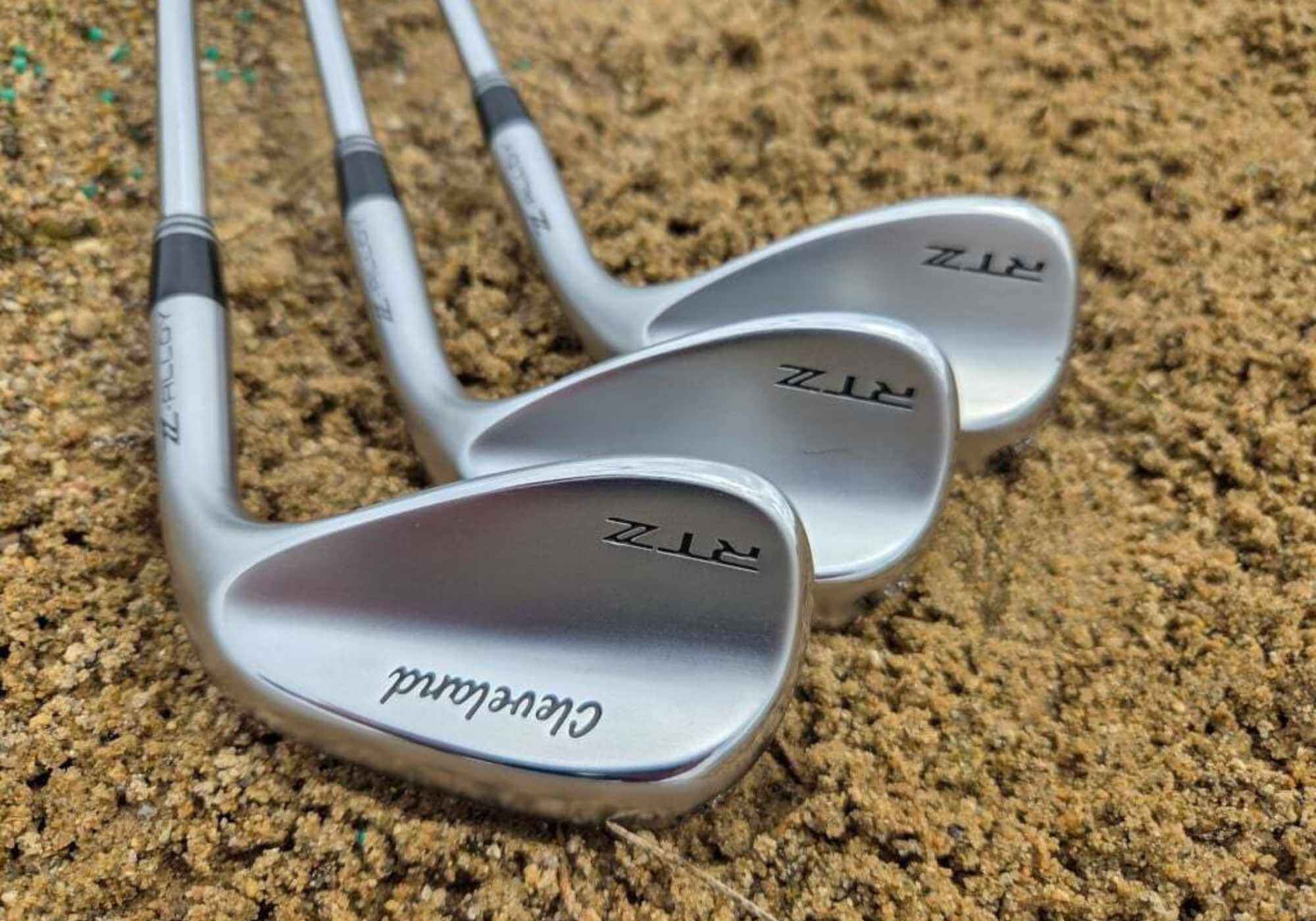
This isn’t marketing fluff; it’s a strategic allocation of resources that makes perfect sense. In my testing, Cleveland wedges consistently offer superior feel and turf interaction. The various grind options mean I can almost always find a Cleveland wedge that fits a golfer’s attack angle and typical course conditions. The innovation with Z-Alloy for their RTZ wedges is a testament to their commitment beyond just shape and grind – it’s about material science for better performance and durability. While I can’t provide specific hardness values for Z-Alloy without proprietary data, the pursuit of a material better than 8620 carbon steel indicates a drive for improved groove retention and consistent spin, which are critical for short game precision.
The Tour Validation and the Scheffler Effect
While I often caution against blindly following Tour pros, the fact that an uncontracted Scottie Scheffler games a Srixon utility iron is a huge endorsement. It perfectly illustrates the point Chris Kircher makes: “There’s no amount of money that covers up equipment that just doesn’t work.” Elite ball-strikers *need* the best, most consistent performance, and if Scheffler is choosing a Srixon iron to dial in his long game, it speaks volumes about the club’s build quality, feel, and precise flight characteristics.

Utility irons, in particular, require a delicate balance of launch, spin, and forgiveness to bridge the gap between fairway woods and traditional irons. The consistency of Srixon’s utility offerings on the launch monitor – showcasing optimal launch angles, controlled spin rates, and impressive ball speeds for their loft – is why they find their way into the bags of many pros, even those sponsored by other brands. This isn’t marketing; it’s pure performance.
The Case for the Big Five
So, does Srixon, Cleveland, and XXIO combined deserve that “Big Five” spot? Strictly from a performance and market presence perspective, I think the argument is incredibly strong. When you factor in the dedicated following of XXIO for slower swing speeds (which commands premium prices and delivers exceptional ease of use), Srixon’s consistently solid drivers and irons, and Cleveland’s undisputed dominance in wedges, the collective impact is undeniable. The data from my fittings consistently shows Srixon as a reliable performer across the board – not always dominating every single metric, but delivering an excellent overall package of feel, forgiveness, and consistent ball flight. They aren’t just selling clubs; they’re selling performance that golfers can actually measure and feel.
My advice to any golfer looking for new gear: don’t overlook Srixon. Their drivers might not always be the longest for *every* swing profile, but their forgiveness and feel are top-tier. Their irons are consistently among the best for feedback and precise ball striking. And Cleveland wedges? They’re practically industry standard for a reason. Go hit them, get them on a launch monitor, and see how they stack up against the competition. I have a hunch you’ll be just as surprised and impressed as I often am.
