

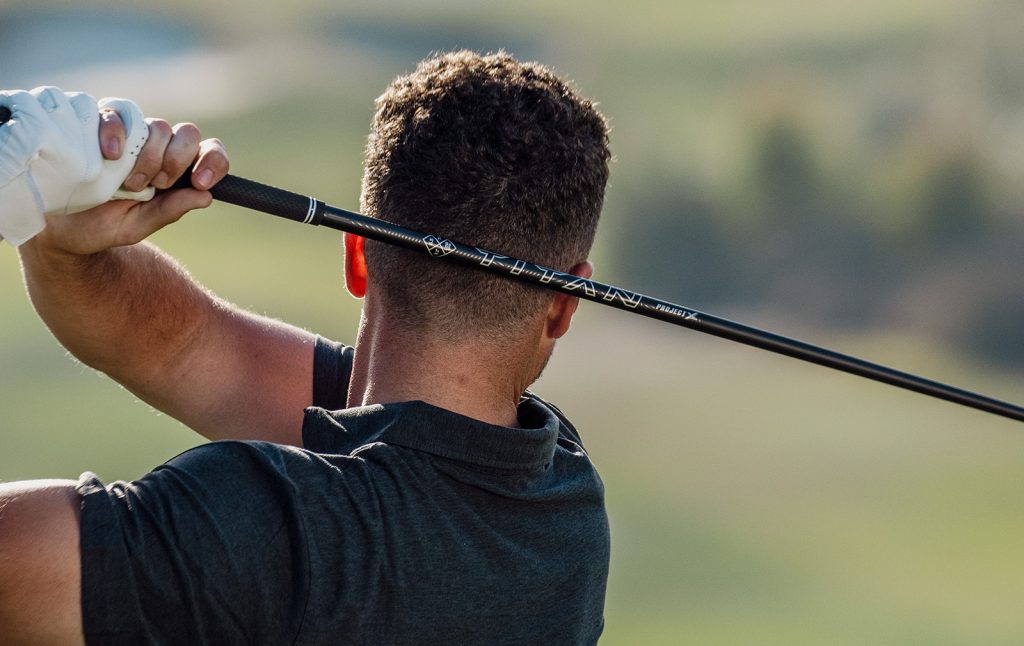

Alright, fellow gearheads and swing scientists, Tyler Reed here, Equipment Editor at The Daily Duffer. We’re talking about shafts today, specifically the new Project X Titan, because frankly, in the world of drivers, the shaft is often the unsung hero – or the silent killer of your launch numbers if it’s ill-suited.
I caught wind of Project X pushing their new Titan Black shaft recently, and like any good Club Fitter worth his salt, my ears perked up. They’re making some noise about it hitting tour and getting into fitters’ hands. Now, I’ve hit a lot of shafts across every brand imaginable, and I’ve seen enough marketing hype to fill a municipal landfill. My job, and The Daily Duffer’s mission, is to cut through that noise and tell you what’s real and what’s not.
The Claim: What is the Project X Titan Supposed to Do?
The source article for this call-for-testers is pretty light on technical specifics about the Titan itself, opting instead to direct readers to a “feature story” or the Project X website for details. That’s a common tactic – generate buzz for a new product, then gate the deep dive content behind another click. From what I’ve gathered through my own industry channels and preliminary intel, their focus is on stability and energy transfer. Every shaft manufacturer claims this, of course. The real question is: *how* do they achieve it, and does it translate to measurable gains for the average golfer or even the highly skilled player?
“A couple of weeks ago, we had a feature story on the brand new Project X Titan Black shaft that was hitting tour and fitters. If you missed that information, it’s worth the read on this pretty unique shaft that is quickly gaining steam.”
My concern here is always this: “unique” doesn’t automatically mean “better.” I’ve seen plenty of unique designs that offer marginal gains at best for 99% of golfers. What I’m always looking for behind the flowery language are the materials science, the bend profiles, and the torque numbers. Is Project X using a new carbon fiber weave? A different resin? A unique tapering process? These are the details that dictate how a shaft actually performs on a launch monitor.

My Expert Take on Shaft Testing
Having done hundreds of fittings and spent countless hours scrutinizing launch monitor data, I can tell you this: a truly great shaft doesn’t just feel good; it produces verifiable numbers. I’m looking for consistency in ball speed across the face, a tight dispersion pattern, and optimization of launch angle and spin rates for maximum carry and total distance.
When I test a new shaft like the Titan, I’m not just swinging away. I’m looking at data points like:
- Smash Factor: How efficiently is energy being transferred from the clubhead to the ball? A good shaft can improve this by stabilizing the head through impact.
- Peak Height and Descent Angle: Are we getting the right trajectory to maximize carry without sacrificing roll?
- Spin Axis: This is a massive indicator of consistency. A shaft that helps maintain a neutral or slight positive spin axis reduces unwanted side spin and improves accuracy.
- Torque: A lower torque shaft generally appeals to higher swing speed players looking for more control, while higher torque can offer more feel and potentially help moderate swing speeds release the club more effectively.
Without specific data on the Titan’s bend profile or torque characteristics, it’s hard to predict its precise target audience just yet. However, Project X has a history of producing shafts that cater to players seeking a stable, controlled feel, often with a mid-low launch and low-mid spin profile. If the Titan follows this pattern, I’d expect its “uniqueness” to come from even greater stability or a more refined energy transfer mechanism, possibly leading to a slight uptick in ball speed for those it fits.
The Real Value: Who is This For?
The hacker’s Paradise is setting up a testing program, which I always commend. Getting clubs into the hands of real golfers, not just tour pros or engineers on a simulator, is crucial. That said, selecting just five testers, even with staff oversight, is a very small sample size. Shaft performance is incredibly individual. What works for one person’s swing dynamics, tempo, and transition can be detrimental for another’s.
“You must be able to check in on the forum thread daily (or close to it) to discuss and answer questions. All of your reviews will be posted in this thread on the THP Forum on the Project X Titan shaft.”
This commitment is key. If those testers genuinely provide detailed feedback on feel, shot shape, and, hopefully, *their own launch monitor data* (if they have access), then this could be valuable. My advice to anyone signing up: be brutally honest about how it performs *for you*. Don’t try to make it work if it doesn’t. Your feedback on specific ball flight characteristics – higher launch? Lower spin? Tighter dispersion on misses? – will be far more beneficial than vague statements about “feel.”
When it comes to giving practical buying advice, until I get my own Titans on the launch monitor and run them through their paces with a variety of swing types, it’s tough to pinpoint the exact demographic. However, Project X shafts generally appeal to players with a more aggressive transition and higher swing speeds, who benefit from the added stability to maintain control and minimize dispersion. If you’re a golfer who struggles with excessive spin or a ballooning trajectory, and you have a consistent-to-fast swing speed (say, 95+ mph with driver), then a shaft like a Project X, and potentially the Titan, might be a candidate for your fitting discussion. If you’re a smooth swinger with moderate speed looking for more launch, this might not be your first stop.
“Please note: You will be reviewing the golf shaft for a period of a full month and then it is yours to keep. If you cannot commit to this length of testing please do not signup.”
A full month of testing is excellent. Driver shafts aren’t something you can evaluate on a range session or two. It takes time on the course, in varying conditions, to truly understand how a shaft influences your game. So, for those lucky few THPers, take that month seriously!
Ultimately, the Project X Titan enters a highly competitive market, dominated by established players and new innovations almost weekly. The proof, as always, will be in the pudding – or in this case, on the TrackMan. I’ll be eagerly awaiting the data and real-world feedback from these testers to see if Project X has truly engineered something that goes beyond marketing speak and delivers tangible performance improvements for golfers.
