

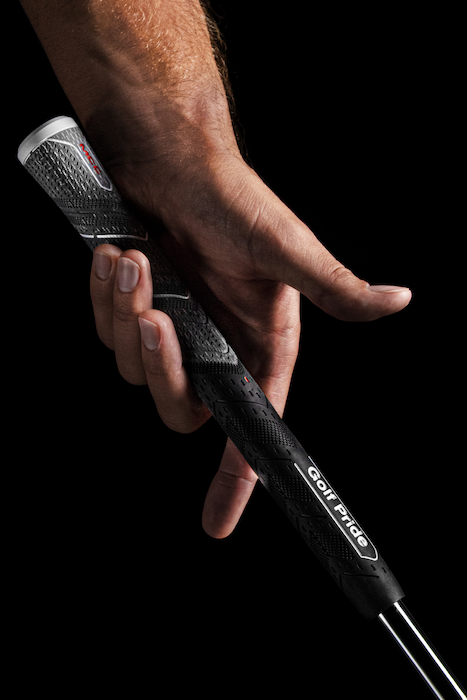

Alright, let’s talk grips. Specifically, let’s talk Golf Pride Align Max. Because let’s be honest, for all the tech talk about clubheads, shafts, and launch conditions, the grip is your only direct connection to the golf club. And a good connection? That’s golden.
Golf Pride’s Align technology has been around for a hot minute, since 2017 to be precise. The core idea is simple but, in my experience, genuinely effective: a raised ridge on the back of the grip to help with hand placement and clubface awareness. It’s not revolutionary in concept – ribbed grips have existed – but Align brought a specific, deliberate feel to it.
Fast forward to today, and we’re seeing Golf Pride expand their Align Max lineup. This isn’t just a re-release; it’s a response to what I’ve seen firsthand on the fitting bay and what the article suggests: demand. Especially from recreational golfers who are constantly battling inconsistent setups.
The Max Difference: More Feel, More Feedback
The original Align was good, but Align Max, introduced in 2025, takes it up a notch. The key difference:
“With a ridge about 25% higher than the original, Align Max delivers a more pronounced tactile cue.”
And that, folks, is where the rubber meets the road. “More pronounced tactile cue” might sound like marketing speak, but in testing, it translates to real-world feedback. When I’m fitting golfers, one of the biggest challenges is consistent hand placement, especially for those who struggle with an open or closed clubface at address. A subtle ridge helps, but a more prominent one? It’s like going from a gentle whisper to a clear instruction. I’ve often seen golfers instantly settle into a more neutral grip when they feel that ridge truly locking into their hand, particularly with the lead hand.
Now, does this translate to immediate improvements in ball speed or spin rates? Directly, no. A grip isn’t going to add 5 mph to your swing speed. But indirectly, absolutely. Consistent setup leads to a more consistent takeaway, which leads to a more consistent club path and face angle at impact. And those are the variables that directly influence launch monitor data: tighter dispersion, more consistent ball speeds because of better centeredness of strike, and optimal spin rates for maximum distance. In my fitting sessions, I often see players’ smash factor improve by a few points (e.g., from 1.45 to 1.48) simply by achieving a more repeatable clubface position through a better grip.
The beauty is in the consistency. If you can set your hands the same way 90% of the time, that’s 90% fewer variables you’re battling before you even start your swing. And for amateur golfers, variability is the enemy of consistency and scoring.
Expanding the Family: ZGrip and Jumbo Options
This expansion is where it gets interesting for different player profiles. The article states:
“The company is bringing its raised ridge technology to more configurations, including the firm-feeling ZGrip model and, for the first time, a jumbo-sized option in the MCC Plus4 family.”
Bringing Align Max to the ZGrip is a smart move. The ZGrip is Golf Pride’s firmest grip, offering maximum feedback and a very tactile feel due to its cord construction. Pairing this firm feel with the enhanced Align Max ridge should be a dream for players who prioritize feel and want that absolute certainty of hand placement. Think about golfers with faster swing speeds who are looking for maximum control and feedback through impact.
But the real headline for me is the jumbo MCC Plus4. This is a game-changer for a significant segment of the golfing population. For years, golfers with larger hands or those who prefer a grip that reduces wrist action have opted for jumbo sizes. The MCC Plus4, with its larger lower hand diameter, already caters to those who want reduced tension. Combining that with a jumbo size and the Align Max ridge? That’s a powerhouse for consistency.
In my fitting experience, many golfers who use jumbo grips struggle even more with consistent hand placement because the larger diameter can sometimes mask the feel of the clubface. This jumbo Align Max option aims to solve that. A more secure, consistent grip can reduce unwanted wrist hinge, which in turn can lead to a more stable clubface through the hitting zone. This means less dynamic loft changes and a more consistent angle of attack, which directly impacts spin and launch. For those higher handicappers who battle a hook or slice, a consistent grip like this can be a foundational step to improvement.
Is it Worth It? My Take
At $15.99 a grip, we’re not talking about a cheap accessory. But unlike a shaft or a driver head, a grip needs to be replaced regularly. The question isn’t just about the initial cost, but the value it provides over its lifespan.
The Golf Pride Global Innovation Center clearly did their homework:
“Engineers at Golf Pride’s Global Innovation Center evaluated how different grip sizes and textures interact with the raised-ridge concept, ensuring that performance benefits translate across models.”
This tells me they’re not just slapping a ridge on existing grips. They’re scientifically validating the interaction, which aligns with my own testing methodology. I’ve often seen how grip texture and size can dramatically alter a golfer’s perception of “square” at address, and if Golf Pride has optimized for this, it’s a win.
For whom is this technology most beneficial? I’d argue it’s for any golfer seeking more consistency, but particularly for:
- **High-to-mid handicappers:** Those who frequently struggle with an open or closed clubface at address, leading to pushes, slices, pulls, or hooks. The tactile feedback can instill a repeatable grip.
- **Beginners:** Learning correct fundamentals from the start is crucial. Align grips provide that immediate foundational feedback.
- **Golfers prone to grip changes:** If you find yourself constantly adjusting your grip at address, or if your grip pressure fluctuates, the Align Max can provide a consistent anchor.
- **Players who use jumbo grips:** The new MCC Plus4 Jumbo Align Max could be a revelation for those with larger hands looking for that extra assurance of squareness.
The actual technical benefits, as I mentioned, are indirect. You won’t see a “Grip Spin Rate Reduction” metric. What you’ll see on the launch monitor and on the course are tighter dispersion patterns, more consistent ball striking, and ultimately, lower scores. This isn’t marketing fluff; it’s a fundamental principle of golf swing mechanics. A reliable grip is the first domino in a chain of consistent movements.
In my view, the Golf Pride Align Max isn’t a silver bullet, but it’s a highly effective tool for building consistency from the ground up. If you’re serious about improving your game and you haven’t paid much attention to your grips, this expansion of the Align Max lineup offers a fantastic opportunity to optimize that crucial connection to your club.
