


Maximizing Your Indoor Golf Practice: 4 Essential Keys to Improve Your Game
With the advent of advanced technology, golfers have unprecedented access to state-of-the-art facilities year-round. However, many still struggle to make the most out of their indoor practice sessions. Rather than simply swinging a club occasionally to stave off off-season rust, a strategic approach can ensure that you not only maintain your skills during winter but also emerge as a more proficient golfer when spring arrives. Here are four essential keys that can elevate your indoor practice to the next level, based on insights from renowned golf instructor Joke Plecker, a GOLF Top 100 Teacher.
1. Master Your Setup
While it may seem mundane, the setup is the cornerstone of a successful golf swing. Having a consistent setup position is crucial for developing a reliable swing. As Plecker notes, "Before the Grand Prix, somebody has to check the tire pressure," paralleling this to the golfer’s grip, ball position, and posture. This foundational step is practiced by professionals as well; take Brooks Koepka, who emphasizes the importance of "PGA" when warming up—posture, grip, and alignment.
To refine your setup, consider investing in alignment aids such as rods or even string to ensure your stance and posture are precise. Developing this skill is straightforward and can significantly influence your overall game.
2. Focus on Face Angle and Club Path
When practicing indoors, keep track of vital statistics: face angle and club path. These data points are essential for achieving a consistent swing. Plecker points out that understanding these metrics is among the first checkpoints when working with students.
Face angle represents the horizontal direction your clubface points at impact, which can be square, open, or closed. On the other hand, club path indicates the direction of your swing — in-to-out or out-to-in. By honing these fundamentals, you create a reference point that helps diagnose swing issues, such as face impact and ball reaction.
3. Experiment with Your Game
The off-season is the ideal time to explore innovative adjustments to your game without the pressure of performance in competitive rounds. Indoor practice allows for experimentation with major concepts like ground force production and subtle tweaks in areas such as ball position and spine tilt.
Plecker advocates for a hands-on approach, advising golfers to test small changes in their setup to discover what works best for them. Utilize simulators to assess how adjustments impact your launch angle and ball flight. This deliberate experimentation can expand your understanding of your own game, enabling you to control shot trajectories more effectively.
4. Prioritize Your Putting Practice
Surprisingly, putting often gets sidelined during the off-season, yet this is a crucial area for improvement. Standard indoor simulators frequently do not accommodate putting, which can lead to neglect of this vital skill. According to Plecker, mastering three elements—start line, alignment, and body position—can lead to a consistent putting stroke.
You don’t need expensive gear to practice; even a simple flat surface combined with an alignment aid, such as string or a rod, can help you perfect your stroke mechanics. More advanced tools like a putting mirror or specialized mat further enhance stroke path and face rotation analysis.
Managing Your Expectations During the Off-Season
While the off-season often serves as a maintenance period for many golfers, embracing it as a time for refinement can lead to greater improvements. You’ll find that with mindful practice, you’ll return to the course not just prepared, but also more confident than you were before. The right mindset can transform your perspective on indoor practice.
Invest in Quality Training Tools
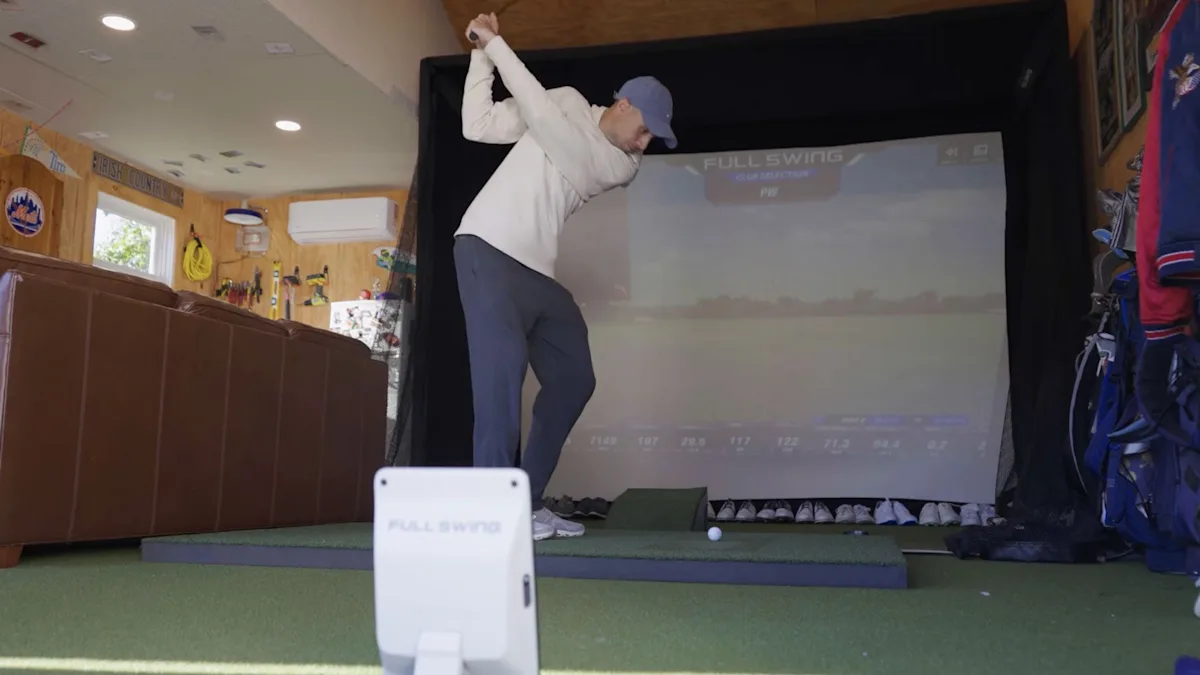
To make the most of your practice, consider investing in technological aids. High-quality launch monitors, such as the Full Swing KIT, leverage advanced radar technology to provide comprehensive feedback on your swing. Trusted by golf legends like Tiger Woods, it transforms practice sessions into data-driven experiences, allowing for precise adjustments tailored to your needs.
Building a Consistent Routine
Creating a structured practice routine is as critical as the techniques employed. Allocate specific times for various elements of your game—setup analytics, swing drills, and putting practice. Consistency in approach leads to growth and ensures each aspect of your game receives attention.
Make Use of Available Resources
Whether you’re practicing at a facility or at home, take advantage of online resources, tutorials, and instructional videos that can augment your training. Group discussions, online forums, and video lessons led by experienced instructors can provide valuable insights that enhance your practice sessions.
Conclusion: The Off-Season as a Launchpad
The off-season shouldn’t merely be about preserving your skills but about refining them. By focusing on your setup, understanding face and path dynamics, experimenting within a structured environment, and dedicating time to putting practice, you can significantly elevate your game ahead of the new season. The effort you invest during the cold months will ultimately lead to warmer results when you step back onto the greens.
Golf is as much a mental game as it is a physical one, so approach your indoor practice sessions with purpose and confidence. Embrace this time to optimize your skills, and watch as your game transforms come spring.
