


Punta Brava: Tom Doak’s Masterpiece on Mexico’s Wildest Coast
There’s a particular moment in every architect’s career when they encounter terrain so dramatic, so uncompromising, that it becomes something more than just a golf project—it becomes a calling. For Tom Doak, that moment came when he first stepped onto the rugged Pacific cliffs of Mexico’s west coast to survey what would become Punta Brava Golf & Surf Club. The verdict from one of modern architecture’s finest minds was unequivocal: this would be one of the great courses of the world.
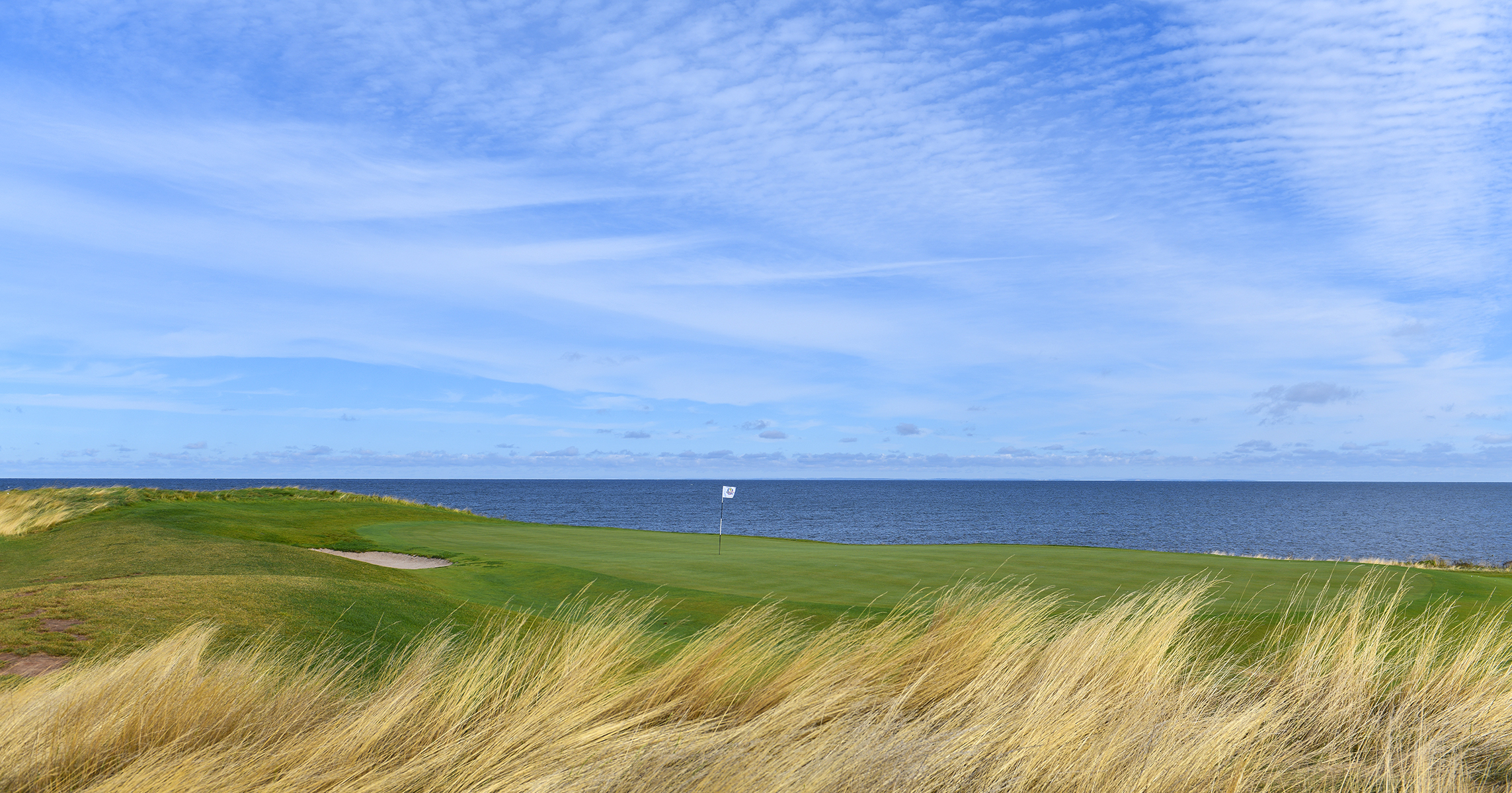
Picture it: eight holes routed directly over and along ocean cliffs so severe that Doak’s construction crews faced challenges unlike anything the renowned designer had previously encountered. The Pacific churns hundreds of feet below, indifferent and primal. The coastline doesn’t so much meet the ocean as plunge into it. And somewhere in that theatrical landscape, a golf course had to not merely exist, but thrive—had to sing, in fact, with the kind of strategic brilliance that separates memorable courses from truly transcendent ones.
Where Architecture Meets Audacity
Punta Brava represents something increasingly rare in contemporary golf development: a project where the land itself dictates the design philosophy rather than the other way around. Too often, architects arrive at sites with predetermined templates, routing plans sketched before the first stake is driven. Doak, by contrast, belongs to that distinguished lineage of designers—think Pete Dye at TPC Sawgrass or the original architects studying Scottish linksland—who understand that the greatest courses emerge from dialogue with the landscape, not domination of it.
The property’s “raw coastal terrain,” as the development describes it, isn’t merely scenic window dressing. It’s the fundamental design constraint that forces every decision. When you have eight holes playing over ocean cliffs, you can’t hide weak design choices behind artificial bunkering or contrived elevation changes. The strategic intent must be pure, the routing must be inevitable, and the playability must reward thoughtful golf while maintaining enough teeth to challenge the world’s finest players.
“Before the build even began on the dramatic oceanside cliffs—including eight holes over and along the water—Doak said he couldn’t imagine that anyone who went to the site would walk away unconvinced that it was going to be one of the great courses of the world.”
That’s not hyperbole from a marketing department. That’s Doak, a designer who has routed courses across seven continents and studied the greatest layouts in golf history, essentially saying that the land itself is already masterful—the architect’s job is simply not to ruin it.
Beyond Golf: A Lifestyle Retreat
What distinguishes Punta Brava from other oceanfront golf developments, however, is its deliberate positioning beyond golf alone. This is a lifestyle retreat—part golf destination, part surf culture hub, part luxury residential escape. The fact that Stephen Malbon, founder of Malbon Golf, counts himself among the founding members tells you something about the aesthetic and aspirational vision here. This isn’t trying to be Augusta National or Cypress Point. It’s trying to be something more contemporary, more experiential, more integrated into the rhythms of coastal living.
The low-density luxury housing component matters architecturally, too. It means the course won’t be surrounded by McMansions or overly developed residential lots competing for views. The architecture of the community itself will respect the drama of the landscape. In an era when many private clubs sacrifice course integrity on the altar of real estate value, this restraint is refreshing.
The Doak Difference
Having played roughly a dozen Doak designs over the years—from his restoration work at Cruden Bay in Scotland to his original layouts in the American West—I can attest to his particular genius: he understands that great golf architecture is fundamentally about creating meaningful choices. Every shot presents a puzzle. The green complexes don’t betray their secrets from the fairway. The routing flows with logic rather than artifice.
At Punta Brava, those principles will be tested against perhaps his most demanding canvas. The ocean holes will be spectacular, certainly. But the holes routed away from the cliff edges—the inland holes threading through native Mexican vegetation and working the property’s elevation changes—will reveal whether Doak can maintain that same strategic sophistication when the landscape itself isn’t doing half the visual work for him.
Practical Details for the Golf Traveler
Here’s what you need to know: Punta Brava is private, which means access requires membership or an invitation from a member. Given the founding member involvement and the project’s positioning as a lifestyle retreat rather than a traditional club, it’s unclear whether it will eventually open to daily-fee or resort play. The course is expected to open to members in 2026, though the broader community continues development.
The location on Mexico’s Pacific coast offers significant advantages for accessibility—not as remote as some exotic golf destinations, yet far enough removed to feel genuinely away. The combination of world-class golf, world-class waves, and luxury accommodations positions it as a genuine alternative to established Mexican golf destinations that have become increasingly crowded and commercialized.
If you’re fortunate enough to secure an invitation, clear your calendar for at least three days. A course this dramatic, routed across terrain this unforgiving, deserves multiple rounds to fully appreciate. The Pacific coast changes light throughout the day—dawn rounds offer drama, afternoon rounds offer different strategic imperatives as shadows shift across the fairways, and sunset rounds offer, well, something transcendent.
Tom Doak has built a remarkable career by recognizing that the architect’s primary responsibility is stewardship of the land, not domination of it. At Punta Brava, with eight holes hovering above the Mexican Pacific and the entire routing constrained by some of the most dramatic topography he’s ever encountered, that philosophy will be tested in the crucible of construction. The early indicators suggest it’s a test he’s eager to pass.
