

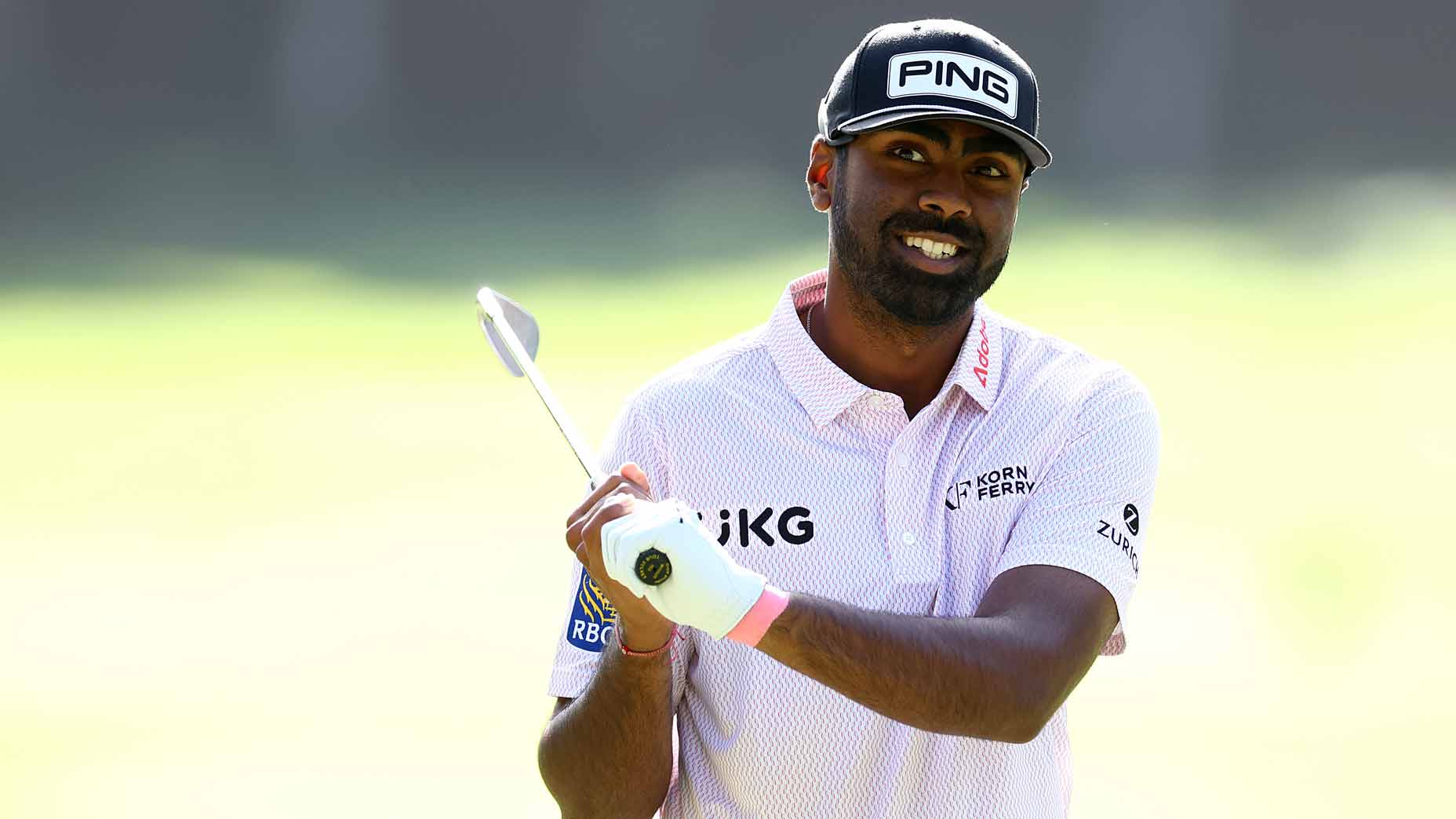

There’s something refreshing about watching a 15-year-old ask better questions than most of us ever will. At last week’s WM Phoenix Open, Maverick Midthun—a high school freshman representing “Today’s Junior Golfer,” an Arizona non-profit supporting lower-income junior players—stood in the media center alongside veteran reporters and asked Sahith Theegala a question that cut right to the heart of what’s wrong with modern golf culture.
His question was simple: What advice would you give a junior golfer aspiring to play the PGA Tour?
Theegala’s answer should be required reading for every golfer, amateur or professional, who’s ever felt the pressure to be better at everything all at once.
The Distance Obsession is Killing Your Game (And Your Joy)
We’re living in an era where golf has become obsessed with one thing: how far you can hit it. Tour players are longer than ever. Junior golfers are buying launch monitors before they can legally drive a car. I’ve noticed this cultural shift creeping into every conversation—at the range, in group texts, on social media. The narrative is relentless: if you’re not adding yardage, you’re falling behind.
Theegala pushes back on this with the kind of wisdom that only comes from someone who’s actually made it.
“I’m seeing guys that are in high school and college hit it further than guys on Tour. The distance thing is a big thing. I think something that’s—it’s easier said than done, but just ignoring that part and finding your own path. I’ve seen a lot of kids lose their game trying to chase distance rather than hone in their craft.”
Think about that for a moment. Players are literally losing their game in pursuit of something that, statistically speaking, doesn’t guarantee success. Last year, Theegala ranked 102nd on Tour in driving distance. He also ranked 13th in scrambling from 20-30 yards. He has a Tour victory and a world ranking of 92. The math is simple: short game mastery beats distance every single time.
But here’s what really matters from a lifestyle perspective—Theegala isn’t just sharing a swing tip. He’s talking about something deeper: the psychological freedom that comes from playing to your strengths instead of obsessing over your weaknesses.
The Happiness Factor: Why Loving Your Game Changes Everything
Modern golf instruction has become obsessively data-driven. Golfers are told to identify their weaknesses and attack them relentlessly. Swing speeds are measured. Short game percentages are tracked. Off-course training plans are tailored to fix what’s broken rather than amplify what’s working.
Theegala’s philosophy turns this approach sideways. He’s suggesting something almost radical: focus on the part of your game you love most.
“What I did personally and what I think has worked for a lot of my peers and a lot of my friends is focus on the part of your game that I love the most. For me that was chipping. I just chipped as much as I could. Did a ton of chipping contests. Didn’t matter if I knew they were a good or bad chipper, I just wanted to beat them, and I got my best practice in that way.”
There’s a wellness lesson buried in here that goes beyond golf. When you do something you genuinely enjoy, you practice harder. You practice longer. You practice with intensity and purpose because it doesn’t feel like work—it feels like play. That’s the difference between grinding through a practice session and actually improving.
Theegala spent countless hours in chipping contests, not because he was forced to, but because he wanted to be better than his competition at something he loved. That joy translated into mastery, which then freed up the rest of his game. He even struggled with his driver early on, but by pouring energy into what he loved, the pressure released, and the other parts improved naturally.
This is what I call the “excellence through joy” approach to golf, and it’s a lifestyle shift worth making regardless of your handicap.
How to Apply This to Your Own Game
So what does this actually look like in practice? Here are some actionable takeaways for everyday golfers:
Identify what makes you feel alive on the course. Is it hitting long irons? Holing putts? Executing a perfect pitch? Getting up and down from tricky spots? That’s your starting point. That’s the part of your game to invest in.
Create friendly competition around your strength. Theegala played chipping contests with friends. You could play putting games, chipping matches, or driving competitions. Make it competitive. Make it fun. The practice becomes the reward.
Trust that excellence in one area creates momentum. When you feel genuinely good at something, confidence bleeds into other parts of your game. You stand taller. You trust your swing. You make better decisions.
Give yourself permission to practice in a way that feels natural. Not every golfer needs to be a data scientist. If you love practicing, practice. If you love playing, play more and practice less. If you love the social element, lean into group competitions.
A Lesson About Living Your Best Golf Life
What struck me most about Theegala’s answer wasn’t the tactical advice—it was the implicit permission he gave to every golfer listening: you don’t have to follow the script everyone else is following. You don’t have to chase distance. You don’t have to fix everything at once. You don’t have to practice like the guy next to you.
“I would say find a part of the game you love, focus on that.”
That’s not just golf advice. That’s life advice dressed up in golf clothes. Find what you love. Do it with intention. Let mastery in that area elevate everything else.
A 15-year-old asking better questions. A Tour player with a 102nd-ranked drive giving wisdom about the power of focus. A culture so obsessed with distance that we’ve forgotten the simple joy of getting really, really good at one thing.
Maybe that’s the most important lesson of all.
