

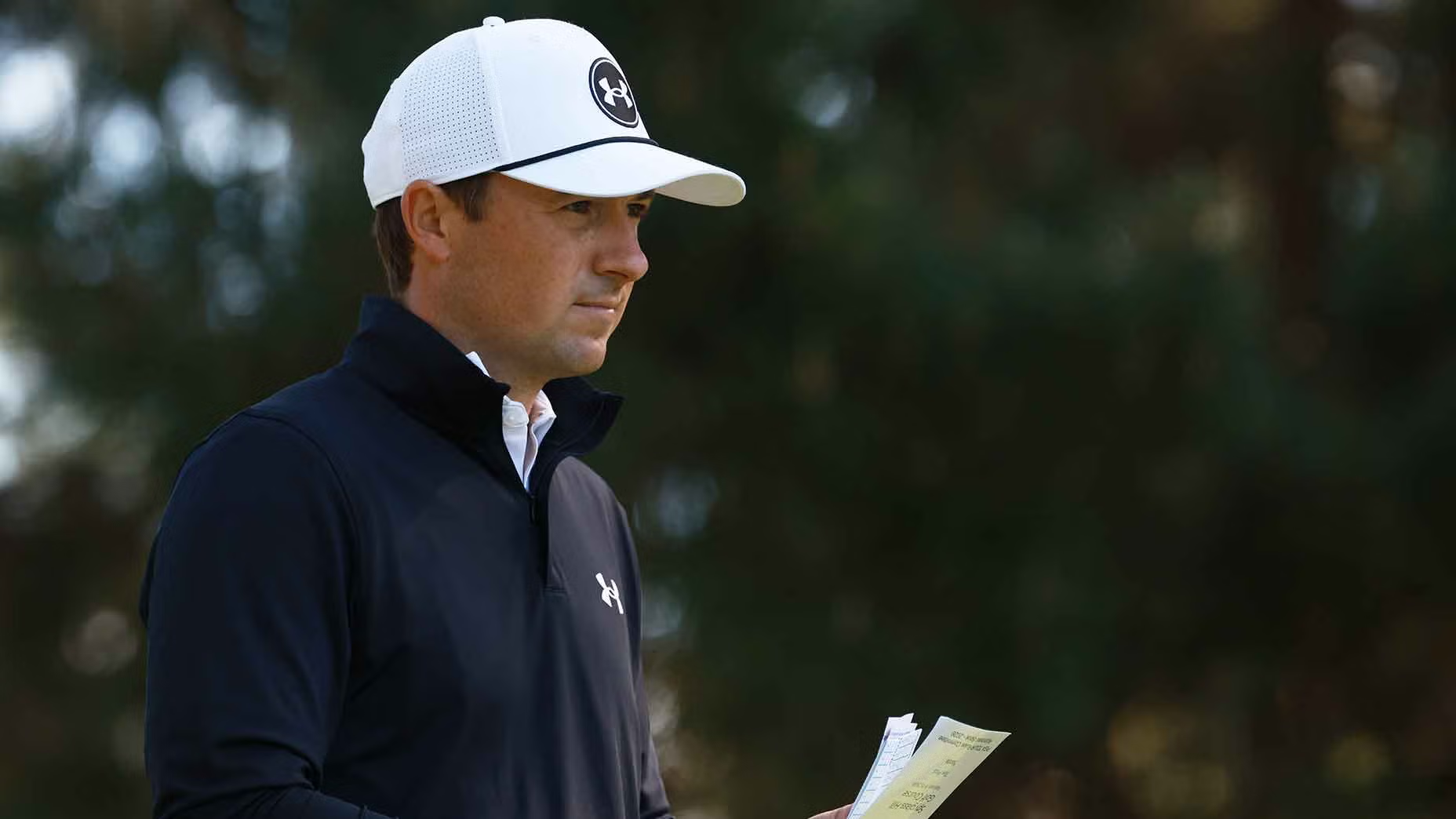

As the Lifestyle Editor for The Daily Duffer, I’m always looking for those moments in golf that transcend the scorecard. Those glimpses into the human spirit, the mental game, and the subtle ways our favorite sport mirrors life itself. And this week at Pebble Beach, Jordan Spieth offered a masterclass in exactly that.
You see, for all the glamour and high stakes of a Signature Event like the AT&T Pebble Beach Pro-Am, what struck me most about Spieth’s opening performance wasn’t just his impressive T11 6-under start. It was his refreshingly honest take on the mental hurdles he faced just days before. Every golfer, from weekend warriors to major champions, can relate to the inner critic, the bad days, and the struggle to hit the reset button.
Let’s rewind a bit. Spieth was coming off a missed cut at the WM Phoenix Open, a rare occurrence for him at a venue where he usually shines. Instead of dwelling on a physical flaw, he pinpointed something much deeper.
“I got in a bad kind of mental place Friday,” Spieth said, referring to the second-round 75 that ended his week at the WM Phoenix Open prematurely with a missed cut. “I was swinging it well and I decided to tell myself I wasn’t. I just had a bad day.”
How many times have we, on the golf course or even in our daily lives, talked ourselves out of a good thing? Convinced ourselves we weren’t performing well, even when the evidence might suggest otherwise? Spieth’s candidness is a powerful reminder that sometimes our biggest opponent isn’t the course, the weather, or even our swing – it’s our own mind.
From Cliff’s Edge to Mental Resilience
This isn’t Spieth’s first rodeo with unique mental challenges at Pebble, either. He famously recalled a swing thought from 2022 on the cliff overhanging the 8th hole that resonated with me:
“Let’s not shift our weight forward or we might die,” Spieth said with a chuckle, recalling the cliff scene from ’22 on Thursday. “That’s probably the weirdest [swing thought] I’ve ever had.”
While most of us aren’t facing life-or-death scenarios on the course, that underlying pressure – whether self-imposed or environmental – can feel just as intense. It’s a reminder that golf, at its core, is a test of mental fortitude. It asks us to adapt, to overcome, and sometimes, to simply “forget about it and use this as our pseudo-Phoenix and try to get dialed in,” as Spieth put it later.

The Art of the Reset: What We Can Learn
So, what can we, the everyday golfers who might not have a caddie to give us a pep talk or a private jet to whisk us away to “a fun round with my brother on Sunday morning at Pebble,” take away from Spieth’s experience?
1. Acknowledge Your Inner Critic, Then Let It Go
Spieth was able to articulate that he “decided to tell myself I wasn’t” swinging well. The first step to overcoming a negative headspace is recognizing it. Don’t suppress it, but don’t let it dominate. Acknowledge its presence, then consciously choose to move past it.
2. Embrace the “Pseudo-Phoenix” Mindset
Spieth’s decision to “throw it out the window” after his Phoenix hiccup and treat Pebble as a fresh start is brilliant. For us, this means that every new round, every new hole, every new shot is an opportunity for a reset. If a bad shot or a bad hole derails your entire round, you’re giving it too much power. View the next tee box as your “pseudo-Phoenix”—a chance to begin anew, regardless of what came before.
3. Find Your Joy Outside the Scorecard
Notice how Spieth recalibrated his mental state? He “played a fun round with my brother on Sunday morning at Pebble… Played Pebble and Cypress in the same day, Sunday. Just had a fun day.” Disconnecting from the pressure and simply enjoying the game and the camaraderie is often the best medicine for a struggling mindset. Whether it’s playing a quick nine with friends, focusing on the beauty of the course, or just having a laugh, remember why you fell in love with golf in the first place.
4. Trust Your Preparation
Despite his mental struggles in Phoenix, Spieth had been swinging it well. His physical game was there. This highlights the importance of trusting your practice and preparation. When your mind starts to wander, come back to the fundamentals you’ve ingrained. That muscle memory and dedication are still there, even if your brain is playing tricks.
The golf world has squinted hard to find signs of a comeback from Spieth in recent years, as golf’s one-time golden child has aged into a frustrating prime. Spieth, who is currently ranked 89th in the world, has dealt with both injury and mental obstacles in the nine years following his last major win at the 2017 Open Championship. He has tried reset after reset during that time — most recently undergoing surgery to correct a wrist tendon issue that had plagued him for years last offseason — to little progress.
The dark moments seem… very dark. But they never seem to hang around. Like Spieth says with a hopeful shrug:
“I just thought I had a fluke kind of crappy day,” Spieth said. “I woke up on the wrong side of the bed last Friday.”
We’ve all been there. The beauty of golf, and life, is that there’s always a tomorrow, always another round, always another opportunity to step up to the tee with a clear mind and a renewed spirit. Jordan Spieth staring over the edge of the cliff – both literally and metaphorically – and choosing not to stay there, is a powerful lesson for us all.
Jordan Spieth (-7) is back at Pebble Beach, the location of the weirdest swing thought of his career.
The thought, as he told me Thursday?
“Let’s not shift our weight forward or
we might die.” pic.twitter.com/FiOnNSWerw— James Colgan (@jamescolgan26) February 12, 2026
