



Hello, Daily Duffer readers! Sarah Chen here, and today we’re diving into a topic that often perplexes even the most seasoned golfers: wedge grinds. If you’ve ever felt like your short game could use a magic touch, understanding your wedges is a fantastic place to start.
For years, golfers have been taught to focus intently on the “bounce number” of a wedge. While bounce is undoubtedly important, it’s only one piece of a much larger puzzle. In my 15+ years of teaching, I’ve seen firsthand how a golfer’s delivery conditions — how they approach and impact the ball — play a massive role in wedge performance. And what I’ve learned from countless hours on the lesson tee is that a common misconception is holding many of us back from optimal short game play.
The truth is, what’s printed on the club often doesn’t tell the whole story. As the Fully Equipped co-host Johnny Wunder and Jake Morrow discussed, relying solely on the stated bounce number can be misleading. In fact, more often than not, the stated bounce on a wedge isn’t actually what the bounce of the sole is. This crucial detail means that two wedges with the same “bounce number” could perform entirely differently for you.
Beyond the Number: Understanding Wedge Grinds
So, if the bounce number isn’t the be-all and end-all, what should we be focusing on? The answer lies in the concept of “grind.” The grind refers to the shaping of the sole of the wedge. Think of it as the sculpting that allows the club to interact with the turf in a specific way. A skilled clubfitter or a well-informed golfer looks beyond just high or low bounce; they consider how the leading edge, trailing edge, heel, and toe interact with the ground through impact.
Jake Morrow offered a fantastic illustration of this point from his own testing:
“I was hitting the Opus T, and I was on the very left side of a two-weeks-without-rain ECPC range, which is the tightest lie they have,” Morrow explained. “And with the T grind, which they say on paper and in the forums and everything, that should be the one that works, right? Because it’s super tight. You’re going to be able to nip it, but whatever. Well, the problem is for me as a steeper player, it just turns into a knife and then it doesn’t come out of the ground. That’s the issue.”
This is a perfect example of why there are no hard and fast rules. What works for one player, even under seemingly ideal conditions (like a tight lie), can be detrimental for another. Morrow, a steeper player, found that the T-grind, often recommended for tight lies, dug into the ground like a knife. It’s all about matching the tool to your unique swing.
His revelation came when he switched to a different grind:
“And so I go, and I start hitting these like 20-yard pitches with the 12-degree X grind, which is probably the highest they have and I feel like an absolute god.”
Imagine that! Going from struggling to feeling like a “god” simply by changing to a wedge that better suited his swing. This is the power of finding the right grind for your game, not just the right stated bounce.
Your Delivery Conditions Matter Most
This brings me to a core philosophy I share with all my students: your personal delivery conditions are paramount. Are you a steeper player, like Morrow, who takes a pronounced divot? Or do you tend to sweep the ball off the turf with a shallower angle of attack? Do you open the clubface significantly for flop shots, or do you prefer to keep it squarer?
These are the questions you need to ask yourself, and more importantly, observe in your own game. Manufactures like Titleist, with their Vokey wedges, are now designing with much more precise CG (Center of Gravity) positioning across different grinds and lofts.
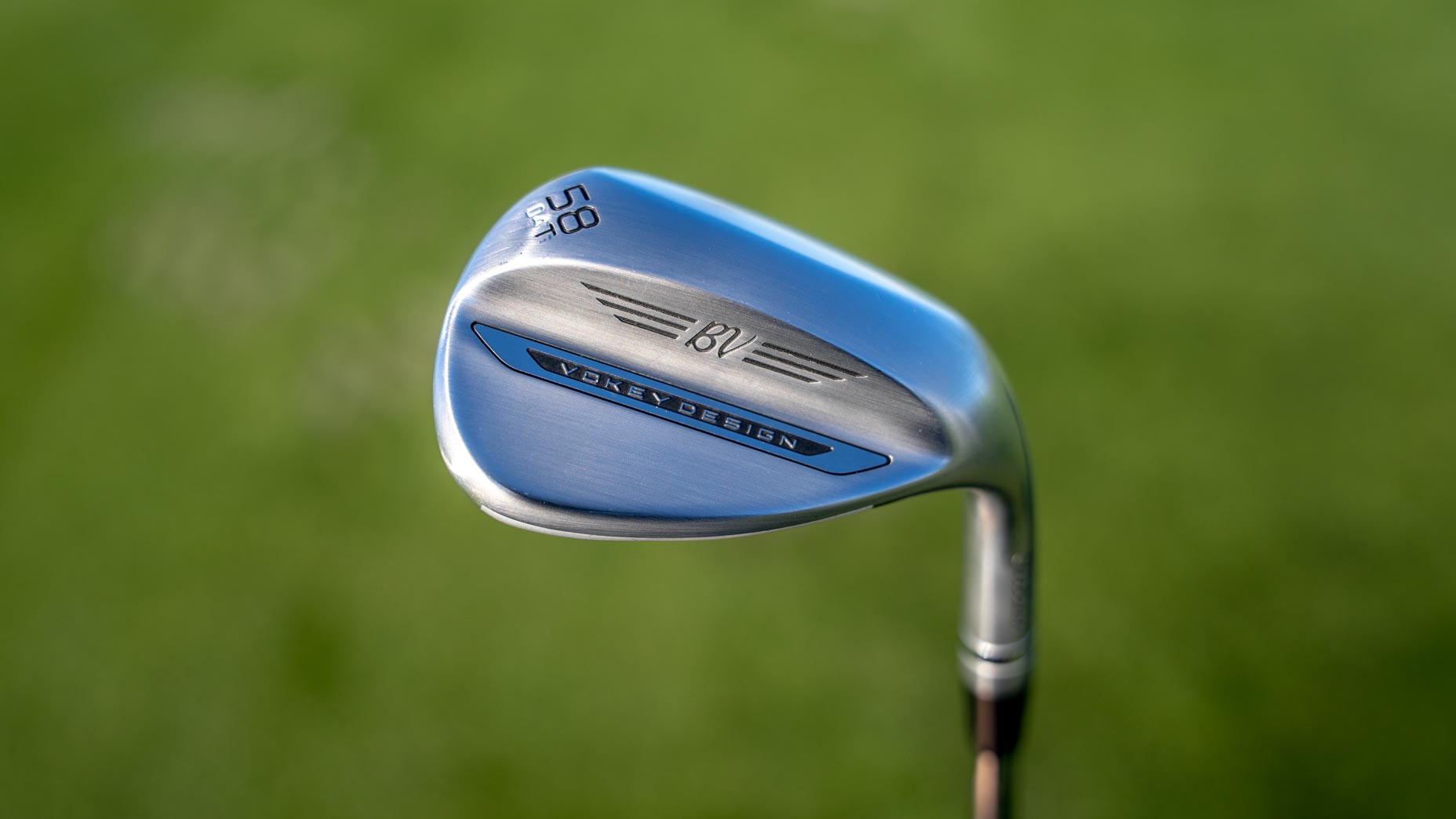
Titleist Vokey SM11 Tour Chrome Wedge
Titleist Vokey Design’s new SM11 wedges feature a new precise CG position across each grind in a loft, meaning every wedge will now perform the same way with the same strike.
This means designers are focusing on making sure each wedge, even with different grinds, performs consistently with a consistent strike. But even with these advancements, your individual interaction with the ball and turf is the key. You want a wedge that glides through the turf or sand, rather than digging or bouncing uncontrollably.
The Blind Test: Your Best Approach
Given the complexity, how do you find your perfect wedges? Morrow suggests a method I wholeheartedly endorse:
“I’m almost at the point where I wish the bounce number would just be eliminated from wedges,” Morrow said. “Like I just want to put the shape of the sole, whatever the grind is from each manufacturer on the bottom of them. And the blind test that Vokey does is probably the best way to do it.”
A blind test removes preconceived notions. You won’t be swayed by a number or a name; you’ll simply feel what works best. This is precisely why a professional club fitting is invaluable. They have the expertise and the tools to let you experiment and find the perfect match for your swing.
Actionable Drills: Finding Your Feel
Ready to start exploring grinds for yourself? Here are a couple of drills you can try:
Try this: The “Feel the Turf” Drill
This drill helps you become more aware of how your wedge interacts with the ground.
- Grab your current sand wedge. Choose a spot on the range with relatively uniform grass (avoiding very fluffy or very bare patches).
- Without a ball, take miniature swings, focusing solely on brushing the turf. Start with tiny, pendulum-like motions, then gradually increase to a quarter swing.
- Pay attention to the sound and sensation: Does the club glide smoothly, or does it snag and dig? Does it bounce off the turf too abruptly?
- Now, try the same drill with an older wedge or a friend’s wedge if you have access to one with a visibly different sole grind. Can you feel the difference in how they move through the grass? This simple comparison will heighten your awareness of how grind affects turf interaction.
Here’s a drill: The “Divot Depth Check”
This will give you insight into your angle of attack.
- Head to the practice range and hit 10-15 pitch shots with your current sand wedge, aiming for a consistent 20-30 yards. Don’t worry about accuracy yet; focus on your interaction with the ground.
- After each shot, observe your divot. Is it deep and narrow (steeper player)? Or is it shallow and wide (sweeper/shallower player)? Are you leaving small, consistent divots, or are they erratic?
- Photograph a couple of your typical divots. Bring these photos to a clubfitter. This visual evidence, combined with your feedback, will be incredibly helpful in guiding their recommendations for grind options. Understanding your typical divot pattern is a direct window into your delivery conditions.
Embrace the Journey
Finding the right wedge grind is a journey of discovery, not a quick fix. There are so many different grind options from each manufacturer nowadays, and players hit shots in very different ways, so it’s important to find which wedges work for your specific delivery conditions, rather than catering to the course conditions. Don’t be afraid to experiment, and definitely consider getting a professional fitting. The confidence and control you’ll gain around the greens are truly worth the effort. Remember, anyone can improve, and with the right tools tailored to your unique swing, you’ll be chipping and pitching like a pro in no time!
