


What an incredible Ryder Cup! Europe’s 15-13 victory at Bethpage Black was a masterclass in resilient, strategic golf, especially significant as their first away win since 2012. While most of us won’t face the intensity of a Ryder Cup Sunday, the lessons learned from how the world’s best performed under pressure are incredibly valuable for everyday golfers like you and me. As a teaching professional for over 15 years, I’ve seen firsthand how adopting even a few principles from the pros can transform a golfer’s game.
Let’s dive into some key takeaways from this thrilling tournament and how you can apply them to your own game, no matter your handicap. Remember, anyone can improve with proper instruction and a dedication to practice!
1. Master Your Short Game: The Scoring Zone
If there’s one area of your game that will consistently lower your scores, it’s your short game. The Ryder Cup truly hammered this home. Think about Shane Lowry’s birdie on the 18th to retain the cup – that wasn’t luck; it was the result of focused work on crucial mid-range putts. The pros spend countless hours on these shots because they know that’s where rounds are won and lost.
“Stop obsessing over your driver. Those 8-foot putts you’re leaving short? They matter more than you think.”
I hear it all the time on the range: “I just want to hit my driver further.” While distance is fun, improving your putting and chipping will yield far more immediate and significant results on your scorecard. Those 8-footers for par, or even just to save a bogey instead of a double, are game-changers.
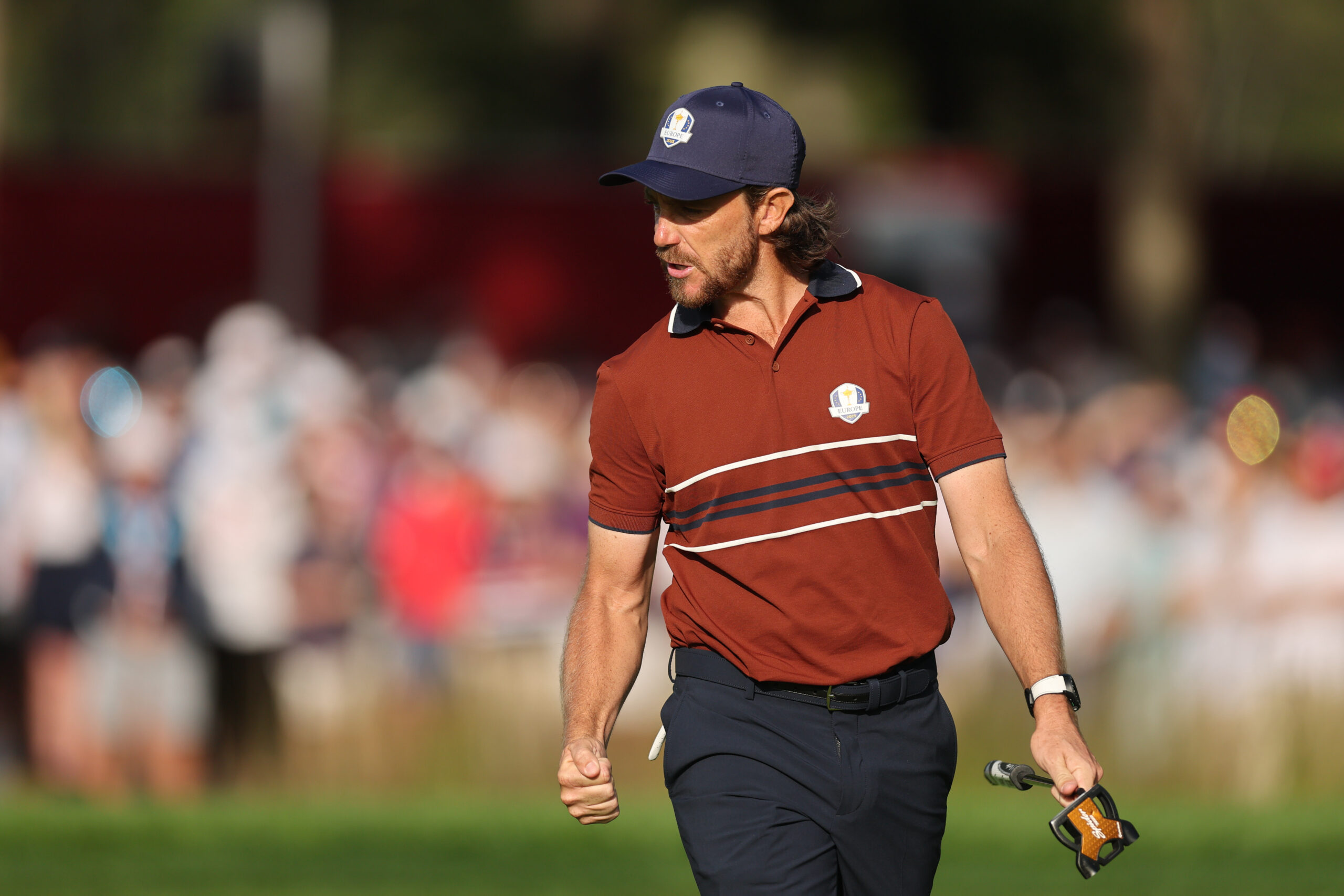
FARMINGDALE, NY – SEPTEMBER 27: Tommy Fleetwood of Team Europe reacts to his putt on the seventh hole during the 2025 Ryder Cup on the Black Course at Bethpage State Park on Saturday, September 27, 2025, in Farmingdale, New York. (Photo by Michael Reaves/PGA of America)
Try this Short Game Drill: The 3-6-9 Putting Challenge
On the practice green, place three balls at 3 feet, three at 6 feet, and three at 9 feet from the hole. Your goal is to make all nine putts consecutively. If you miss one, you start over. This drill trains your focus, touch, and confidence from the distances that most frequently impact your score. It’s simple, effective, and guaranteed to sharpen your short game.
2. Play Smart: Embrace Course Management
Europe’s captain Luke Donald led his team with a fantastic strategy: play percentages. They didn’t try to force heroic shots; they took what the course offered. This conservative, smart approach minimized mistakes and kept them in control, while the Americans often risked too much. This is a crucial lesson for all amateur golfers.
“Your Saturday foursome doesn’t need fireworks – it needs fairways and greens.”
How often have you stood over a ball, trying to hit a miracle shot from the trees, only to compound your error? Taking your medicine – chipping out, or laying up – might not feel exciting, but it’s often the smartest play. Managing your game means understanding your own capabilities and respecting the course.
Here’s a Course Management Drill: The “Safe Two-Shot” Approach
The next time you play, for every par 4 or par 5, plan your two safest shots off the tee and into position. For example, if it’s a tight par 4, maybe you hit a 5-wood or hybrid off the tee, leaving yourself a comfortable full-swing iron into the green, rather than trying to overpower it with a driver and risking a penalty. This drill helps train a more strategic mindset on the course, reducing penalty strokes and big numbers.
3. Resilience: Bouncing Back from Bad Shots
Golf is a game of mistakes. Even the best players in the world hit bad shots. What separates the champions from the rest is their ability to bounce back. Scottie Scheffler’s recovery in singles and Bryson DeChambeau’s incredible comeback from 5-down through seven holes highlight an essential mental aspect of the game: resilience.
“Bad starts happen to everyone. The difference between a ruined round and a salvaged one often comes down to how quickly you forget the last hole and focus on the next shot.”
I always tell my students that the last shot is exactly that – *the last shot*. You can’t change it. What you can control is your approach to the next one. Don’t let one bad hole ruin your entire round. It’s an opportunity to learn and demonstrate mental toughness.

Sep 28, 2025; Bethpage, New York, USA; Team USA golfer Bryson DeChambeau reacts on the 18th hole on the final day of competition for the Ryder Cup at Bethpage Black. Credit: Peter Casey-Imagn Images
Practice Your Mental Reset: The 10-Second Rule
After a frustrating shot, give yourself exactly 10 seconds to vent, be angry, or feel disappointed. Then, consciously let it go. Take a deep breath, and by the time you’re walking to your next shot, your mind should be clear, focused only on the present. This simple routine helps you build mental resilience, allowing you to salvage rounds that might otherwise unravel.
Make it Your Own
The beauty of golf is that these fundamental principles apply to everyone, from Rory McIlroy to the weekend warrior. The Europeans didn’t win because they had inherently better players; they won because they executed fundamentals under extreme pressure. Those same fundamentals work just as well when the only thing at stake is a $2 Nassau and bragging rights at the 19th hole.
So, take these lessons to heart. Dedicate time to your short game, strategize your way around the course, and cultivate resilience when things don’t go your way. I’m confident you’ll see a noticeable improvement in your game and, perhaps even more importantly, a renewed enjoyment of this great sport. Happy golfing!
