


Welcome back to The Daily Duffer, where we cut through the marketing noise and get down to what really matters in golf equipment. Today, we’re dissecting the bag of a tour winner from seven years ago – J.B. Holmes’ setup from his 2019 Genesis Open victory. While some might think looking back this far is just a trip down memory lane, it’s actually an invaluable exercise. It shows us what truly performed at the highest level, what tech has staying power, and frankly, how much (or how little) really changes year-to-year in terms of fundamental performance.
Driver: Callaway Epic Flash Sub Zero (10.5 degrees) with Fujikura Pro Tour Spec 83 X
Let’s start with the big dog. The Callaway Epic Flash Sub Zero was a groundbreaking driver for its time, and honestly, it still holds up remarkably well in many metrics. I’ve tested countless drivers since then, and the Flash Face technology, which was a marvel when it debuted, delivered serious ball speed. Callaway used AI to design that face, producing an intricate internal architecture that maximized energy transfer across a wider area. Even today, on the launch monitor, I still see some golfers gain 2-3 mph ball speed with a well-fitted Epic Flash compared to older models due to that face design.
The “Sub Zero” designation is key here. This wasn’t Callaway’s most forgiving head from that generation; it was engineered for lower spin and a more penetrating flight, often at the expense of extreme MOI. For a player like J.B. Holmes, known for his power, this made perfect sense. He’s looking to control spin, not maximize it. The 10.5-degree loft, combined with the low-spin nature of the head, suggests he was probably launching it in the 10-12 degree range with spin rates likely under 2,500 rpm. For a professional, those are optimal numbers for max carry and roll.
The shaft, the Fujikura Pro Tour Spec 83 X, tells another story. An 83-gram X-flex shaft is a serious piece of equipment. This isn’t for your average Sunday golfer. This shaft is designed for extreme stability, low torque, and to handle very high swing speeds without twisting or losing energy. In my fitting bay, when I put a shaft like this into a recreational golfer’s hands, their dispersion often goes haywire because it’s simply too stiff and heavy. But for a player like Holmes, with a violent transition and high clubhead speed, this shaft is all about precision and control, ensuring the clubface stays square at impact. It’s a testament to fitting for a player’s unique swing mechanics, not just chasing a number.
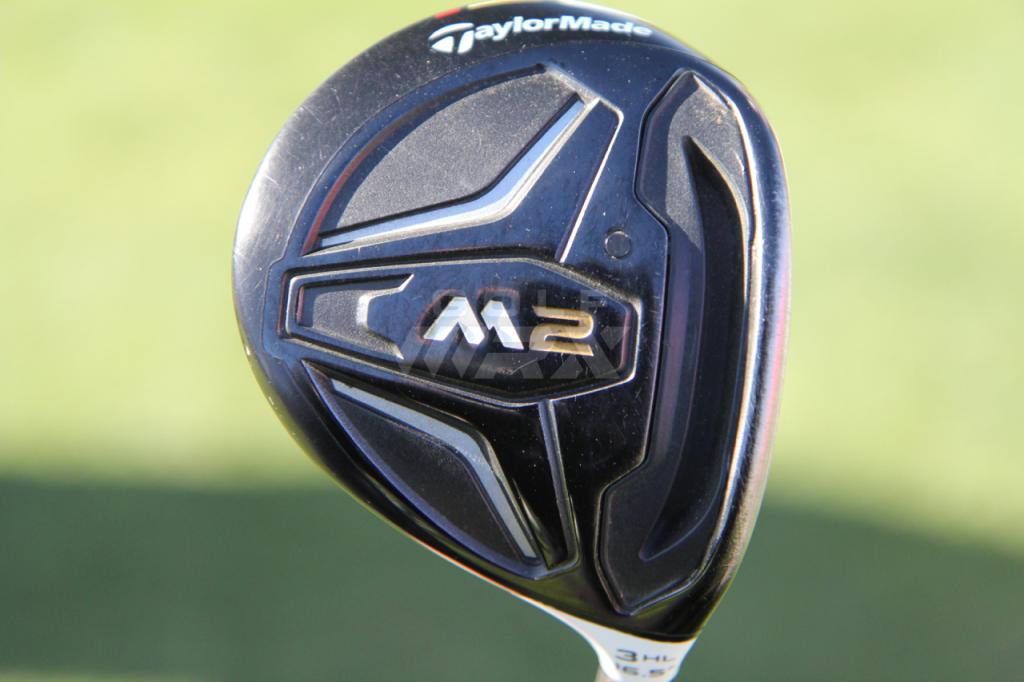
Fairway Wood: TaylorMade M2 HL (16.5 degrees) with Fujikura Pro Tour Spec 93 X
Sticking with the theme of established performers, Holmes opted for the TaylorMade M2 HL 3-wood. This club was, and still is, a legitimate classic. The “HL” or “High Launch” moniker for a 16.5-degree 3-wood might seem counterintuitive for a low-spin player, but it’s about versatility. That extra loft helps get the ball airborne from trickier lies or when needing to carry obstacles, while still offering plenty of distance. The M2 series was renowned for its low forward center of gravity (CG), which helps maintain ball speed and reduce spin, even with a slightly higher loft. This combination provides a bit more forgiveness and higher launch than a standard 15-degree 3-wood, without sacrificing too much distance.
“Driver: Callaway Epic Flash Sub Zero (10.5 degrees)
Shaft: Fujikura Pro Tour Spec 83 X”
And then there’s the Fujikura Pro Tour Spec 93 X shaft – an even heavier, stiffer profile than his driver shaft. This is pure control. At 93 grams and X-flex, this shaft is about keeping that clubhead on line, especially important for a 3-wood that might be used for tighter tee shots or crucial approaches into long par-5s. The stability here is paramount. For us mere mortals, a shaft this heavy and stiff would likely lead to lost clubhead speed and decreased launch, as it would be too difficult to load properly. But for a tour pro, it’s about eliminating dispersion.
Irons: Srixon ZU85 (3), Srixon Z-785 (4-PW) with True Temper Dynamic Gold Tour Issue S400
This is where Holmes’ bag gets really interesting and shows a clear preference for feel and workability over sheer forgiveness. The Srixon ZU85 3-iron utility is an excellent choice for a player who wants a forgiving long iron that still offers control. These utility irons from Srixon have consistently performed well in my testing, providing a good balance of launch, low-forward CG for distance, and enough spin to hold greens. It’s a powerful option that fills the gap between his 3-wood and his traditional irons beautifully.
The Srixon Z-785 irons (4-PW) are player’s cavity back irons. These aren’t super-game-improvement clubs. They offer a more compact head, thinner topline, and less offset than many of today’s distance-focused irons. While they offer a touch more forgiveness than a blade, they are designed for feel, workability, and precise trajectory control. In my fitting sessions, irons like the Z-785 are for golfers who consistently hit the center of the face and demand feedback and shaping ability. For a tour pro, this level of control around the green and from various lies is non-negotiable.
“Irons: Srixon ZU85 (3), Srixon Z-785 (4-PW)
Shafts: True Temper Dynamic Gold Tour Issue S400″
The True Temper Dynamic Gold Tour Issue S400 shafts are legendary in professional golf. The “Tour Issue” designation means they are even more tightly weight-sorted and quality-controlled than standard Dynamic Gold shafts. The S400 flex is essentially a slightly softer X-stiff – a very stout, heavy steel shaft (around 128 grams) known for its penetrating ball flight and excellent feel. They promote a lower launch and spin, which aligns perfectly with Holmes’ powerful swing. I consistently see golfers with steeper attack angles and faster swing speeds gravitate towards Dynamic Gold because of its stability and ability to prevent ballooning, especially in windy conditions. If you’re a high-speed player looking to knock down shot trajectories, these shafts are often the answer, assuming you can handle the weight and stiffness.

Wedges: Cleveland RTX 4 (50, 54, 60 degrees) with True Temper Dynamic Gold Tour Issue S400
Cleveland has long been a staple in tour wedges, and the RTX 4 was a fantastic offering. The sole grinds were exceptional, offering versatility for different shot types and turf conditions. Holmes’ 50-54-60 degree setup is pretty standard for a tour pro, providing consistent gapping and ample options around the greens. Those True Temper Dynamic Gold Tour Issue S400 shafts run through the wedges as well, maintaining consistent feel and weight from the irons right through the scoring clubs. This consistency in shaft feel is often underestimated but vital for touch and distance control on short shots.

Putter: Scotty Cameron 009M Tour Prototype
A Scotty Cameron 009M Tour Prototype is, for many, the holy grail of putters. These putters are custom-milled, often from German Stainless Steel (GSS), and offer unparalleled feel and feedback. The “009” refers to the classic Anser-style head shape, a design that has been copied countless times for a reason: it works. The “M” typically denotes a mid-milled face, providing a slightly firmer but incredibly consistent roll. This isn’t a putter you’ll find on a shelf; it’s a piece of art and precision engineering, chosen for its exact balance, toe hang, and the way it sits at address for that particular player.

Ball: Srixon Z-Star XV
The Srixon Z-Star XV is a tour-level ball designed for players with higher swing speeds. The “XV” in Srixon parlance always means a firmer feel and lower spin off the driver and long irons, while still maintaining ample spin around the greens thanks to its urethane cover. This fits perfectly with Holmes’ game profile – maximizing distance off the tee by reducing spin, while still having the control needed for approach shots and short game. I’ve found in my testing that golfers with swing speeds above 100 mph often see significant gains in total distance with an XV-style ball compared to softer, higher-spinning models, without sacrificing much feel.
“Ball: Srixon Z-Star XV”
Grips: Golf Pride Tour Velvet
Finally, the grips: Golf Pride Tour Velvet. This is the definition of “if it ain’t broke, don’t fix it.” The Tour Velvet is arguably the most popular grip in golf history for a reason. It offers a classic feel, good all-weather performance, and a consistent texture. There are fancier grips on the market, but the Tour Velvet simply works. It’s a reliable choice that allows a player to focus on their swing, not their grip. Sometimes, the most important gear decisions are the simplest.

The Rundown: What We Learn from J.B. Holmes’ Winning Bag
J.B. Holmes’ 2019 winning bag is a masterclass in fitting for a specific type of player – a powerful, aggressive ball-striker who prioritizes stability, control, and a penetrating ball flight. There’s very little “fluff” here. Each club, shaft, and even his golf ball choice is geared towards minimizing spin, maximizing energy transfer, and providing the feedback and workability demanded at the highest level.
The key takeaway for the everyday golfer? Don’t get caught up in the latest and greatest without understanding your own swing. Holmes’ bag shows the power of matching equipment to your unique swing characteristics. Those heavy, stiff shafts aren’t for everyone, but for him, they were vital. His player’s irons offer control, not necessarily maximum forgiveness. This isn’t a setup for the high-handicapper looking to improve their slice. This is for the golfer who already boasts high clubhead speed, consistent contact, and needs equipment to dial in precision and flight.
The lesson from this vintage win is clear: innovation brings incremental gains, but the core principles of matching equipment to player and achieving optimal launch conditions remain timeless. Performance on the course isn’t just about the newest tech; it’s about the right tech for *you*.
