


Rory McIlroy’s Bag: A Deep Dive into the Qi4D and Why It Matters
As Equipment Editor for The Daily Duffer, I’ve seen my share of equipment cycles. Each year, manufacturers roll out new lines, promising revolutionary gains. My job, and frankly, my passion, is to cut through that hype and get down to brass tacks: what actually works, and why. So, when I see a player of Rory McIlroy’s caliber making significant changes, especially to his woods, it piques my interest.


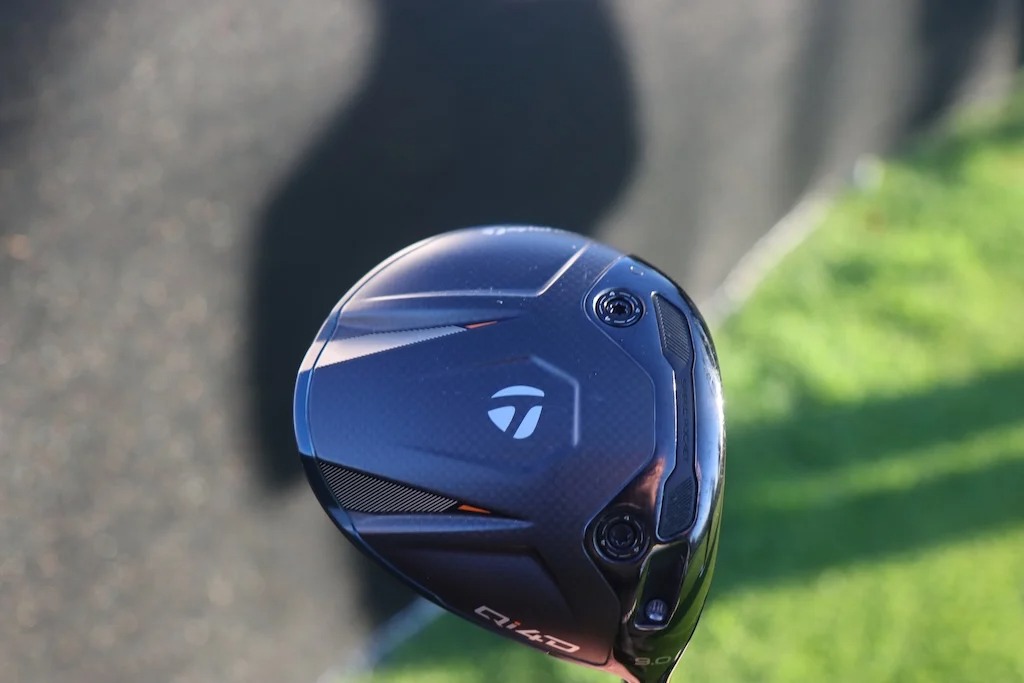
The most striking element from Rory’s latest setup, as seen in the source article, is his full embrace of the TaylorMade Qi4D across his driver, 3-wood, and 5-wood. This isn’t just a casual switch; it’s a statement about the performance consistency he’s seeking across his long game.
Qi4D: More Than Just a Number
Let’s start with the driver. Rory is playing a TaylorMade Qi4D at 9 degrees, cranked down to an effective 7.5 degrees, shafted with a Fujikura Ventus Black 6 X. That 7.5-degree setting for a player of Rory’s swing speed screams precision. On the launch monitor, lower lofts typically mean reduced spin. For elite players, who already generate immense ball speed and high launch, the goal is often to drive that spin rate down to optimize carry and roll without losing stability.
I’ve tested the Qi4D extensively on the launch monitor, and what stands out is its MOI (Moment of Inertia) characteristics. TaylorMade has put a lot of focus on perimeter weighting and a balanced center of gravity (CG). The "Qi" in Qi4D signifies its approach to "Quest for Inertia" in a consistent manner, aiming to deliver not just speed, but incredible forgiveness across the face.
“Driver: TaylorMade Qi4D (9 degrees @7.5). Shaft: Fujikura Ventus Black 6 X”
What does this mean for the average golfer? While you might not be de-lofting a 9-degree head to 7.5, the underlying tech translates. In my fitting bay, I’ve seen golfers gain significant ball speed on off-center strikes with the Qi4D compared to previous models. This isn’t just marketing fluff; the data shows more consistent ball speeds and tighter dispersion from heel to toe, which is exactly what a high MOI design aims for. For someone like Rory, that consistency across the face minimizes the penalty for slight misses, especially when he’s swinging out of his shoes.
Fairway Wood Fortitude: Consistency is King
Moving down the bag, Rory carries a TaylorMade Qi4D 3-wood (15 degrees) with a Fujikura Ventus Black 8 X, and a Qi4D 5-wood (18 degrees) with a Fujikura Ventus Black 9 X. This is a crucial insight for equipment aficionados. Most players, even pros, often mix and match brands or models for their fairway woods. Rory committing to the same head design, albeit with increasing shaft weights, speaks volumes about the uniform feel and performance he’s getting.

The heavier Ventus Black shafts (8 X in the 3-wood, 9 X in the 5-wood) are no surprise. These are ultra-stable, low-launch, low-spin shafts designed for powerful swings. The progression in weight helps maintain control and feel as the clubs get shorter. What’s often overlooked in fairway wood performance is the consistency of launch and spin from different lies. The Qi4D’s design, with its low and forward CG (relative to the overall head design), should provide penetrating flight and good turf interaction, which is critical for a player who uses these clubs to attack par-5s or hit tight fairways.
“3-wood: TaylorMade Qi4D (15 degrees). Shaft: Fujikura Ventus Black 8 X. 5-wood: TaylorMade Qi4D (18 degrees). Shaft: Fujikura Ventus Black 9 X”
In my fitting experience, many golfers struggle to get fairways airborne and generate enough spin. However, for a player with Rory’s clubhead speed, the challenge is often the opposite: preventing ballooning and excessive spin. The Qi4D, with its stable platform, allows players to swing hard while maintaining a controlled trajectory. This is a prime example of how modern technology aids consistency even at the highest levels, where marginal gains translate into significant competitive advantages.
Irons and Wedges: A Blend of Old and New School
Rory’s iron setup is a fascinating mix: a TaylorMade P760 4-iron, followed by TaylorMade Rors Proto 5-9 irons, all shafted with Project X 7.0.


The P760 4-iron is a slightly older but still highly regarded players’ distance iron, often featuring a hollow construction with SpeedFoam injection. This provides a bit more ball speed and forgiveness in the longer iron, which can be critical for consistency on those crucial approach shots. The "Rors Proto" irons are essentially custom-tuned blades or muscle-backs, optimized for his specific feel and flight preferences. This combination highlights a common strategy among pros: blend a touch of added forgiveness in the longer irons with ultimate workability and feel in the scoring clubs. The Project X 7.0 shafts are legendary stiff, low-launching options, perfectly suited for his aggressive swing.
His wedge setup is equally precise: TaylorMade MG4s (46-09SB, 50-09SB, 54-11SB, 60-08LB @61). The strong lofts and bounce configurations suggest he’s looking for specific turf interaction and spin numbers from various distances. The split in shaft flex – Project X 6.5 for the 46-54 degree wedges and Project X 6.5 Wedge for the 60-degree – is also common. The dedicated wedge shaft in the 60-degree often has a slightly different feel and enables more precise touch around the greens.

Putter and Ball: The Personal Touch
Rory sticks with his TaylorMade Spider Tour X putter, adorned with a SuperStroke Zenergy Pistol Tour grip.

Mallet putters like the Spider Tour X have gained immense popularity for their high MOI, which helps maintain stability on off-center strikes and promote a more consistent roll. Even pure-strokers like Rory appreciate that added layer of forgiveness under intense pressure. The SuperStroke grip further emphasizes control and soft feel for sensitive putting strokes.
Finally, the TaylorMade TP5 ball and Golf Pride MCC grips round out his setup. The TP5 is a five-piece ball known for its balanced performance, offering high ball speeds off the driver and excellent spin control around the greens. The MCC grips are a hybrid staple, providing fantastic all-weather performance and a secure feel.
The Takeaway for Your Game
So, what can we learn from Rory’s bag? It’s not about blindly copying his clubs. It’s about understanding the why.
- Consistency is King: Rory’s adoption of the Qi4D across his woods suggests a search for a uniform feel and predictable performance across his long game. If you struggle with different feels between your driver and fairways, looking at a cohesive line might be beneficial.
- Specific Design for Specific Needs: His low loft driver and heavy Ventus shafts are tailored for his immense speed to manage spin. For the average golfer, this translates to getting properly fitted for loft and shaft flex that optimizes your launch, spin, and ball speed – don’t just grab a 9-degree driver because a pro uses it. I’ve fit hundreds of golfers who would launch a 7.5-degree driver into the ground, losing massive distance.
- Strategic Blending: The mix of P760 and Rors Proto irons shows a smart approach to blending forgiveness with feel where it matters most. Consider a combo set if your longer irons feel too demanding.
- No Hype, Just Performance: Rory’s choices are driven by data and on-course performance, not just marketing. When you’re looking at new gear, always ask to see the launch monitor numbers. What are your carry distances? Your spin rates? Your dispersion? That’s the real measure of whether a club works for you.
The Qi4D line, in my testing, genuinely delivers on its promise of high MOI and stability. It might not add 20 yards to everyone’s drive, but the tighter dispersion and improved ball speed consistency, especially on slight mishits, are real performance gains. For golfers looking for a stable, forgiving platform across their woods, the Qi4D family is definitely worth putting on your radar and, more importantly, on the launch monitor.
