

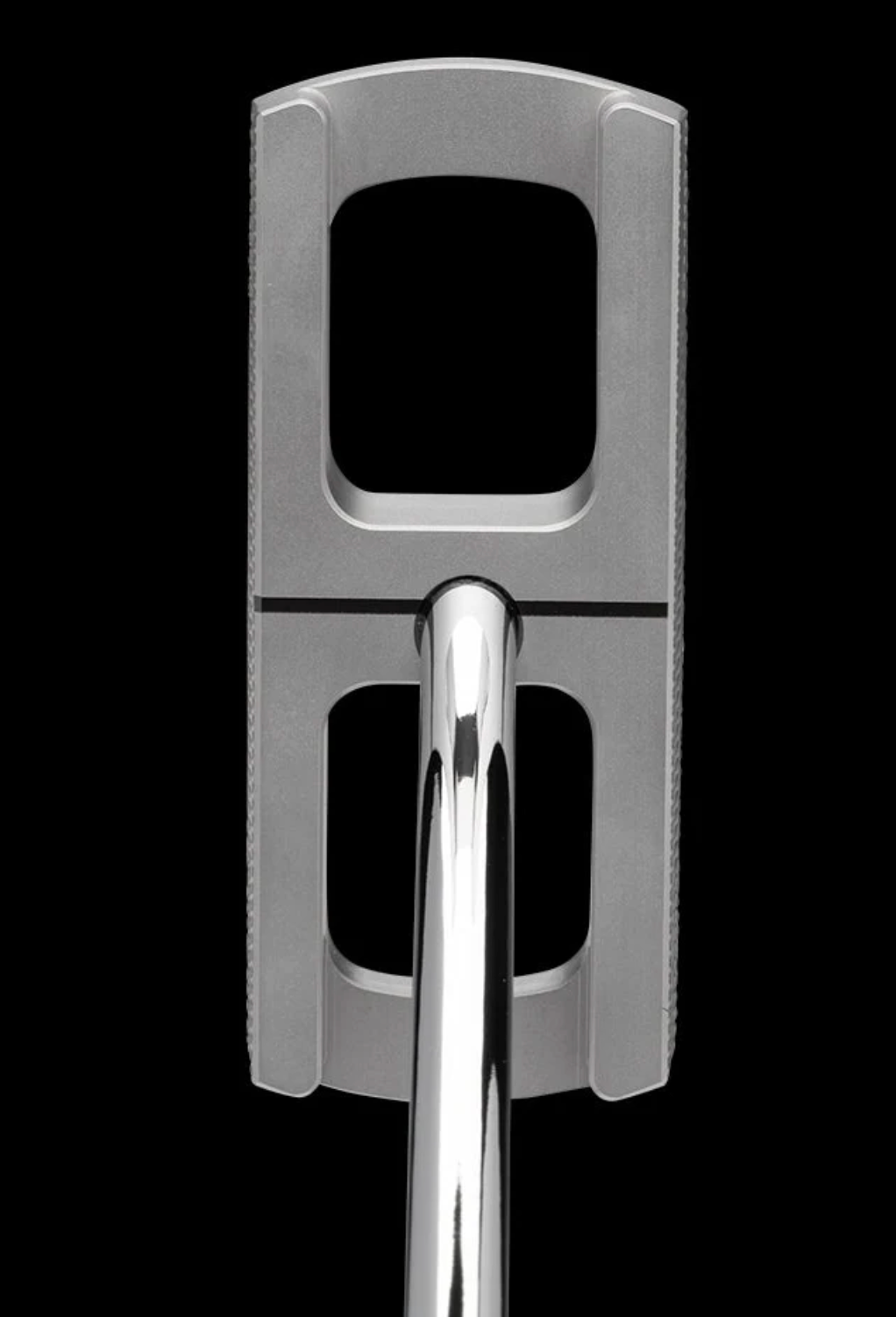

As a teaching professional with over 15 years of experience, I’ve seen countless innovations in golf equipment designed to help us play better. From drivers that launch the ball further to wedges that spin it closer, every piece of gear has its purpose. But when it comes to putting, where touch, feel, and precision are paramount, equipment choices often spark lively debates. Recently, something truly caught my eye in The Daily Duffer forums: the discussion around Bell’s onset center shaft putters.
Our forum members were buzzing about a rather unique design, with WRXer ‘ARSM1932’ kicking off the thread with this observation:
“I just found this rather strange looking putter design from Bell Putters earlier, the Bell VIII 385 is labelled as an onset two-way face balanced mid mallet putter suitable for SBST putting strokes which is available in both standard (72) and upright (79) degree lie angle options.”
This immediately piqued my interest. An “onset two-way face-balanced mid mallet putter” designed for an SBST (straight back, straight through) stroke? Let’s break down what that means for your putting game and how a putter like this might fit into your arsenal.
First, let’s talk about the key features mentioned: “onset” and “center shaft.” In traditional putter design, an offset creates a slight bend backward in the hosel, positioning the leading edge of the putter face slightly behind the shaft. This helps many golfers keep their hands ahead of the ball at impact, promoting a forward press and solid contact. An “onset” design, as seen in the Bell putter, reverses this. The shaft appears to enter the head slightly toward the target, or more in line with the leading edge. The “center shaft” means the shaft enters the putter head in the middle of the face, rather than towards the heel.
Why would a design like this appeal to some golfers? For players with a true straight back, straight through stroke, a center-shafted, face-balanced putter can feel incredibly stable. The weight distribution is even, reducing the tendency for the putter face to open or close excessively during the stroke. The “onset” could be beneficial for those who unconsciously push the ball or struggle with impact consistency, potentially promoting a more direct and repeatable impact.
One of our members, mogc60, brought up a great point about adjustability:
“I actually like it. They have some nice putter heads but the 72* lie angle keeps me from ever trying one. Center shafts should be on a post so they can be adjusted for lie. Just my opinion.”
This highlights a critical aspect of putter fitting: lie angle. The Bell VIII 385 is available in both standard (72°) and upright (79°) lie angle options. A correct lie angle ensures the sole of your putter sits flat on the ground at address, preventing the toe or heel from lifting. If the lie angle is too flat for you, you might pull putts; too upright, and you could push them. While the idea of an adjustable post is intriguing, having two distinct options *is* a step in the right direction. When I fit my students for a putter, we always pay close attention to this detail because it directly impacts your ability to start the ball on your intended line.
Finding Your Stroke: Is a Center Shaft Onset Putter For You?
You might be wondering if a putter with this unique combination of features could help your game. In my experience, the best putter for you is the one that allows you to consistently hit your start line and control your distance with confidence. If you struggle with:
- Consistently striking the ball in the center of the face.
- Maintaining a square face at impact, especially if you have a straight back, straight through stroke.
- Over-manipulating the clubface with your hands.
Then a putter like this might be worth exploring. The “face-balanced” aspect is particularly appealing for golfers who don’t have a strong arc in their putting stroke. You can test if you have an SBST stroke by balancing your putter on your index finger – if the face points straight up, it’s face-balanced. If it hangs with the toe pointing down, it’s toe-balanced and designed for an arcing stroke.
Practice Drills to Enhance Your Putting Precision
No matter what putter you use, consistent practice is key. Here are a couple of drills you can try to improve your stroke and take advantage of a stable putter design:
Drill 1: The “Gate” Drill for Strike and Path
This is a classic for a reason. Place two tees about an inch wider than your putter head, just beyond the heel and toe, creating a narrow gate. Position a third tee about 6 inches in front of your putter face, directly on your intended line to the hole. Your goal is to swing the putter head through the gate without touching either of the side tees and hit the ball through the front gate. This drill immediately gives you feedback on your putter path and strike. If you consistently hit the outer tees, you might be taking the putter outside; if you hit the inner tees, you’re taking it inside.
Drill 2: The “Line It Up” Drill for Lie Angle and Squareness
If you’re testing new putters, or just want to check your current setup, this drill is fantastic for understanding lie angle and face alignment. Find a perfectly flat section of the practice green. Place a golf ball with a fresh line on it on the ground. Address the ball with your putter, making sure the sole is sitting flat. Now, without moving your head, take a practice stroke. If the putt rolls perfectly end-over-end along the line, your lie angle is likely correct, and you’re making square contact. If the ball wobbles or spins unevenly, it indicates an issue with your lie angle or impact location. Experiment with your stance and hand position to see how it affects the roll. If your putter has specific lie angle options like the Bell VIII 385 (72° or 79°), this drill helps you determine which might be better for you.
Remember, your putting stroke is unique to you. While “strange looking” putters like the Bell’s onset design might seem unconventional at first, the golf equipment industry is constantly innovating to help us find something that truly optimizes our performance. As Golfingfanatic noted, it reminds them of “a Bobby Grace Switch Hitter or a Ping 1A – interesting!” There’s a long history of unique putter designs, and many have found their way into the hands of champions. Don’t be afraid to try something different if it helps you roll the ball better. After all, the feeling of draining a long putt is one of the best in golf, and I believe every golfer can achieve that feeling with the right equipment and a dedicated practice routine.
