

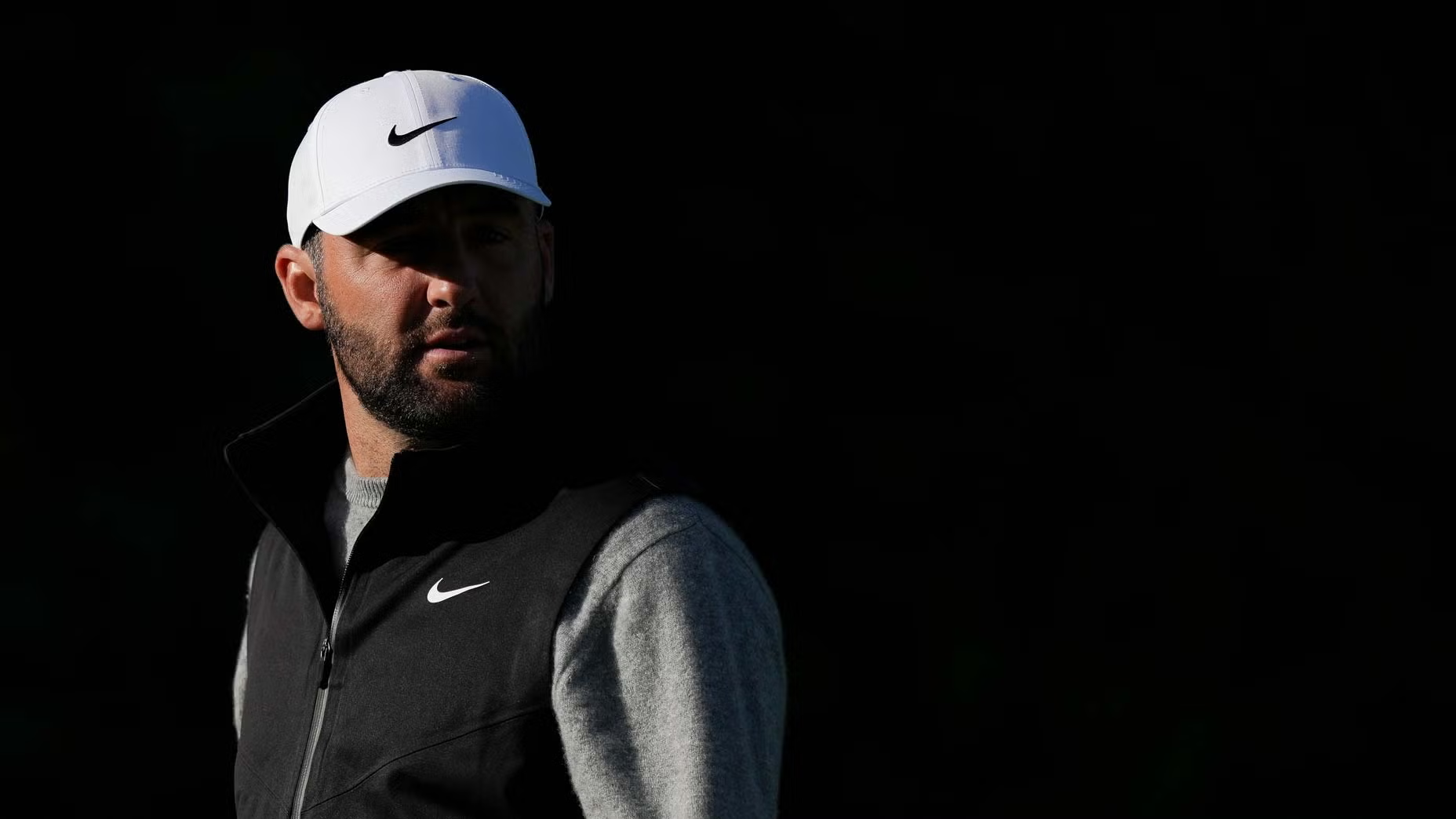

There’s something uniquely captivating about watching a master at work, even when they’re not at their best. As a lifestyle editor, I’m always looking for the human story behind the headlines, the lessons we can all glean from the world’s most elite athletes. And this past week at Riviera, Scottie Scheffler, the World No. 1, gave us a masterclass not in perfection, but in perseverance.
Initially, the headlines were grim: “What the hell is Scottie Scheffler doing in last place?!” It’s a question many of us weekend warriors have muttered under our breath on the back nine. But what truly struck me, and what I believe offers invaluable insight for every golfer—from the club champion to the casual Sunday player—is not the slump itself, but the unwavering commitment to clawing his way out.
The Anti-Lead and the Power of the Reset
Imagine finding yourself at the bottom of the leaderboard, literally in last place. For most of us, that might mean packing it in, blaming the conditions, or just mentally checking out. But for Scottie, even amidst a frustrating start, the resolve never wavered. The article highlights his journey: “Scheffler’s journey to last place was more complicated than bad golf. When a rain-delayed day finally halted play midway through the first round, Scheffler was only halfway through his first 18 at the Genesis. The horn sounded about a half-hour after Scheffler made double bogey at No. 8 and just minutes after bogey at No. 10. At the time, Scheffler was five over par, T71 in a field of 72, and stuck there from sundown Thursday to sunup Friday.”
This “anti-lead” scenario offers a powerful lesson in resilience. How many times have you had a rough start to a round? A three-putt, an errant tee shot, a missed chip? It’s easy to let those early blips define the entire day. But Scottie’s morning restart, despite the cold and the humbling position, was a blank slate. He showed up, warmed up, and committed to finding his game. It reminds us that every shot, every hole, and every practice session offers an opportunity for a reset. Leave the last bad shot behind, breathe, and focus on the next.
Beyond the Scorecard: Cultivating Mental Toughness
What truly sets players like Scheffler apart, especially on days when the swing isn’t quite clicking, is their mental game. The article beautifully illustrates this:
“I may not be, like, the flashiest player, but I feel like my mind has always been my greatest tool, and I just try to use that to my advantage.”
This is something we can all integrate into our golf lifestyle. It’s not about having a perfect swing every time; it’s about having a resilient mind. When I hit a less-than-stellar shot, I try to channel that Scheffler-esque “commitment to commitment.” That means no dwelling, no letting frustration bleed into the next shot. It’s about a 30-second huddle with your inner caddie, a quick mental reset, and then full focus on the task at hand. This isn’t just for the course, either; this level of mental discipline can benefit us in our careers, our personal lives, and any challenge we face.
“One thing he has borrowed from Tiger Woods is a commitment to commitment. There is no pack-it-in option.”
This unwavering commitment is a powerful ethos. It’s not about being emotionless, but about channeling those emotions into productive action. We saw Scheffler “storm his way to the eighth tee and collapsed into a chair in frustration” at one point. He’s human! But the key is that he then played “essentially perfect golf for the next 40 minutes.” It’s about acknowledging the frustration, then actively choosing not to let it dictate your performance.
For us, this might look like:
- **The Breath Before the Swing:** Take a deep breath before every shot, regardless of the previous one.
- **Micro-Goals:** Instead of focusing on the entire round, focus on making a perfect swing on this specific shot.
- **Positive Self-Talk:** Replace negative thoughts with empowering statements. “I’ve hit this shot well before,” or “I’m capable of recovering.”
The Grind for Greatness (and a Made Cut)
The image of Scheffler finishing a round with a fist pump, 12 shots off the lead, after a nervy par putt, truly captured the essence of his character. It wasn’t for a tournament win, but for a made cut and to keep his remarkable streak of consistency alive. “The fist pump, plus the ferocious high five he shared with Scott, showed a man clearly not too cool to grind for a made cut. All that to crack the top 50 in a 72-player field. All that to keep the streak alive. All that to climb from the basement to the first floor.”
This reminds us that every small victory is worth celebrating. Whether it’s finally breaking 90, making a challenging par save, or simply enjoying the walk and the camaraderie, the grind is what makes golf so rewarding. It’s a testament to showing up, putting in the effort, and respecting the game, no matter the score.
Scottie’s honesty post-round also struck me. He admitted not having “cracked Riviera’s code” and confessed to a “weird relationship” with the course. Even the best face challenges and have courses that “give them fits.” It’s a humbling reminder that golf demands continuous learning and adaptation – a mindset that leads to longevity and enjoyment in any pursuit.
“I don’t know, this place and I have a weird relationship. I feel like I can play so well out here and I just haven’t yet,” he said.
So, what can we take from Scottie Scheffler’s Riviera experience? That even when things go sideways, there’s always an opportunity to reset and commit to the next step. That mental fortitude is just as crucial as physical prowess. And that the sheer joy of the game, the grind, and the small triumphs along the way are what truly make golf a lifestyle worth living. Embrace the challenge, learn from the setbacks, and celebrate every fist pump, no matter how far off the lead you might be.
