


Hello, Daily Duffer readers! Sarah Chen here, your Golf Instruction Editor. Today, I want to talk about something crucial that often gets overlooked until frustrations reach a boiling point: putting. It’s the part of the game where even the slightest miscalculation can turn a great approach shot into a disappointing bogey. We’ve all been there, right?
I see many high-level amateurs and even professional golfers struggle with consistency on the greens. They might spend hours on the range perfecting their swing, but dedicating significant, focused time to putting often takes a backseat. Yet, putting accounts for roughly 40% of your strokes in a round!
One common mistake I observe is golfers focusing solely on the “outcome” – whether the ball goes in – rather than the “process” – how they are actually stroking the ball. It’s like trying to bake a cake just by looking at a picture of a finished cake, without understanding the steps or ingredients. To truly improve your putting, you need to break down your stroke and understand what consistency feels like and looks like.
The Foundation: Setup and Alignment
Before you even think about moving the putter, your setup and alignment are paramount. Imagine trying to hit a target if you’re not even pointing in the right direction! You want to create a stable base that allows your shoulders to rock naturally, driving the putter head. Here’s what I look for:
1. Eyes Over the Ball: Stand slightly bent at the waist so your eyes are directly over or just inside the ball. This helps you track the putt line accurately. You can check this by dropping a ball from between your eyes – if it hits your ball, you’re in a good position.
2. Square Shoulders and Hips: Your shoulders and hips should be parallel to your target line. Many golfers unknowingly open or close their stance, which immediately sets them off line. A simple way to check this on the practice green is to place two alignment sticks down – one along your target line and one along your feet – then step away and observe.
3. Relaxed Grip: Hold the putter firmly enough to maintain control, but not so tightly that you introduce tension into your wrists and arms. A good way to gauge this is to hold the putter gently and feel the weight of the club head. If you feel like you’re squeezing it to death, ease up! This relaxed grip allows for a smoother, more pendulum-like stroke.
“At GolfWRX, we are a community of like-minded individuals who all experience and express our enjoyment of the game in many ways.”
This sense of community is powerful, and I believe we can apply that spirit to our shared journey of improving our golf game, especially on the greens. Think of me as part of that community, here to offer guidance.
The Pendulum Stroke: Consistency is Key
Once your setup is dialed in, it’s time to focus on the stroke itself. My philosophy centers around a smooth, consistent pendulum motion driven by your shoulders, with minimal wrist breakdown. The length of your backstroke corresponds to the length of your forward stroke, dictating the distance the ball travels.
Here’s a common pitfall: using too much hand and wrist. When you introduce these smaller muscles, you lose stability and face control, leading to inconsistent contact and directional misses. The larger muscles of your shoulders provide a much more stable and repeatable motion.
Actionable Drills for Better Putting
Here are a couple of drills you can implement immediately to feel and build a better putting stroke:
Try this: The Gate Drill
- Place two tees on either side of your putter head, just wide enough for your putter to swing through without touching them. The tees should be positioned where your putter head is at impact.
- Place a third tee about 6-8 inches in front of your ball, directly on your intended target line. This tee acts as a target to roll the ball over.
- Now, practice making putts, focusing on swinging the putter through the “gate” created by the two tees and rolling the ball over the forward tee. This drill gives you immediate feedback on whether your putter face is square at impact and if you’re maintaining a consistent path. If you hit a tee, you know you’ve either opened or closed the face or had an inconsistent path.
Here’s a drill: The One-Arm Putting Drill
- This drill helps you feel the pendulum motion and eliminates wrist action. Hold the putter with only your dominant hand, keeping your wrist locked.
- Make short putting strokes (2-4 feet) focusing on moving the putter head solely by rocking your shoulder.
- Now switch to your non-dominant hand and repeat. You’ll feel how much your shoulder muscles need to engage.
- Finally, put both hands on the club and try to replicate that same shoulder-driven motion. This really highlights the connection between your shoulders and the putter head, promoting a unitized stroke.
“It’s that sense of community that drives day-to-day interactions in the forums on topics that range from best driver to what marker you use to mark your ball. It even allows us to share another thing we all love – buying and selling equipment.”
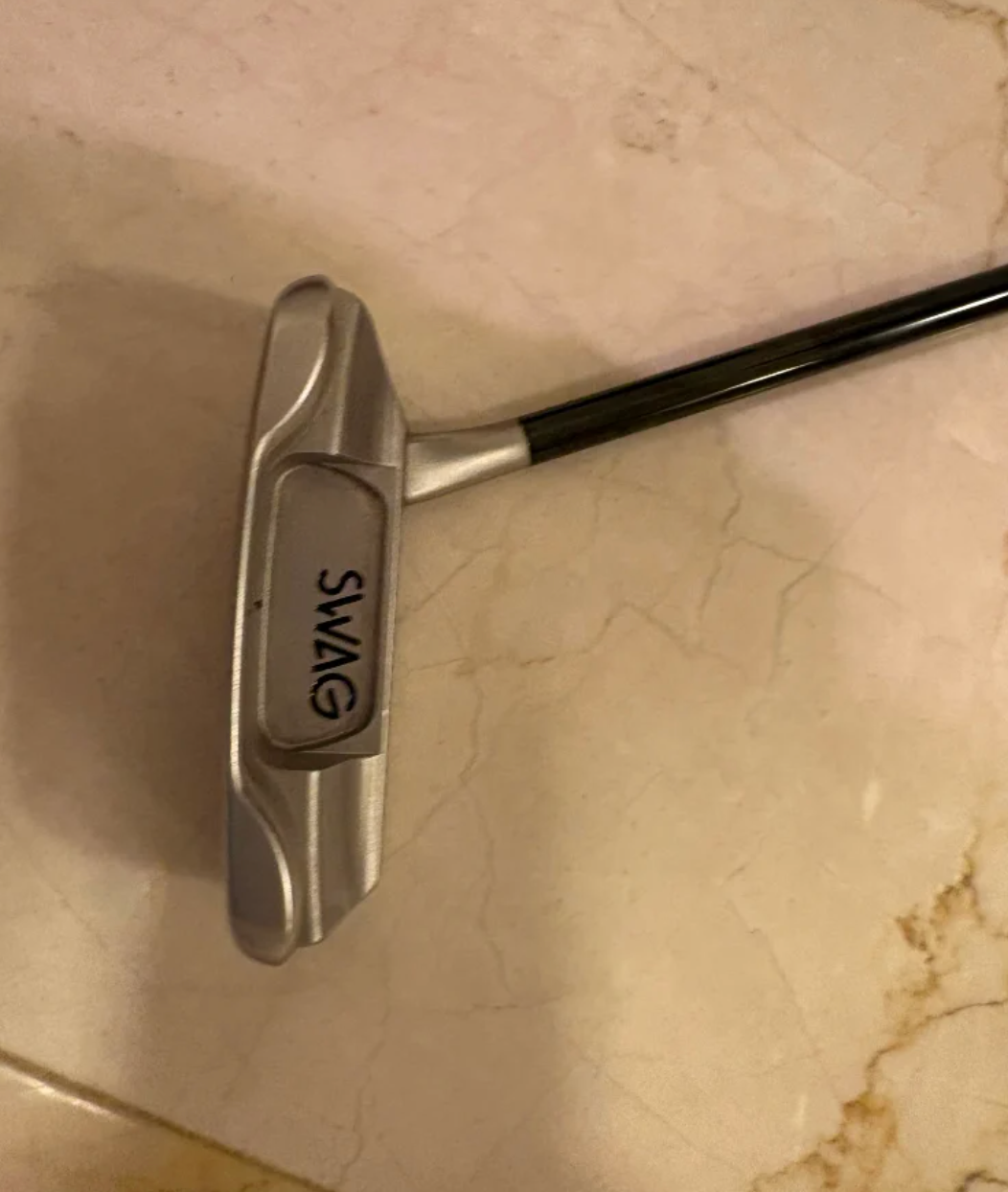
Speaking of equipment, sometimes finding the right putter can make a difference. While no putter can fix a fundamentally flawed stroke, one that feels good in your hands and looks right to your eye can boost your confidence. I noticed a recent listing in the GolfWRX BST forum:
From the listing: “SWAG Savage One, 34”, head cover…$275”
A “SWAG Savage One, 34”” for $275 could be a great find for someone. Just remember, the putter is a tool, and like any tool, its effectiveness depends on the skill of the user. Focusing on your technique first will make any putter perform better.
Practice with Purpose
In my teaching experience with tour players and weekend golfers alike, one of the biggest differentiators is the quality of their practice. Don’t just hit putts aimlessly. Practice with a purpose, using drills, and challenging yourself. Measure your progress. Can you make 10 putts in a row from 3 feet? How about 5 from 5 feet? Set targets.
Every putt is an opportunity to improve. By focusing on your setup, developing a consistent stroke, and practicing with dedicated drills, you’ll start to see more putts dropping. The frustration will lessen, and the joy of a well-rolled putt finding the bottom of the cup will become an increasingly familiar feeling. You absolutely have what it takes to become a better putter. Let’s get to work!
