

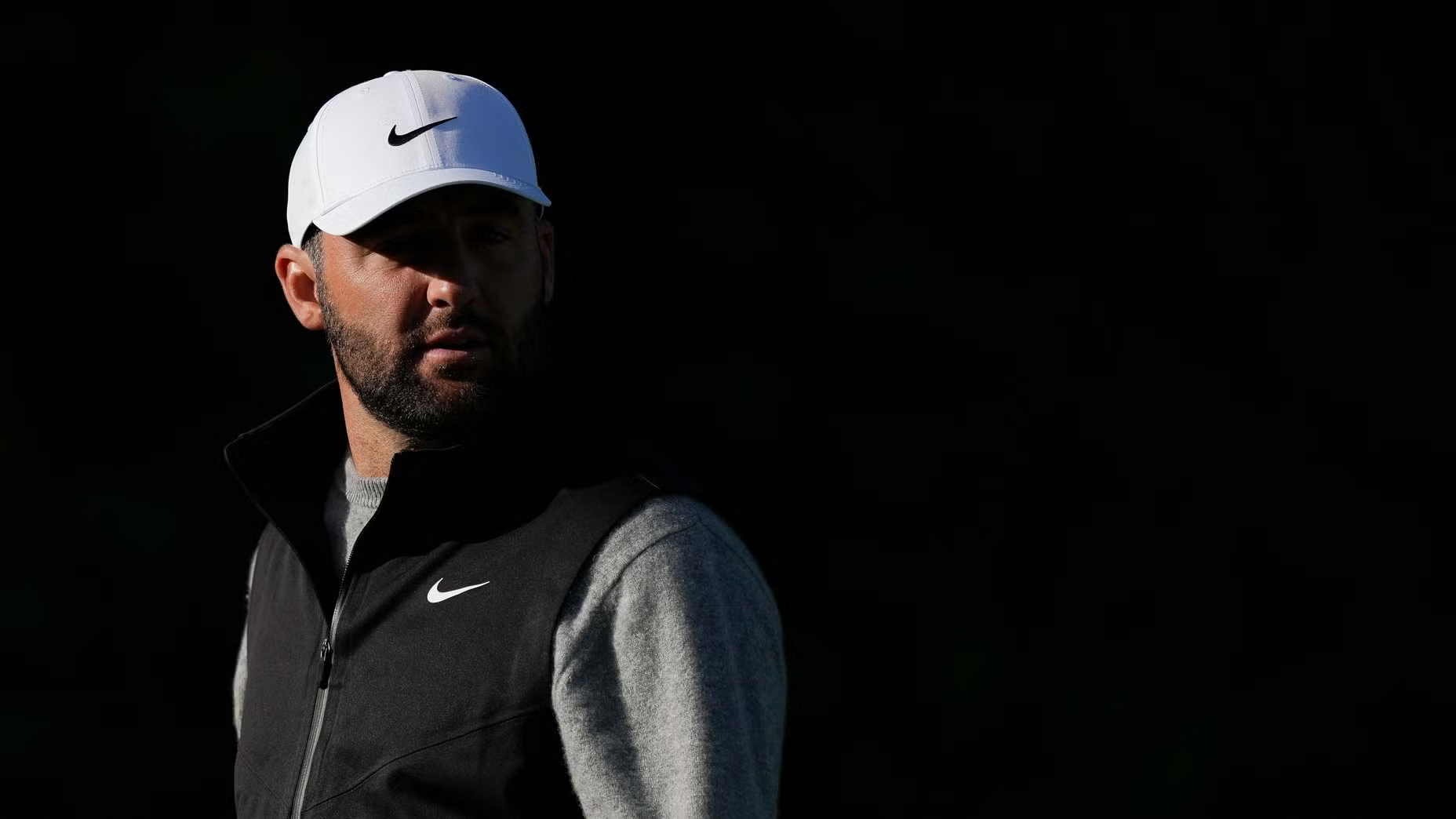

As a golf instructor for over 15 years, I’ve had the privilege of working with players at every level, from weekend warriors to tour professionals. One thing I’ve learned is that even the best in the world face challenges, and how they respond to those moments can teach us all valuable lessons. The recent Genesis Invitational, and specifically Scottie Scheffler’s journey through it, provides a perfect example of mental resilience and the importance of grinding for every shot.
Scottie Scheffler, the World No. 1, isn’t someone you expect to see struggling. Yet, the Genesis Invitational saw him in a position that would rattle most golfers: dead last. After a rain-delayed start, he found himself five over par through ten holes and firmly at the bottom of the leaderboard. This isn’t a typical scenario for a player with his track record, but what happened next is something every golfer can learn from.
The Power of Persistence: Even When Things Go Wrong
It’s easy to get discouraged when a round starts badly. Maybe you hook your first tee shot, chunk an approach, or miss a few short putts. For many amateurs, this can snowball into a completely derailed round. But Scottie’s reaction, even when looking “miffed” as the article describes, wasn’t to give up. It was to regroup and fight for every shot, every par, every birdie. This dedication is a hallmark of elite players.
“The putt told a story about the day, about the course, about the man. But mostly it ended a strange afternoon that began with an even stranger question: What the hell is Scottie Scheffler doing in last place?!”
This “strange” situation highlights a crucial mental aspect of golf: your attitude on the course. Scottie, despite being 12 shots off the lead, finished his first round with a fist pump after a critical seven-footer for par. That’s not just relief; that’s a celebration of a well-executed shot under pressure, and a testament to his commitment.
Actionable Drills for Mental Fortitude and Course Management
So, how can you adopt this “never give up” mindset and improve your play, even when you’re not having your best day?
1. The “Next Shot” Reset Drill
Just like Scheffler, who “completely resets before the next shot,” you need to compartmentalize. After a poor shot, don’t dwell on it. In my teaching experience, the best players manage their emotions incredibly well. Here’s how to practice it:
- **Try this:** After every shot on the practice range or course, whether good or bad, take a full 10-second pause. During this pause, physically turn away from the target, take a deep breath, and pick a visual cue – maybe a specific cloud or a tree. Let go of the last shot completely. Only turn back to the target when you feel truly ready to commit 100% to the next shot. This helps break the cycle of negative thoughts.
2. The “Grind for Par” Drill
Scottie’s fight for a par putt after an uncharacteristic approach shot, and later chipping short of the green, shows the importance of scrambling. Even from difficult positions, he found a way to save par. This is where rounds are truly saved.
“The fist pump, plus the ferocious high five he shared with Scott, showed a man clearly not too cool to grind for a made cut.”
Scottie Scheffler’s struggles are still a relative term. Despite his Friday morning scoring woes at the Genesis Invitational, he still showed some 🔥. pic.twitter.com/f2sF5kZq3M
— GOLF.com (@GOLF_com) February 16, 2024
- **Here’s a drill:** On the practice green or even a short game area, intentionally hit a ball into a tricky spot – maybe just off the green in a fluffy lie, or in a shallow bunker. Now, rather than just hitting a practice chip, treat it like an actual shot to save par. Go through your full routine, commit to a target, and focus intently on execution. Repeat this for 10-15 minutes, always with the goal of saving an imaginary par. This builds confidence in your short game under pressure.
3. Embracing the Challenge: “Commitment to Commitment”
Scottie Scheffler has openly borrowed from Tiger Woods’ playbook, specifically a “commitment to commitment.” This means once you’ve chosen your shot, you commit 100% to it, no second-guessing mid-swing.
“One thing he has borrowed from Tiger Woods is a commitment to commitment. There is no pack-it-in option.”
Still early, but he’s making moves!💪@ScottieNIM | pic.twitter.com/D8nL2WcR5K
— PGA TOUR (@PGATOUR) February 16, 2024
- **Try this:** During your next practice session, before every full swing shot, verbally state your target and your intended shot shape (“I’m hitting a slight draw to the left side of the fairway”). Then, and only then, step up and execute the shot without any hesitation. If you find yourself having second thoughts, step away, reset, and re-commit. This practice builds decisiveness and reduces internal doubt, leading to more confident swings.
The Scheffler Mindset: Your Greatest Tool
Scheffler himself stated, “I may not be, like, the flashiest player, but I feel like my mind has always been my greatest tool, and I just try to use that to my advantage.” This is a powerful statement. Your mental game, your ability to focus, adapt, and persevere, is just as important as your swing mechanics.
Even though Scheffler struggled with scoring early in the Genesis, he rallied strongly in his previous events, with impressive rounds of 65-67-64 at the WM Phoenix Open and 66-67-63 at the AT&T Pebble Beach Pro-Am. This consistent fight back from slower starts underscores his mental strength and resilience. His ability to turn a challenging situation around is truly inspiring.
So, the next time your round isn’t going as planned, remember Scottie Scheffler. Don’t let a few bad shots define your entire day. Instead, embrace the challenge, focus on the very next shot, and commit to grinding until the ball is in the hole. You might just surprise yourself with what you can achieve, even when you’re “sleeping on the anti-lead.” Anyone can improve with the right mindset and proper instruction, and that includes you!
“>
