

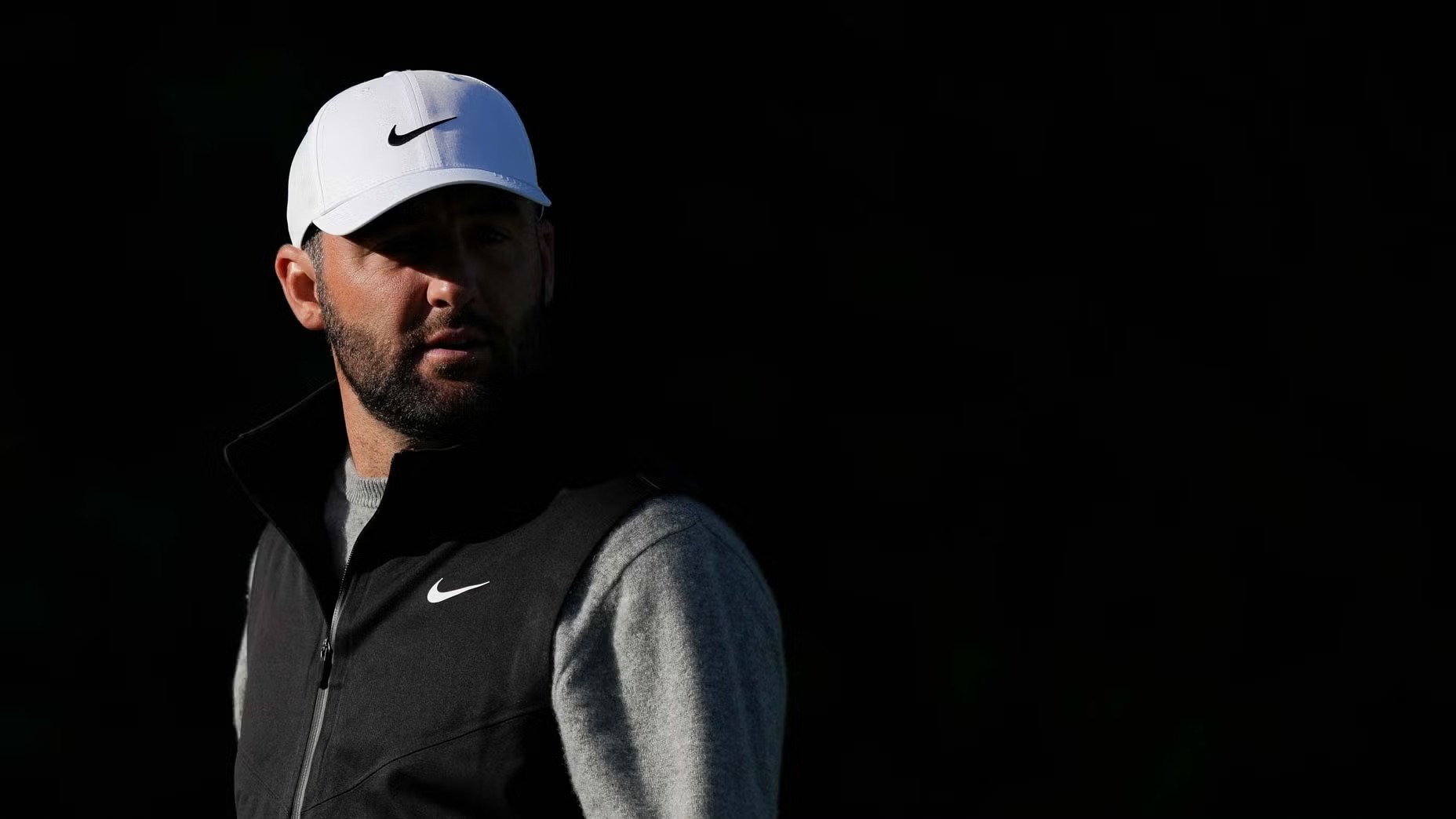

We’ve all been there, right? That round where everything feels off. The crisp morning air turns into a dense fog of frustration, your swing feels alien, and every putt seems to have a personal vendetta against the cup. It’s enough to make even the most seasoned golfer question their life choices. But what if I told you that even the world’s best, like Scottie Scheffler, face these very same struggles? And more importantly, what if their response to adversity holds the key to improving our own golf lives, both on and off the course?
I recently followed the Genesis, where even the seemingly invincible Scottie Scheffler found himself in an unfamiliar position: last place. Now, for us regular folks, “last place” might be a familiar, if unwelcome, acquaintance. But for the World No. 1, it was an anomaly, a head-scratcher that captivated golf fans and, admittedly, me too. This wasn’t just about scores; it was about the human spirit, the mental game, and the sheer grit it takes to keep going when golf (and life) throws you a curveball.
Watching Scheffler navigate this challenge wasn’t just about witnessing a comeback; it was a masterclass in resilience—a vital ingredient for any golfer, regardless of handicap. It’s a reminder that golf, much like life, is a series of ups and downs, and how we respond to those “downs” truly defines us.
What struck me most was his unwavering commitment, even when the scoreboard looked bleak. He wasn’t just playing golf; he was actively engaged in a silent battle against frustration, doubt, and the demanding Riviera course. His intensity wasn’t about theatrics; it was an internal focus, a deep-seated determination that I believe every one of us can tap into.
“It means a 30-second, full-focus huddle-up with caddie Ted Scott before picking the correct shot, even 10 shots off the lead. It means a complete reset before the next shot. One thing he has borrowed from Tiger Woods is a commitment to commitment. There is no pack-it-in option.”
This isn’t just about sinking a 20-footer for a birdie; it’s about the conscious decision to reset, to regroup, and to approach each moment with renewed intent. Think about your own day, whether you’re on the course or tackling a mountain of emails. How often do you allow one challenging moment to derail the next hour or even the entire day? Scheffler’s approach is a powerful lesson in mindfulness and resilience for every aspect of our lives.
And then there’s his perspective on golf itself. It’s not always about perfection; it’s about the process, the struggle, and the profound satisfaction of overcoming obstacles. Even when describing his challenging relationship with Riviera, he offers a universal golf truth:
“I don’t know, this place and I have a weird relationship. I feel like I can play so well out here and I just haven’t yet,” he said.
This “weird relationship” with a course or even with certain aspects of our game is something we can all relate to. It reminds us that golf is a journey, not a destination. There will always be courses that challenge us more, shots that elude us longer, and days where our game just isn’t there. The key isn’t to get frustrated and quit; it’s to acknowledge the challenge, learn from it, and keep coming back.
Now, how can we translate this “Scheffler Spirit” into our own lives? Here are a few actionable takeaways:
Embrace the Reset Button
After a bad shot, a tough meeting, or a moment of frustration, take a literal or mental 30-second reset. It might be pausing for a deep breath, stepping away from your desk, or, like Scheffler, huddling with your caddie (or a trusted friend) to recalibrate. Don’t let one negative moment spiral. Choose to commit to the very next task with fresh focus.
Cultivate Mental Fortitude
Scheffler highlighted his mind as his greatest tool. We often focus on physical fitness, but mental toughness is equally vital. For golfers, this means practicing visualization, managing expectations, and reframing negative thoughts. Off the course, it means approaching challenges with a problem-solving mindset rather than defeat. Try starting your day with a clear intention or practicing a few minutes of meditation to build mental clarity.
“I may not be, like, the flashiest player, but I feel like my mind has always been my greatest tool, and I just try to use that to my advantage.”
Celebrate the Small Wins (Especially When Things Go Wrong)
Dethier notes that Scheffler finished Friday with a fist pump after a critical par putt, despite being 12 shots off the lead. That’s pure human resilience. Even when you’re far from your ultimate goal, acknowledge and celebrate the smaller victories. Did you manage to save par after a terrible drive? Did you get through a difficult task at work? These acts of perseverance build momentum and remind you what you’re capable of.
The image of Scheffler, battling the cold, the course, and his own frustration, and still finding a way to make the cut, is a powerful one. It reminds us that golf is more than just a game; it’s a metaphor for life. It teaches us patience, resilience, and the importance of showing up, even when we’re in last place. And ultimately, it teaches us that Scottie Scheffler isn’t very good at staying there—and neither should we be.
Scottie Scheffler’s chip on 10 was beautiful. 😤 pic.twitter.com/fEdpI1bW0Q
— PGA TOUR (@PGATOUR) February 16, 2024
Scottie Scheffler making the cut after being T71 out of 72. 😮💨
The World No. 1 is just different. pic.twitter.com/n2tB7E4m5m
— PGA TOUR (@PGATOUR) February 16, 2024
“>
