

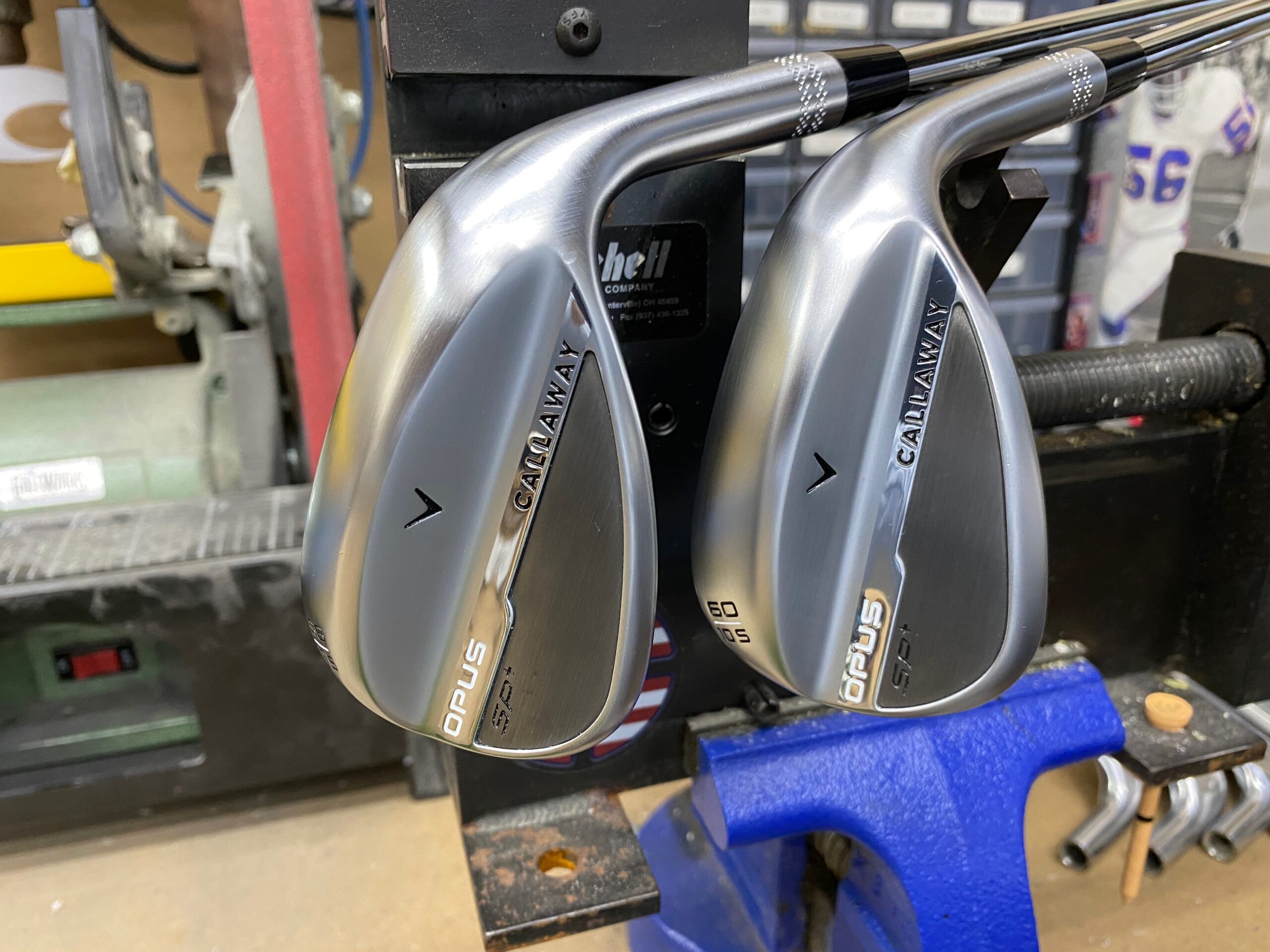

Alright, golfers, Tyler Reed here from The Daily Duffer, and today we’re diving into Callaway’s latest wedge offering, the Opus SP+. Callaway’s promising “more spin and precision” with an “even higher center of gravity.” My job is to cut through the marketing jargon and tell you if these claims hold up under the unforgiving eye of the launch monitor and what they mean for your short game.
Wedges are fascinating. Unlike drivers where raw distance often dominates the conversation, wedges are all about control, feel, and, most importantly, spin. Manufacturers are constantly seeking ways to eke out an extra 500 RPMs or drop that flight a degree. Callaway’s Opus SP+ is their newest attempt, building on the Opus SP line with some distinct changes.
The “Higher CG, More Spin” Equation: Does It Add Up?
The core story here revolves around CG placement. Callaway R&D Manager Brian Herr explains the strategy:
“Opus SP+ takes on the best qualities of Opus SP, with lower launch, more spin, and engineering control. We’ve taken the Spin Pocket and made it larger; we’ve hollowed out more of the sole and doing that allows us to put Tungsten up in the topline. We have a larger Spin Pocket than we had in Opus SP. We’ve also added even more Tungsten up top to raise the CG, which allows us to flight the ball lower for more control.”
This is a classic play in wedge design: raise the center of gravity (CG) to encourage a lower, more penetrating ball flight, which, counter-intuitively for some, often translates to increased spin. My launch monitor data consistently shows this to be true. When CG is pushed higher, especially in wedges, it promotes a more direct impact on the ball, reducing dynamic loft at impact. This delofting effect, combined with aggressive grooves, allows the ball to climb the face more effectively, leading to higher spin rates and a piercing trajectory that golfers seeking control crave.
Callaway touts a “25% larger Spin Pocket” and “23% more tungsten” in the topline compared to previous models. This isn’t just arbitrary numbers; this is the engineering reality behind shifting that CG. In my fitting bay, when I’m able to effectively manipulate CG in a wedge, I see noticeable differences in peak height and descent angle, which are critical for stopping the ball on the green. For the average golfer, a lower flight means less susceptibility to wind, and more spin means the ball sits down quickly.
Spin Gen 2.0 Face: Groove Technology Under the Microscope
Beyond CG, the face technology is crucial. Callaway claims “the most advanced face in Opus history” with their New Spin Gen 2.0. They highlight a “new 17° groove angle with tighter pitch spacing” and a “deeper cross-hatch laser pattern.”

From a technical standpoint, tighter groove spacing increases the number of grooves that interact with the ball at impact. The 17° groove angle is a precise adjustment aimed at optimizing the bite and friction. The deeper cross-hatch laser pattern? This is all about maximizing surface roughness to grab the ball. I’ve tested countless wedges with various groove patterns, and while the difference can sometimes be marginal between top-tier manufacturers, these subtle refinements do add up. What I’m looking for on the launch monitor with these types of claims are consistent spin numbers, especially from imperfect lies like light rough. A truly advanced face design should maintain more reliable spin even when there’s grass or moisture between the clubface and the ball.
In my experience fitting hundreds of golfers, what truly matters isn’t just the peak spin number on a perfectly struck shot, but the *consistency* of that spin. If your wedge is designed to maintain 8,000-9,000 RPMs on full shots and 10,000+ on partials, but it drops to 6,000 RPMs from a slightly damp lie, that’s not effective. The Opus SP+’s focus on groove design, particularly for “more consistent spin across a variety of lies,” is where the real performance benefit might lie.

Tour-Validated Shape and Grinds: Personal Preference Meets Performance
The “Shape 6 – Tour Validated Profile” is intriguing. Callaway states it’s “trusted by Tour players for its clean, confident look at address, Shape 6 offers precise leading edge shaping and refined sole geometry.” What does “tour validated” actually mean to us amateurs? It means a shape that typically suits a golfer with a consistent swing path and attack angle. They prefer minimal offset and a classic, compact head that allows them to manipulate the face and clubhead through different shots.

The inclusion of Z, X, and S grinds is absolutely critical. This isn’t marketing fluff; it’s essential for proper wedge fitting. The Z grind is described as a “friendly-low bounce option,” the X grind for “maximum greenside versatility,” and the S grind for “every situation.” These descriptions indicate what I’d expect: The Z likely has relief in the heel and toe, allowing for playability from tight lies or players with a shallow attack angle. The X grind often features significant heel and toe relief, perfect for opening the face around the green and manipulating loft. The S grind is usually the more traditional, medium-bounce option that works for a wider range of players and turf conditions.

In my fitting experience, selecting the correct grind for your swing type and typical course conditions is more impactful on short game performance than an extra 200 RPMs of spin. A well-matched grind prevents digging, allows for clean turf interaction, and fosters confidence. If you’re someone who often struggles with chunking or thin shots around the green, look closely at these grind options.
The increased D5 swingweights for lob and sand wedges (D3 for Gap and PW) is a subtle but important detail. A heavier swingweight can help with clubhead awareness, especially on shorter shots, potentially leading to more consistent contact and better feel. It’s a preference, but one many skilled players gravitate towards in their scoring clubs.
The Bottom Line: Are These Right for Your Bag?
At $229.99 per wedge, the Opus SP+ places itself at the premium end of the market. Based on the technical details provided and my understanding of how these design principles translate to on-course performance, I’m optimistic. The emphasis on a higher CG for lower launch and higher spin is a proven concept, and the attention to grind versatility is excellent.
Who is this wedge for? Primarily, I see these being a strong contender for the mid-to-low handicap player who prioritizes control and feel. Golfers who consistently make good contact and play on courses that offer a variety of short game challenges would benefit most from the refined shaping and grind options. The claimed consistent spin across lies is a big deal for competitive players. If you’re looking for wedges that can help you flight the ball down, generate more bite, and give you options around the green, these are definitely worth a demo.
My recommendation? Get fit. Seriously. Don’t just pick a 56-degree wedge off the rack. Go to a reputable fitter, hit these alongside your current gamer and some other competitive models. Pay attention to launch angle, spin rate, and importantly, feel. See how they perform chip shots, pitches, and full swings. Only then can you truly know if the Callaway Opus SP+ wedges deliver the “more spin and precision” you’re looking for.
