


Alright, The Daily Duffer faithful, Tyler Reed here, and today we’re diving into a set of irons that’s making some noise: the Vice Golf VGI03. Vice is a name most of you probably associate with direct-to-consumer golf balls, but they’ve decided to step into the iron game, specifically targeting the skilled player with a one-piece forged 1020 carbon steel offering. My job, as always, is to cut through the marketing fluff and tell you if these are truly contenders or just a pretty face.
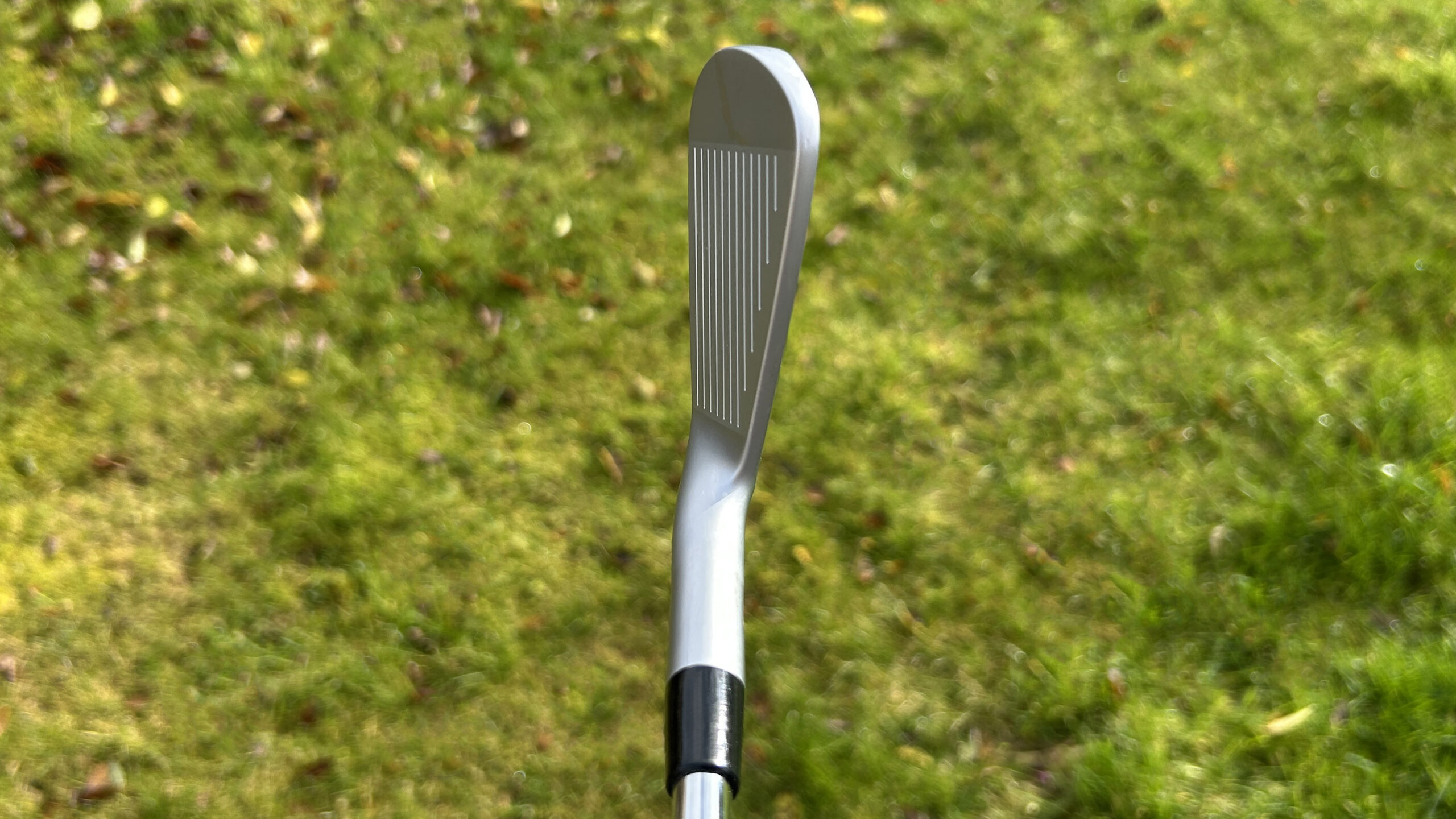
First impressions matter, especially in the competitive world of player’s irons. Vice certainly brings its unique aesthetic. The matte powder coating caught my eye immediately. It’s a smart choice, effectively diffusing glare – a common annoyance with polished finishes – and giving the club a robust, industrial feel. The understated logo engraving on the hosel is a nice touch, too. As a club fitter, I appreciate when a manufacturer understands that sometimes less is more, providing a premium look without unnecessary flash.
“The finish is almost a matte powder coating, and I really enjoy it; it diffuses glare perfectly and gives the club a rugged, modern industrial feel. A particularly classy touch is the subtle logo engraving on the hosel – the lack of paint fill here always makes a club look far more expensive than its price tag suggests to me.”
However, Vice’s branding isn’t entirely subtle. The main logo on the back, to my eye, feels a bit oversized and detracts from the otherwise clean design. There’s also a black line in the “crease” on the rear that I’m struggling to find any technical justification for. It breaks up those muscle-back lines that purists often crave. While I appreciate a brand attempting to stand out, sometimes it borders on trying a little too hard.
Behind the Ball: The Business End
Where it matters most for the target player, the VGI03s deliver a strong visual. Vice clearly understands what a low-handicap player wants to see at address. The blade length is compact, and critically, the offset is minimal. This is non-negotiable for players who prefer to work the ball and demand precise control. The top line is razor-thin, yet it manages to avoid feeling intimidating – a delicate balance many manufacturers struggle to strike.
Image 1 of 3


I did notice what some of my more “purist” low-handicap friends picked up on: a slight overlap of the top edge into the hosel. For them, it’s a distraction, but honestly, I found the overall aesthetic at address to be confidence-inspiring. As a club fitter, I know that if a player *likes* the look of a club, they’re more likely to perform well with it. The VGI03s certainly hold their own against the traditional stalwarts in this regard.
Data Dive: Performance on the Launch Monitor
Now, let’s talk numbers – because that’s where the truth lies. The VGI03 is a one-piece forged 1020 carbon steel iron. I measured the 7-iron at 33 degrees, which puts it firmly in the traditional players’ iron loft category (think Titleist T100, Mizuno Pro 241, Srixon ZX7). This is important because it tells you exactly what to expect. There are no gimmicks here, no super strong lofts to fake distance. When I put these on the launch monitor, the data corroborated exactly what I expected:
“performance – in terms of launch monitor data – is essentially identical in terms of launch, spin, and carry to every other forged blade on the market in the 33˚/34˚ 7-iron area, simply because there is so little to play with in terms of technology.”
This isn’t a knock on Vice; it’s simply the reality of blade irons. When you’re dealing with a solid piece of forged steel, there isn’t much room for radical innovation in terms of ball speed, launch, or spin. The sweet spot, or Coefficient of Restitution (COR), is pretty much maxed out across the board for these types of irons. What you’re paying for in this category isn’t extreme distance, it’s consistent gapping, workability, and most importantly, feel and feedback.

(Image credit: Future)
The feel of these irons is precisely what you’d expect from a 1020 carbon steel forging. It’s soft, muted, and provides excellent feedback. You know immediately if you’ve flushed it or caught it a little thin. This level of feedback is crucial for low-handicap players who rely on precise strike location for shot shaping and distance control. The MOI (Moment of Inertia) isn’t going to be huge on a blade like this, meaning off-center strikes will be penalized more than with a larger, perimeter-weighted game-improvement iron. But again, that’s just the nature of the beast, and the target audience for these irons understands that.
My main performance critique lies in the turf interaction. When I tested these, the sole felt a bit abrasive through the ground. It lacks the refined grind and leading-edge relief that you find in some of the top-tier players’ irons – think Mizuno’s more rounded soles or Titleist’s pre-worn leading edges. If your swing tends to be steep, or if you’re prone to taking a slightly fat divot, the VGI03 can feel a little ‘sticky’ through impact, demanding a very precise angle of attack. This isn’t a deal-breaker, especially if you sweep the ball, but it’s something to consider for those with a digger’s swing.

(Image credit: Future)
The Value Proposition – And the Hurdles
Here’s where Vice makes its strongest case: the price. At $999 for a 4-PW set, you’re getting a premium forged player’s iron for significantly less than comparable offerings from the established brands. This direct-to-consumer model truly drives value. Plus, their 60-day return policy, even on custom builds, is virtually unheard of in golf and speaks volumes about their confidence in the product.

(Image credit: Future)
My primary concern for Vice isn’t the product itself, but the market they’re entering. I’ve fit hundreds of golfers, and the blade player is often the most brand-loyal. They value heritage, the “tour-proven” stamp, and the prestige associated with brands like Mizuno, Titleist, Miura, or Srixon. These players are often willing to pay a premium for that perceived legacy and subtle differences in grind or feel.
However, the landscape is changing. Brands like Takomo and Ben Hogan have shown that there’s a growing segment of golfers hungry for high-quality, lower-priced DTC alternatives. If golfers can move past the “value brand” stigma and trust the performance, the VGI03 stands to gain traction.
Who are these irons for?
The Vice VGI03 irons are unequivocally aimed at the better player. Think single-digit handicappers, scratch golfers, or aspiring professionals. These are players who:
- Prioritize feel and workability over maximum forgiveness.
- Have a consistent swing and strike the ball relatively in the center of the face.
- Appreciate traditional lofts and consistent spin numbers for gapping.
- Are looking for premium forged feel without the premium price tag.
- Don’t shy away from a brand challenging the status quo.
If you’re a mid-to-high handicap player seeking maximum forgiveness, explosive ball speeds, or substantial distance gains through stronger lofts, these are likely not the irons for you. However, if you fit the profile of a skilled ball-striker looking for a pure, unadulterated forged experience at an unbeatable price, the Vice VGI03 deserves a serious look on your launch monitor.
Vice has delivered a legitimate player’s iron. While some minor aesthetic and turf interaction refinements could elevate it further, the core performance, feel, and exceptional value proposition make the VGI03 a compelling option that shakes up a traditionally conservative market. You’ll get performance comparable to irons costing hundreds more, and that’s something worth paying attention to.
