



As the Equipment Editor for The Daily Duffer, my job is to cut through the marketing fluff and tell you what actually works. When I saw a list of favorite golf courses, my first thought wasn’t about the breathtaking views or historic clubhouses. It was about how these courses, particularly their greens and challenging layouts, would expose the strengths and weaknesses of a golfer’s equipment.
The author of the source article laid out some excellent criteria for evaluating a course: playability, intriguing design, wow factor, conditions, and overall experience. What immediately jumped out at me was the emphasis on playability for a 10-handicap and “fun green complexes.” This is where equipment genuinely shines or fails, often in ways that aren’t immediately obvious to the casual golfer.
Let’s talk about those “fun green complexes” mentioned in several of these course descriptions. At places like Pasatiempo, the author noted,
“Get above the hole? You might be watching your putt roll a lot farther past than you would expect.”
This isn’t just about reading the green; it’s about controlling your short game, and that’s heavily influenced by your wedges and golf ball. When I’m fitting a golfer who plays courses with severe greens like Pasatiempo, we’re not just looking at yardage gaps for wedges. We’re meticulously dialing in grind options, bounce angles, and turf interaction. A high-bounce wedge might be great for fluffy lies, but on firm, fast greens, it can lead to bladed shots or excessive skidding. Our launch monitors allow us to see how different grind configurations affect the descending blow and the resulting spin and launch angle, crucial for holding those tricky greens.
Similarly, the author’s observation about Seminole:
“My caddie said the stat they keep is GVR (greens visited in regulation) because hitting a green and staying on the green are two entirely different things.”
This immediately brings to mind the spin characteristics of a golf ball and iron/wedge grooves. A low-spinning distance ball might give you a few extra yards off the tee, but if it blows through the green at Seminole, those extra yards are essentially worthless baggage. I’ve consistently found in my testing that golfers often prioritize distance without understanding the trade-offs on approach shots. Higher spin rates, particularly from premium urethane-covered balls, provide the ‘stopping power’ needed on greens that penalize even slightly miss-hit approaches. For irons, dynamic loft and clubhead speed are critical. Too much dynamic loft at impact can cause a ballooning flight, reducing carry distance and making it harder to control the descent angle needed to hold a firm green. Too little, and the ball flies too low, potentially hitting the front and bounding off. We fine-tune iron lofts and shaft flexes to achieve an optimal launch angle and spin for greens like Seminole.
The concept of “intriguing design” and “wow factor” also has an equipment angle, albeit a less direct one. When you’re at Chambers Bay, with its “firm turf, dramatic dunes and fun elevation changes,” or Spyglass Hill with its captivating first five holes, the confidence you have in your equipment amplifies the experience. If you’re constantly fighting hooks or slices because your driver isn’t properly fitted, the beauty of the course becomes secondary to your frustration. I’ve seen countless golfers arrive for a fitting with a driver that’s either too stiff, too flexible, or has the wrong weight bias. The result? Excessive side spin. A 1500 RPM difference in spin left or right can turn a majestic vista into a lost ball.
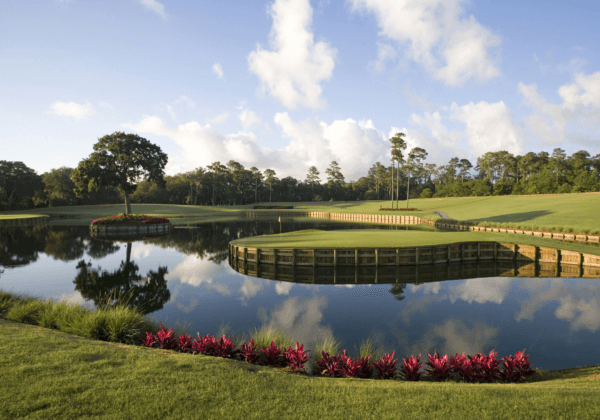
Take TPC Sawgrass, a course the author notes is “so much narrower in person than it looks on TV.” This calls for precision, not just power. When fitting drivers for courses like this, MOI (Moment of Inertia) is a huge factor. A high MOI driver offers more forgiveness on off-center hits, reducing the degree of deviation on those tight tee shots. While a low spin, low launch head might deliver staggering ball speeds for a pro, for the average golfer, a slightly higher trajectory with more stability can be the difference between finding the fairway or the dreaded water. My launch monitor data consistently shows that even a slight toe or heel strike on a low MOI driver can cost a golfer 15-20 yards of accuracy, pushing them into the rough or worse. For a course like Sawgrass, consistency trumps raw distance every single time.
The author highlights the joy of playing a truly “fun” course like Tobacco Road, where
“There are so many shots where you think, ‘I can’t wait until I get to this hole.'”
That feeling is amplified when you trust your equipment implicitly. If your clubs are poorly fitted, those “can’t wait” moments can quickly turn into dread. I’ve fitted hundreds of golfers who came in with a “stock” set of clubs, often leading to inconsistent strikes and frustrating outcomes. By optimizing shaft flex, lie angle, and swingweight – sometimes even adjusting the loft on their fairway woods or hybrids – we can significantly improve strike quality and confidence. This kind of bespoke tuning can genuinely transform a golfer’s experience, making those uniquely designed holes not just memorable, but actually enjoyable to play.
Ultimately, while lists like these remind us of the incredible architecture and breathtaking beauty of American golf courses, for me, they also serve as a stark reminder of the importance of well-fitted equipment. The right gear won’t turn you into a scratch golfer overnight, but it will certainly enhance your ability to navigate these challenging layouts and truly appreciate the genius of their design. After all, what good is a magnificent course if you’re constantly fighting your tools?
