

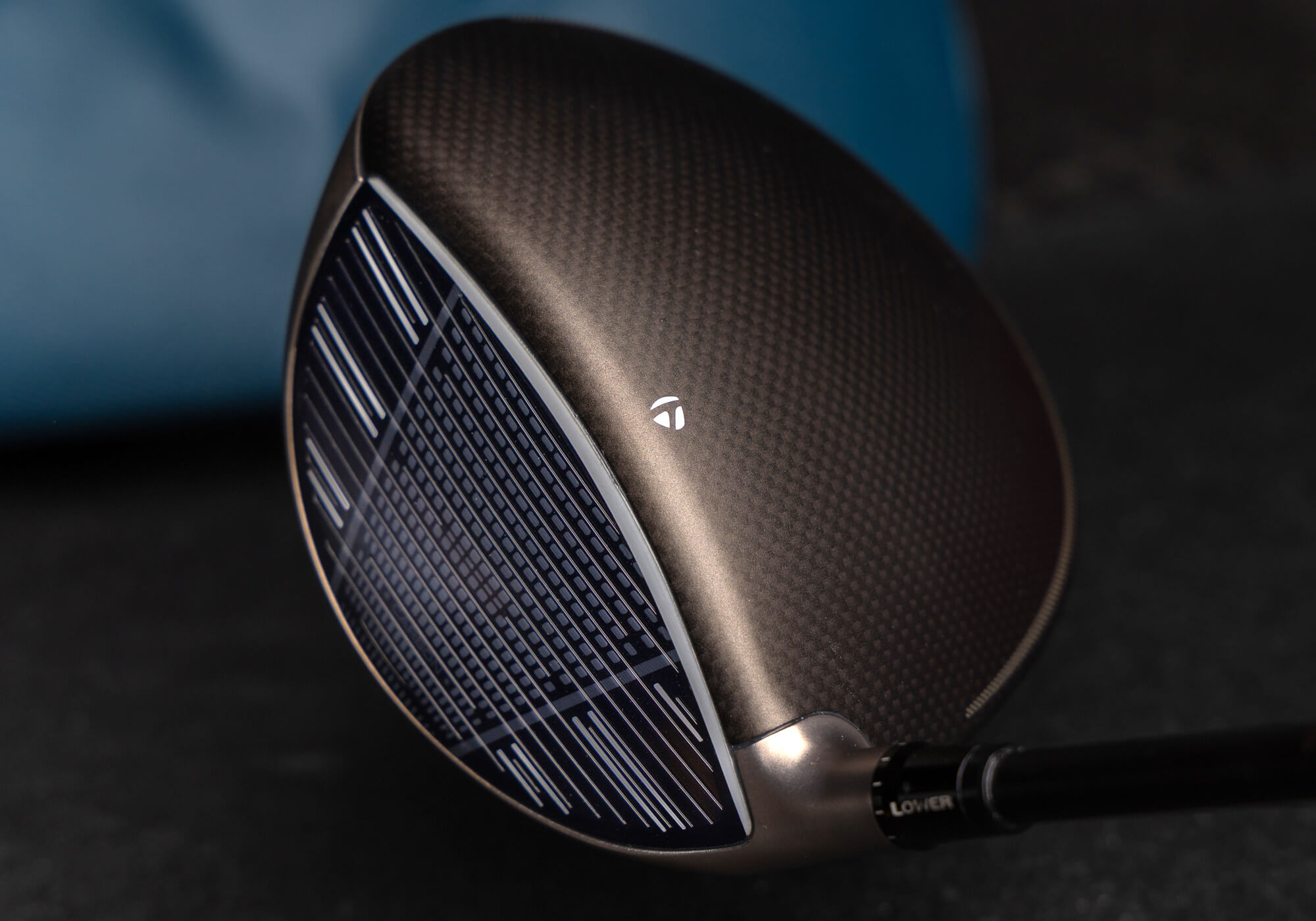

As the Equipment Editor for The Daily Duffer, I spend countless hours sifting through club data, tearing apart manufacturer claims, and putting drivers through their paces on the launch monitor. My goal, and frankly, my passion, is to help golfers cut through the noise and understand what truly works. So, when I saw MyGolfSpy’s 2026 Most Wanted Driver test results compared with PGA TOUR Superstore’s best-sellers, my immediate thought was: “Alright, let’s see where the rubber meets the road.”
The convergence of our rigorous, data-driven testing and real-world sales figures offers a fascinating look into the driver market. It’s one thing for a driver to light up the launch monitor in controlled conditions, but it’s another for golfers to actually open their wallets and put it in their bags. The overlap, or lack thereof, tells a story about performance, perception, and market dynamics.
The fact that five drivers made both lists is significant:
- TaylorMade Qi4D
- Callaway Quantum Max
- Titleist GT2
- Titleist GT3
- PING G440 LST
“That overlap is interesting because it shows where testing results and consumer demand align. Drivers do not land in the top tier of our Most Wanted test by accident. They earn those spots through consistent performance across distance, accuracy and forgiveness.”
From a technical standpoint, this overlap reinforces my beliefs forged from fitting hundreds of golfers. When a club performs consistently well across the board in testing – delivering high ball speeds, optimal launch, and controlled spin rates – it genuinely instills confidence. And confidence, as any golfer knows, is half the battle. These five models aren’t just marketing; they’re delivering tangible results that both testers and average consumers are experiencing.
The Dominance of Distance: A Constant Truth
One theme that roared off the page for me was the undeniable emphasis on distance. The article points out that distance accounts for a staggering 40% of the MGS Score. In my fitting bay, nine out of ten golfers come in wanting more distance first, and then we work on getting that distance more playable. It’s no surprise that the overlapping drivers excelled here:
- Callaway Quantum Max: Led the test with a 9.5 distance score. My experience with Callaway’s “Max” lines has consistently shown they prioritize ball speed and a larger sweet spot, often resulting in impressive carry numbers for a wide range of swings.
- Titleist GT2 and Titleist GT3: Both posted 9.4 distance scores. Titleist has been quietly, yet consistently, building some of the most player-friendly premium drivers on the market. Their GT series typically offers a blend of classic aesthetics with underlying tech that cranks up speed while maintaining a stable feel through impact.
- TaylorMade Qi4D: The Best Driver of 2026, delivered a 9.3 distance score. TaylorMade’s “Qi” platform has obviously carried forward the “distance + forgiveness” mantra, and the Qi4D’s numbers reflect a well-engineered club that doesn’t sacrifice one for the other.
When I see a driver hitting a 9.5 distance score, I’m looking at consistent ball speeds approaching or exceeding 1.5 ratio on well-struck shots, coupled with a launch angle in that sweet spot of 12-14 degrees and spin rates around 2200-2600 RPM. That’s the recipe for maximizing carry and roll. It’s not just about a single peak speed, but the ability to generate those numbers across a wider area of the face.
The TaylorMade Qi4D: A Balanced Performer
The TaylorMade Qi4D earning the “Best Driver of 2026” with an MGS Score of 9.2, and simultaneously being a best-seller, is a testament to its design philosophy.
“Its strength is balance. Instead of dominating a single category, the Qi4D produced high-level results across the board.”
This aligns perfectly with what I’ve seen in countless fittings. A club that scores 9.3 for distance, 9.2 for accuracy, and 9.1 for forgiveness isn’t just a marketing dream; it’s a solid, reliable performer. Many drivers can be long, or forgiving, or accurate. But to excel across all three, that speaks to sophisticated engineering and thoughtful weight distribution, often leveraging low-forward CG for speed combined with high MOI for stability on off-center hits. For the vast majority of amateur golfers, consistency of performance across these metrics is far more valuable than a slight edge in one area.
The Persistent Power of Past Generations
Perhaps the most insightful nugget from the PGA TOUR Superstore data, for me, was the strong sales of previous-generation drivers like the Callaway Paradym Ai Smoke and TaylorMade SIM2 Max. This isn’t a surprise to anyone who understands the golf equipment lifecycle.
As a club fitter, I can tell you the jump in performance from one year to the next is rarely revolutionary. It’s almost always evolutionary. Manufacturers make incremental gains in ball speed (often 0.5-1 mph, which translates to a few yards), tighten dispersion by fractions of a yard, or slightly increase MOI. While valuable, these gains often come with a premium price tag.
When golfers are looking for value, a driver from the previous season can be an absolute steal. The Callaway Paradym Ai Smoke, for instance, might not have the absolute latest AI-optimized face (though it’s still highly advanced), but it’s still a phenomenal driver that offers excellent ball speed and forgiveness. The TaylorMade SIM2 Max was a launch monitor darling in its day, known for its incredible stability and speed.
“It is also a reminder that the performance gap between generations is not always dramatic enough to outweigh a significant price difference.”
This is absolutely critical. For many golfers, upgrading from a 3-5 year old driver to one that’s 1-2 years old can deliver 80-90% of the performance gains of a brand new model, but at 60-70% of the cost. The best advice I can give budget-conscious golfers is to look for these models. Often, with the right shaft, they can be dialed in to perform exceptionally well for your swing.
Final Verdict from the Fitting Bay
This report highlights what I preach daily: data matters, but so does real-world application. The intersection of what performs best in exhaustive testing and what golfers are actually buying provides a solid starting point for anyone in the market for a new driver in 2026. The drivers showing up on both lists – TaylorMade Qi4D, Callaway Quantum Max, Titleist GT2, Titleist GT3, and PING G440 LST – are demonstrably good clubs. They offer a blend of distance, forgiveness, and accuracy that appeals to a broad range of golfers, from mid-handicappers to lower handicaps seeking consistent performance.
For the average golfer, my advice remains constant: don’t chase hype, chase performance that fits your game. If you’re considering one of these top performers, get fitted. See how its specific characteristics—like head shape, loft adjustability, and shaft options—work with your swing dynamics to optimize launch, spin, and ball speed. And don’t be afraid to consider a previous-generation model if it offers a better value proposition for comparable performance. The goal is better golf, and sometimes that means skipping the latest model for a proven performer at a better price.
