


Alright, Daily Duffer faithful, Tyler Reed here, and today we’re tackling a topic that’s been buzzing louder than a mis-hit driver on the range: the broomstick putter and the ongoing debate around anchoring. Specifically, we’re diving into Akshay Bhatia’s technique, fresh off his Arnold Palmer Invitational win, and what it means for golf technology, rules, and ultimately, your game.
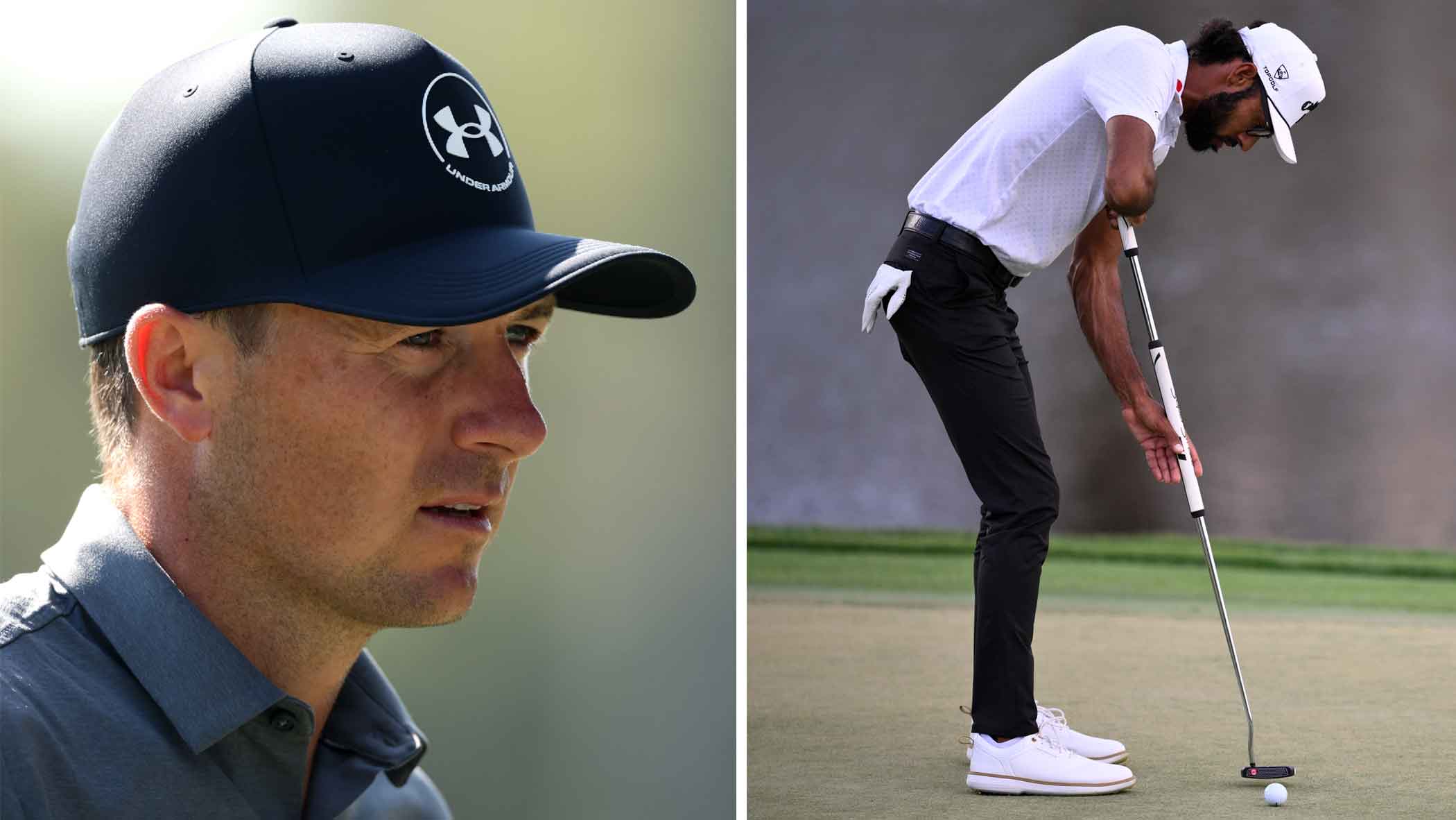
First off, let’s cut through the noise. Bhatia’s win with a 50-inch putter immediately reignited the “is he anchoring?” questions. I’ve heard it, you’ve seen it on social media, and frankly, it’s a distraction from what we should really be dissecting: performance and the intricacies of club design. When watching Bhatia, the visual gap between the putter butt and his chest is indeed minimal. The rules are clear: pressing the club *into* your chest is anchoring, which has been outlawed since 2016. However, hovering it is not. It’s a fine line, one that’s causing a lot of furrowed brows among fans.
The Data Behind the Long Putter Shift
From my perspective as a club fitter who’s put hundreds of golfers through their paces on the SAM PuttLab and various launch monitors, I’ve seen firsthand the struggles many players face on the greens. Short putters, while offering tactile feel and control, also demand incredible stability in the hands and wrists, especially under pressure. The long putter, or broomstick, fundamentally changes the kinematic chain of the putting stroke.
When you shift to a longer putter, the fulcrum of the stroke moves higher up the body, often towards the sternum or belly. This inherently reduces the influence of the smaller muscles in the hands and wrists, which are prone to twitching or misalignment. Instead, it engages larger muscle groups in the shoulders and core for a more pendulum-like motion. I’ve tested players with varying putting styles, and consistently, those who struggle with wrist breakdown or an inconsistent path often find remarkable stability with a broomstick, even without anchoring.
Consider Bhatia’s rapid improvement in putting stats. He was 183rd in SG: Putting in 2022-23. After making the switch in late 2023, he climbed significantly, reaching 12th this season. This isn’t a placebo effect. This is a legitimate gain in performance, as validated by ShotLink data. He posted nearly 16.3 combined strokes gained on and around the greens during his Bay Hill win – the best performance in the ShotLink era. That’s not just luck; that’s a demonstrably better stroke mechanics yielding results.
The stability factor of the long putter is real. It’s not about cheating; it’s about leveraging physics. Imagine trying to balance a broom on your fingertip versus holding it firmly against your shoulder. The latter provides a much more stable base. While we don’t have Bhatia’s specific MOI numbers for his putter, the sheer length and the leverage it provides contribute to a more stable clubface through impact, reducing deviation from the target line. This translates to fewer pushed or pulled putts, and when you can consistently start the ball on line, your make percentage skyrockets.
The “Skill” Argument vs. Reality
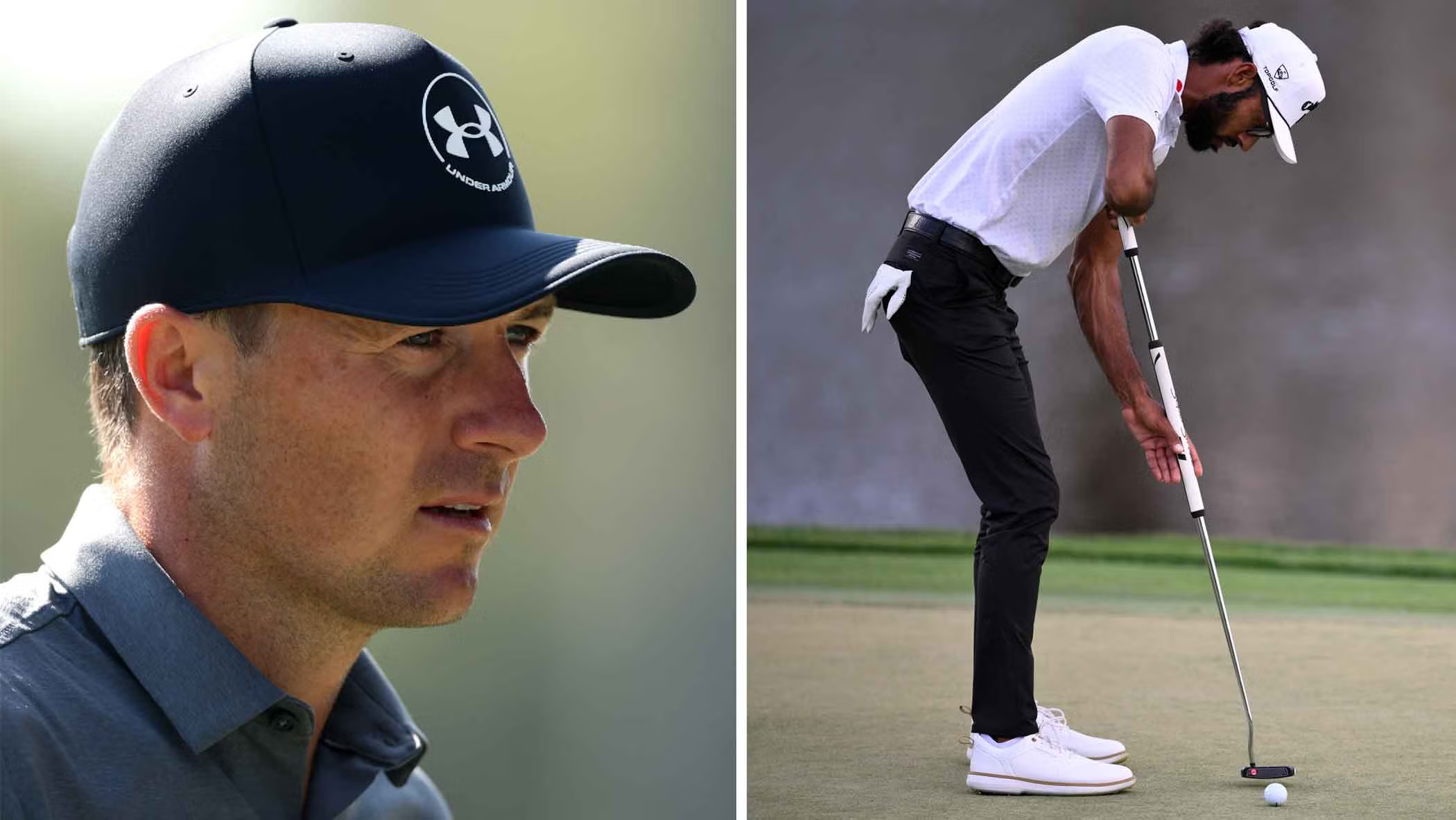
Jordan Spieth, a member of the Tour’s Player Advisory Council, weighed in cautiously, acknowledging the skill involved:
“There’s a skill to it. If it were that easy to do and made everyone that much better, everybody would do it. … He’s been doing it for a long time. Most of the people who have [have been].”
He’s right, partly. There is an undeniable skill to adapting to a new putting style, especially one that fundamentally changes your setup and stroke. It’s not a magic wand. Bhatia spent months practicing with it, making a “promise to myself that I’m going to take at least six months to try this putter out, regardless of how it goes.” That commitment is the real skill. Many golfers try a new club for a few rounds, see no immediate miracle, and ditch it. Bhatia put in the work.
However, Spieth also went on to say:
“I would like the putter to be the shortest club in your bag, because it is the shortest club in my bag, and I do believe that it forces more skill. It uses your hands more, which makes you have to be more, kind of athletic and deal with the stuff that comes up a little bit more.”
This is where I diverge from the “traditionalist” viewpoint. While a shorter putter *can* force more hand-eye coordination and feel, it doesn’t inherently mean more “skill” in the sense of effectiveness. My extensive fitting experience shows that skill encompasses consistency and repeatability. If a broomstick putter helps a golfer achieve a more consistent stroke, reducing three-putts and improving make percentages, that *is* a display of skill – just a different kind. It’s leveraging technology and technique to maximize performance, no different than optimizing driver launch and spin for maximum carry and roll.
The Optics and the Rules
The “optics” of Bhatia’s method are indeed problematic for some, fueling the “cheating” narrative. Michael Kim, a fellow PGA Tour winner, defended Bhatia, noting that amongst players, it’s not a concern:
“It’s funny to me that Akshay anchoring is a thing. In person, it’s not that close. This is not a concern amongst the players.”
This highlights a crucial disconnect between the professional perspective and the perception of the casual fan. The rules are the rules. If there’s a gray area, it’s on the governing bodies (USGA and R&A) to clarify, not on the player to self-regulate beyond what’s explicitly stated. We’ve seen this before with groove rules, driver COR, and ball construction. The job of the player is to play within the defined rules, not within popular opinion’s interpretation of those rules.
Akshay Bhatia’s putting stroke that has been the subject of controversy among fans. pic.twitter.com/dC0e41P6W0
— GOLF.com (@GOLF_com) March 6, 2024
My Take for the Average Golfer: Is a Long Putter for You?
If you’re a golfer struggling with consistency on the greens, prone to wristy strokes, or battling with nerves that cause the putter face to open or close, a longer putter – broomstick or chest-length – is absolutely worth exploring. Forget the stigma or what you think “skill” should look like. Focus on results.
From a fitting perspective, here’s what I look for:
- **Stability:** Do you struggle to maintain a consistent putter path and face angle? The increased leverage and stability of a longer shaft can be a game-changer.
- **Pendulum Motion:** Do you want to minimize wrist action and create a purer shoulder-rocking stroke? A long putter naturally encourages this.
- **Comfort:** Does your current putter length cause you to hunch over excessively, creating back strain or an uncomfortable setup? A longer putter can promote a more upright, relaxed posture.
Don’t just grab one off the rack. Get fit. We’ll measure your ideal length, lie angle, and most importantly, observe how it affects your stroke dynamics and impact consistency on the launch monitor. The goal isn’t to buy a club to cheat; it’s to buy a club that helps you score better, plain and simple.
The long putter isn’t a magical fix, but for many, it offers a legitimate path to greater putting consistency. Bhatia’s success isn’t an anomaly; it’s a testament to a player finding equipment that optimizes his performance within the rules. As equipment editor, I say if it shaves strokes and complies with the rules, it’s smart golf. Don’t let marketing hype or social media outrage dictate your equipment choices. Trust the data, trust your feel, and most importantly, trust the fitting process.
