

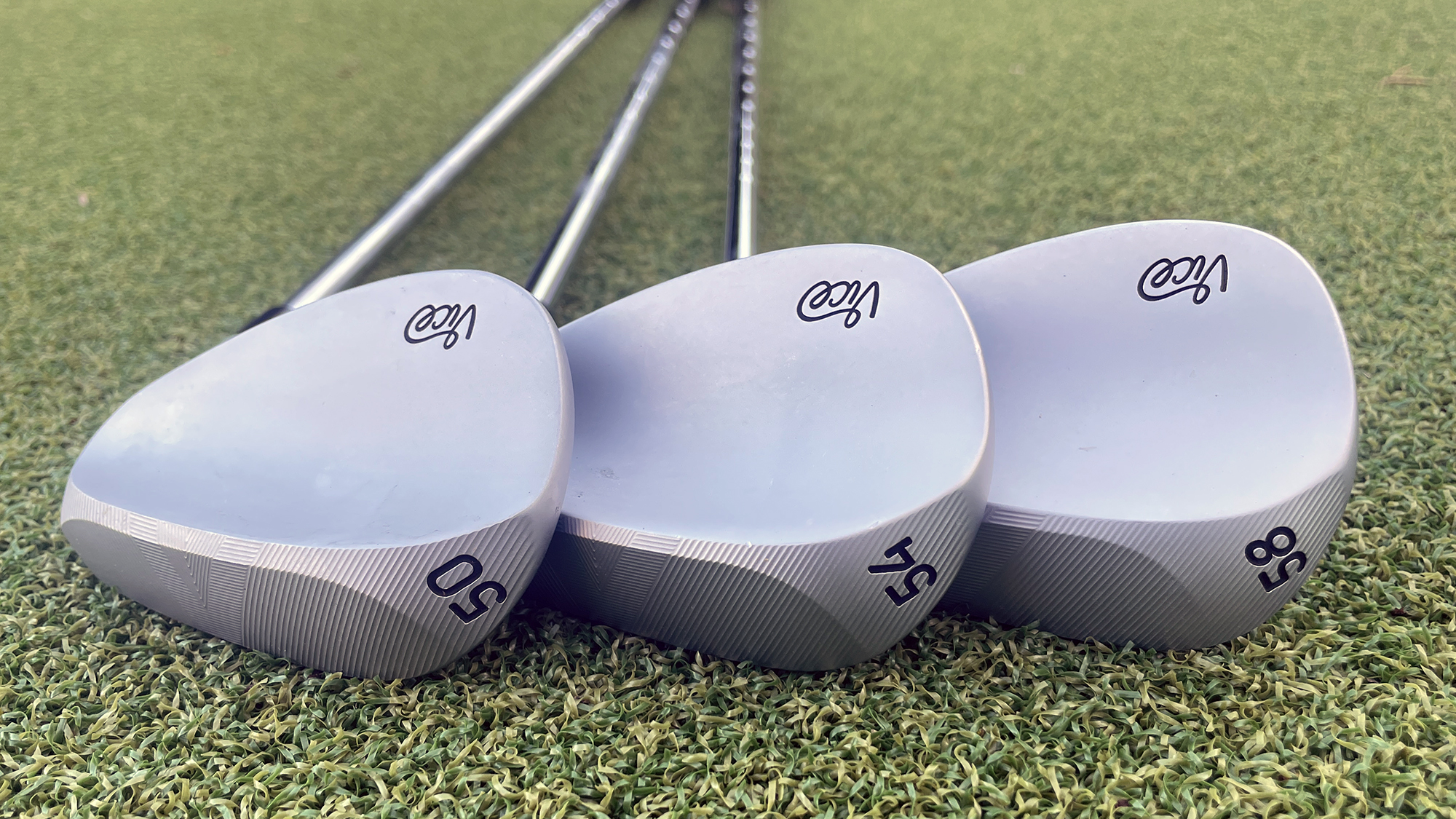

Alright, Daily Duffer faithful, Tyler Reed here, and today we’re diving into something a little different: the Vice Golf VGW02 wedges. Vice, for most of us, means golf balls — and damn good ones, at that. But they’ve been quietly expanding their offerings, and when a brand known for disrupting the ball market pushes into clubs, my ears perk up. The question isn’t just “are they good?” but “are they good *enough* to challenge the established giants, especially at their price point?”
I’ve tested hundreds of wedges on Trackman, Full Swing, and GC Quad systems. I’ve dissected grind options, bounce angles, and groove configurations. I’ve seen what players truly need in their short game tools, and it’s rarely what the glossy ads promise. So, let’s peel back the layers on the VGW02 and see if Vice is truly delivering performance, or just a pretty face.
First Impressions: Aesthetics and Intent
The first thing that jumps out from the article, and quite frankly, from the images, is the aesthetic. And I’ll give them credit where it’s due:
“Visually, this is a stunning looking club. I love the clean, understated look with just a simple, unobtrusive logo on the back cavity. The markings on the precision milled sole also please my eye, and this is an area where Vice excels in my view. Looking across their range of clubs, the aesthetics really do jump off the page.”
I’m a sucker for a clean wedge, and that brushed chrome finish looks sharp. The milled sole is a nice touch, typically indicating a higher level of precision in manufacturing. While aesthetics don’t directly translate to performance, confidence in your gear is real, and if a club looks good in your bag and at address, that’s a mental edge. More importantly, the article highlights a key shift from their previous model:
“The VGW02 has a more traditional face design, which will appeal more to the traditionalists and better players. Higher handicap players may be better served with the older model though. The VGW02 is aimed at the higher end of player, with more emphasis on workability than forgiveness.”
This tells me Vice is targeting a specific player: the one who values shot-making over maximum forgiveness on every strike. Trading full-face grooves for a more traditional look suggests they’re optimizing for spin and feel with center strikes, which aligns with better players’ preferences. This is a crucial distinction and, from my fitting experience, often a good indicator of a truly game-improvement or player-focused wedge.

(Image credit: Vice Golf)
Performance on Data: What the Numbers Likely Say
The review mentions “consistency on full shots” and “very tight numbers” on the range, with “spin levels… in the window I would expect.” While the article doesn’t give hard numbers for spin rate (RPMs), launch angle, or carry distances, my experience with wedges in this category gives me a pretty good idea of what “in the window” means for a better player. For a 50-degree wedge, I’d be looking for spin rates around 9,000-10,000 RPMs on full swings, with a mid-20s launch angle for optimal control. On a 58-degree, we’d want to see 11,000-12,000+ RPMs for excellent stopping power around the greens, with a slightly higher launch.
The fact that “gapping between them was exactly what I look for” across 50°, 54°, and 58° lofts is critical. Proper gapping is often overlooked by amateurs, but it’s the bedrock of a consistent short game. In a fitting, we’re not just looking at total distance, but also how far each wedge carries and rolls out. If the club delivers tight dispersion and predictable yardages, it passes a major test.

The milled sole of the Vice Golf VGW02 wedges
(Image credit: Vice Golf)
The “forged 1020 carbon steel” construction is also a major plus for feel. This material is a staple in player irons and wedges for a reason – it provides exceptional feedback, especially on center strikes. High MOI (Moment of Inertia) isn’t typically the primary goal with a player’s wedge; it’s about feel and control. The review confirming “very responsive with excellent feedback” validates this construction choice.

(Image credit: Vice Golf)
On-Course Performance and the Value Proposition
Where the rubber meets the road for any wedge is around the green. “Turf interaction was a real highlight,” and “performance out of bunkers was excellent too,” are strong endorsements. This is where CG (Center of Gravity) placement and sole grind become paramount. Forged construction typically allows engineers more flexibility in precisely placing the CG for optimal feel and trajectory. The emphasis on workability over forgiveness implies a more traditional CG placement closer to the face, giving discerning players more control over launch and spin.
The “trusty Cleveland CBX Zipcore wedges” mentioned in the article are a forgiving, cavity-back design. The fact that the reviewer could “happily live with” replacing them with the VGW02 suggests the Vice offers a comparable, if not superior, level of performance for a player who prioritizes feel and workability. This is no small feat.
Now, let’s talk about the elephant in the room: pricing. Vice’s business model for golf balls, and now for clubs, is designed to undercut the established brands. Here’s the kicker:
“These wedges are available in a wide range of customisable options when ordered from Vice, and they retail at a very appealing $129 (£109.99 UK) which is quite a significant saving when compared to offerings from the bigger name brands.”
This is where Vice really shines. From a purely data-driven perspective, if the VGW02 delivers spin, launch, and gapping numbers comparable to a Vokey, MG3, or Glide Forged wedge – clubs that typically retail for $160-$180 – then $129 is an excellent value. In my fittings, I’m always looking for the optimal combination of performance and cost efficiency. If Vice can get 95% of the performance of a premium retail wedge for 70-80% of the price, that’s a winning formula for a lot of golfers, especially those who appreciate precision tools.

Testing the Vice Golf VGW02 wedges at Aintree Golf Centre
(Image credit: Vice Golf)
Who is the VGW02 For?
Based on the review, my technical understanding, and countless fitting sessions, the Vice VGW02 is clearly aimed at the low to mid-handicap player. If you’re someone who appreciates nuanced feel, needs precise distance control, and values the ability to work the ball around the green, these wedges warrant a serious look. The focus on “workability” over “forgiveness” means that off-center hits won’t be bailed out as much as with a game-improvement wedge. You’ll get clear feedback, which is what better players desire to improve their strike quality.
If you’re a higher handicapper still struggling with consistent contact, especially with wedges, the previous VGW01 with its full-face grooves might indeed be a better option for you, or perhaps a more forgiving cavity-back design. However, for the player looking to shave strokes around the green and dial in approach shots, and who values a premium feel without the premium price tag, Vice seems to be hitting a sweet spot. They’re leveraging their direct-to-consumer model to offer what genuinely appears to be a high-performance club at a compelling price. It’s not just marketing; it’s a smart business model disrupting the traditional golf equipment space.
