


As the Equipment Editor for The Daily Duffer, I’ve spent countless hours on launch monitors, dissecting club designs, and, most importantly, fitting golfers of all skill levels. When the latest Most Wanted Driver Test results drop, my immediate focus isn’t just on the shiny new numbers; it’s on what those numbers truly mean for the average golfer, and how they translate from a pristine test environment to a cold, hard, Sunday morning tee box.
The 2026 MyGolfSpy Most Wanted Driver Test offers a goldmine of data, particularly when it comes to ball speed. We all know the mantra: more ball speed generally means more distance. But as this test rigorously demonstrates, it’s far from the only variable in play. In fact, it often highlights the critical difference between raw horsepower and controlled performance.
The Need for Speed: But What Kind of Speed?
MyGolfSpy tested 42 different drivers and recorded over 20,000 shots – a massive and invaluable dataset. The top-line takeaway for many will be which driver hit the ball fastest. And deservedly so, to a point:
“While the fastest drivers often produced the longest drives, the relationship between ball speed and total distance wasn’t always perfectly aligned.”
This is precisely what I preach in every fitting session. Getting 1-2 mph more ball speed is fantastic, but if that speed comes at the cost of a wildly inconsistent flight path, excessive spin, or a significantly reduced sweet spot, you’re often worse off. A few extra yards down the middle beats 10 extra yards into the woods every single time.
Let’s look at the top performers purely on ball speed from the 2026 test:
| Rank | Driver Model | Avg Ball Speed | Avg Carry Distance | Avg Total Distance |
|---|---|---|---|---|
| 1 | Vice Golf VGD01+ | 142.89 | 237.47 | 252.72 |
| 2 | Titleist GT3 | 142.62 | 239.17 | 252.52 |
| 3 | COBRA OPTM LS | 142.48 | 236.58 | 250.61 |
| 4 | Titleist GT4 | 142.43 | 237.76 | 252.65 |
| 5 | Titleist GT2 | 142.29 | 239.25 | 252.42 |
| 6 | TaylorMade Qi4D | 142.27 | 238.68 | 253.29 |
| 7 | TaylorMade Qi4D LS | 142.27 | 236.71 | 253.65 |
| 8 | Callaway Quantum Triple Diamond | 142.12 | 238.75 | 254.37 |
| 9 | Wilson DYNAPWR Carbon | 142.05 | 236.88 | 251.58 |
| 10 | Srixon ZXi | 141.87 | 236.01 | 249.18 |
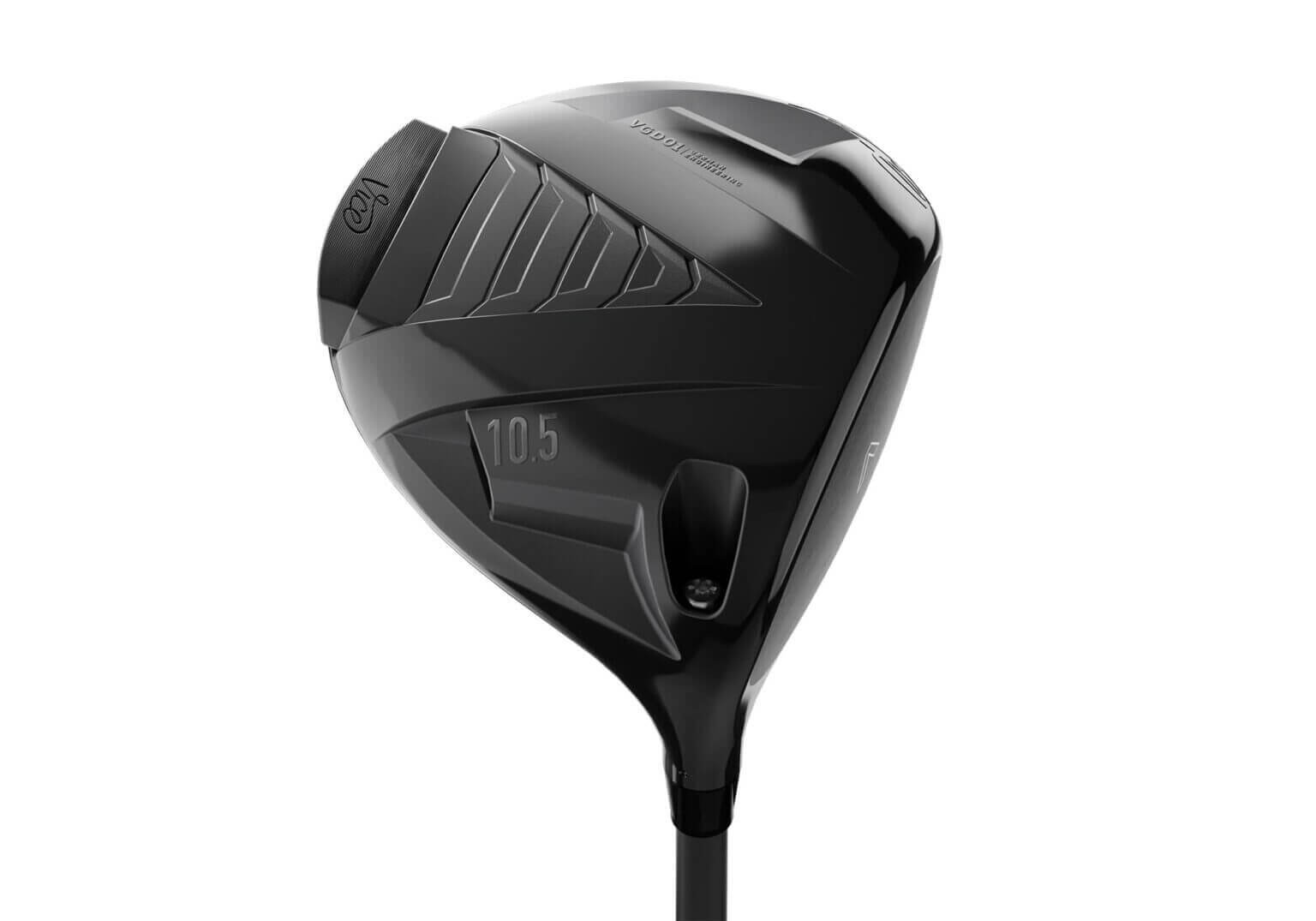
The Vice Golf VGD01+: A Case Study in Speed vs. Playability
The Vice Golf VGD01+ clocked in as the fastest driver, averaging an impressive 142.89 mph ball speed. That’s serious heat off the face. However, as the review points out:
“In fact, despite leading the field in ball speed, the VGD01+ finished toward the lower end of the overall rankings with an 8.4 MGS Score. Its distance score of 9.0 was competitive but its accuracy (8.1) and forgiveness (7.9) limited its overall standing.”
This is a classic example of what I often see on the launch monitor. A driver can be incredibly efficient at converting clubhead speed into ball speed (indicating a very springy, thin face with potentially high COR, close to the legal limit), but if that face doesn’t offer adequate forgiveness across its surface, off-center strikes will bleed ball speed, launch, and spin. An accuracy score of 8.1 and forgiveness of 7.9 suggest a design that is likely low-spin and forward CG, which can be fantastic for the elite player who consistently finds the sweet spot, but punishing for most others. For the vast majority of golfers, especially those not splitting fairways at will, this kind of driver can actually lead to *less* usable distance due to increased dispersion.
Titleist GT3: The Well-Rounded Performer

On the other hand, the Titleist GT3, while slightly slower at 142.62 mph, earned an 8.8 overall MGS Score and a spot in the top 10. Why? Its exceptional carry (239.17 yards) and overall distance score of 9.4. This tells me that Titleist has done an excellent job balancing ball speed with optimal launch and spin characteristics. In my experience, Titleist often designs drivers with a slightly more neutral to forward CG relative to some maximum forgiveness models, but they are masters at pairing that with the right loft and shaft to achieve stellar launch conditions. The GT3 is likely a driver that not only performs well on flush strikes but also offers enough consistency to keep the ball in play, making those fast ball speeds truly usable.
The Callaway Quantum Triple Diamond, coming in at 8th for ball speed (142.12 mph), actually produced the highest total distance of the top 10 speed leaders at 254.37 yards. This illustrates the point perfectly – ball speed is crucial, but how efficiently that speed is converted into carry and then total distance, factoring in rollout, is the true measure of performance. Factors like launch angle, spin rate, and land angle are all equally critical, if not more so, for maximizing total distance.
The Slowest Can Still Deliver
It’s tempting to disregard the slower drivers, but that would be a disservice to the nuances of club design and fitting. The MacGregor Tourney Max, for instance, was the slowest at 139.44 mph, yet delivered a respectable MGS Score of 8.4. More surprisingly, the Tour Edge Exotics Max, with a ball speed of 140.64 mph, finished fourth overall in the test with an 8.9 MGS Score despite not being a speed demon.
“Drivers that find the fairway more often can sometimes post stronger total distance numbers simply because the ball isn’t slowed by rough.”
This is a huge insight. Many highly forgiving drivers, often with deeper CGs and higher MOI, might not produce the absolute fastest ball speeds on perfect strikes. But they make up for it by offering a much larger sweet spot, maintaining ball speed and direction on mishits. If you’re consistently finding the fairway, even with slightly less raw ball speed, you’re looking at more rollout and fewer penalty strokes. That’s a significant factor in genuine on-course performance and something a launch monitor only truly reveals when analyzing dispersion alongside speed.
| Rank | Driver Model | Avg Ball Speed | Avg Carry Distance | Avg Total Distance | MGS Score |
|---|---|---|---|---|---|
| 1 (Slowest) | MacGregor Tourney Max | 139.44 | 231.90 | 247.61 | 8.4 |
| 2 | Tour Edge Exotics LS | 139.88 | 233.71 | 248.76 | 8.6 |
| 3 | Ben Hogan PTx Max | 140.30 | 234.74 | 247.87 | 8.3 |
| 4 | Srixon ZXi LS | 140.63 | 234.23 | 246.95 | 8.3 |
| 5 | Tour Edge Exotics Max | 140.64 | 236.20 | 250.56 | 8.9 |
My Take: Data-Driven Selection, Not Just Speed Obsession
Having fitted hundreds of golfers, I can tell you that trying to chase raw ball speed without considering the whole picture is a fool’s errand for most. If you’re a scratch golfer with a consistent swing and high clubhead speed, then yes, dial in the absolute fastest driver, finely tune the spin and launch, and reap the rewards. Drivers like the Vice Golf VGD01+ or COBRA OPTM LS, with their low-spin, forward-CG characteristics, are built for that player.
But for the majority of golfers – the 10+ handicap, the weekend warrior – forgiveness and accuracy are king. A driver that sacrifices a little peak ball speed for a higher MOI (Moment of Inertia) and a more stable clubhead will ensure that your average ball speed is close to your best, and your dispersion is tight. This is where drivers like the Titleist GT3, and especially the Tour Edge Exotics Max, truly shine. They offer a balanced approach, maximizing usable distance rather than just peak distance.
My actionable advice from these results remains consistent: don’t get hung up solely on the “fastest” driver. Use ball speed as a baseline, but then dive deep into its accuracy and forgiveness scores. Get fitted. Hit different models, pay attention to the launch monitor data beyond just ball speed – look at spin, launch angle, and most importantly, the consistency of these numbers across your impact points. The best driver for you isn’t just the fastest; it’s the one that gives *you* the most consistent blend of speed, accuracy, and playability for your unique swing.
