

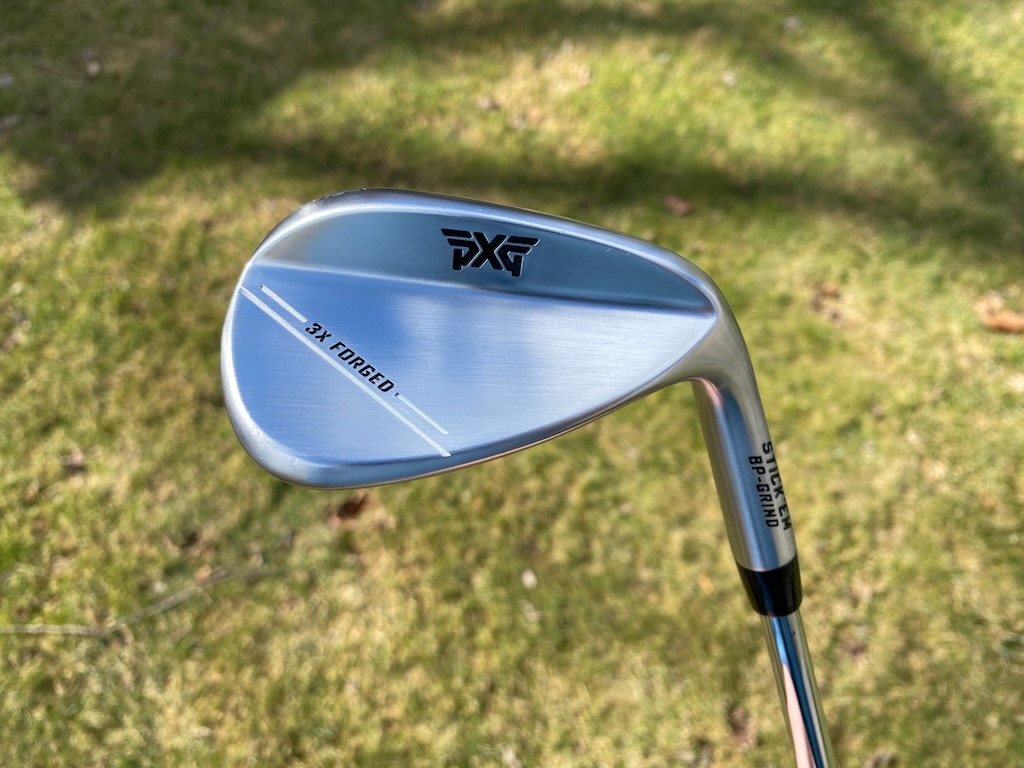

Alright, Daily Duffer readers, Tyler Reed here, and today we’re digging into PXG’s latest offering: the new Stick’em Forged wedges. PXG certainly knows how to grab attention, and after poring over the specs and what they’re claiming, I’m ready to dissect whether these wedges live up to the hype or if it’s just another case of polished marketing copy.
My job, as you know, is to cut through the fluff. I’ve stood next to countless golfers on the launch monitor, seen thousands of swings, and analyzed the data that truly defines performance. So, when a company talks about “enhanced feel, consistent spin, and improved stability,” my ears perk up, but my data-driven brain immediately starts asking, “How?” and “Can they prove it?”
Forging a Promise: Feel and Durability
The first significant detail PXG highlights is the three-times forged 8620 soft carbon steel. This isn’t groundbreaking in the forged wedge market, but it’s a solid foundation. The multi-stage forging process, as claimed, does indeed refine the grain structure, which typically translates into a softer, more satisfying feel at impact. My experience with fitting a wide range of forged clubs confirms this – the molecular alignment often provides a denser, less ‘tinny’ sensation that many golfers crave.
According to PXG, the repeated forging compresses and aligns the material at a microscopic level, producing a softer yet more solid feel at impact along with a crisp sound.
One aspect I appreciate is the mention of improved durability, “helping grooves maintain their sharpness over time.” This is critical. While a soft material generally offers excellent feel, it can sometimes come at the cost of groove longevity, particularly for those of us who spend a lot of time practicing. If the forging process truly contributes to better wear resistance, that’s a tangible benefit worth noting. We’ll need to see some real-world testing from our end to confirm this, but on paper, it’s a smart claim.
Performance on the Data Sheet: CG, MOI, and Grooves
Now, let’s talk tech. PXG is integrating some modern design elements into these forged beauties:
- High-toe weighting: This is a common strategy to increase MOI (Moment of Inertia) and shift the center of gravity (CG) higher and more towards the toe. The goal is to align the CG with the typical impact point when opening the face, which can lead to better stability on open-face shots and help maintain spin. When I analyze wedge data, off-center hits with a standard wedge often show a significant drop in spin and inconsistent launch. High-toe weighting, if implemented effectively, can mitigate some of that loss, leading to more predictable performance from awkward lies.
- Progressive CG placement: This is something we’ve seen in other high-performance wedges. The idea is to move the CG lower in the stronger lofts (50, 52 degrees) for a penetrating flight and higher in the weaker lofts (58, 60 degrees) for more control and less fliers on partial shots. On the launch monitor, consistent spin and launch windows are paramount, and progressive CG is a proven method to achieve this across different loft segments.

Optimized groove geometry: “Wider grooves and tighter spacing” designed to “increase friction at impact by expanding the groove cross-sectional area while tightening spacing so additional groove edges are more likely to contact the ball.” This isn’t revolutionary, but it’s a sound engineering principle. More effective groove contact generally translates to higher spin rates, particularly from the rough or in wet conditions where debris channeling is essential. In my testing, tightly spaced, sharp grooves consistently yield more friction and thus more spin, assuming the clubhead speed and angle of attack are optimized.- Full-face grooves: For the 54-60 degree models, full-face grooves are a welcome addition. This directly addresses those inevitable toe-misses, especially when opening the face around the green. Expanding the effective hitting area means that even glancing blows on the outer edges of the face will still grab the ball, offering a better chance for consistent spin and trajectory. My data shows a significant drop-off in spin and control when golfers miss the center of the face with standard grooves, so this feature can be a real game-changer for short game consistency.

“The short game is where players either gain confidence or lose it,” said Mike Nicolette, Senior Director of Engineering at PXG. “With Stick’em Forged Wedges, the goal was to give golfers a wedge that performs predictably shot after shot.”
This quote from Mike Nicolette really hits home. Predictability is the holy grail in the short game, and these technologies are all geared towards reducing variability. Consistent launch, consistent spin, even on slight mishits – that’s what builds confidence, and that’s what separates good wedges from great ones.

Sole Searching: Getting the Grind Right
PXG offers two sole options, which is a smart move given the diversity of golfers and playing conditions:
- BP-Grind (13-degree bounce): Described as a “wider, fuller sole that increases effective bounce,” this sounds ideal for steeper attack angles and softer conditions. In my fitting experience, golfers who dig tend to benefit hugely from higher effective bounce, preventing the club from digging deep and leading to more consistent turf interaction. For those playing in softer turf or dealing with fluffy bunkers, this grind could be a real asset.
- S-Grind (10-degree bounce): This tapered sole with heel and toe relief is a classic all-around performer. It allows for the face to be opened without the leading edge rising too much, offering versatility for different shot types – flops, pitches, and bunker shots. This is often the preferred grind for golfers with a more neutral attack angle or those who like to manipulate the clubface around the green.


The Verdict: Who are these for and are they worth it?
The PXG Stick’em Forged wedges come in at $199 for chrome and $219 for Xtreme Dark. This puts them squarely in the premium wedge category, comparable to Vokey Forged or Mizuno T-series offerings.
From a technology standpoint, PXG isn’t reinventing the wheel here, but they are combining best practices in wedge design: multi-stage forging for feel, intelligent CG and MOI manipulation for consistency, optimized grooves for spin, and a versatile sole offering. The full-face grooves on the higher lofts are a genuine performance enhancer during those crucial short-sided situations.
So, who would benefit most?
- Golfer Type: These wedges are aimed at golfers looking for top-tier feel and consistent performance around the greens. Mid to low handicappers who value precise control and feedback will likely appreciate the forged construction and thoughtful engineering.
- Short Game Focus: If you find yourself struggling with inconsistent spin or control on partial shots, particularly from open-face lies, the high-toe weighting and full-face grooves could offer real tangible benefits.
- Fit Matters: As with any wedge, the right grind for your swing type and course conditions is paramount. Having the two distinct options (BP and S) means a good fitter can dial you into the right setup. I always stress this: a great wedge in the wrong grind is just a pretty paperweight.
I’ve fit hundreds of golfers, and the data consistently shows that properly fit wedges, where bounce and grind match the player’s attack angle and turf conditions, shave strokes. The feel from a forged wedge is often intangible but can certainly lead to more confidence for many players. I’m keen to get these on the launch monitor myself to measure the spin consistency from various lies and quantify the MOI benefits of the high-toe weighting. If the data aligns with the claims, especially on off-center hits with an open face, then PXG has a strong contender here.
In a crowded wedge market, the PXG Stick’em Forged wedges appear to offer a compelling package of feel, versatility, and modern performance features. The price point is competitive for a forged offering in this segment, and if PXG’s precise manufacturing delivers on the promise of durable grooves and consistent performance, these could be a smart investment for golfers serious about their short game.

