

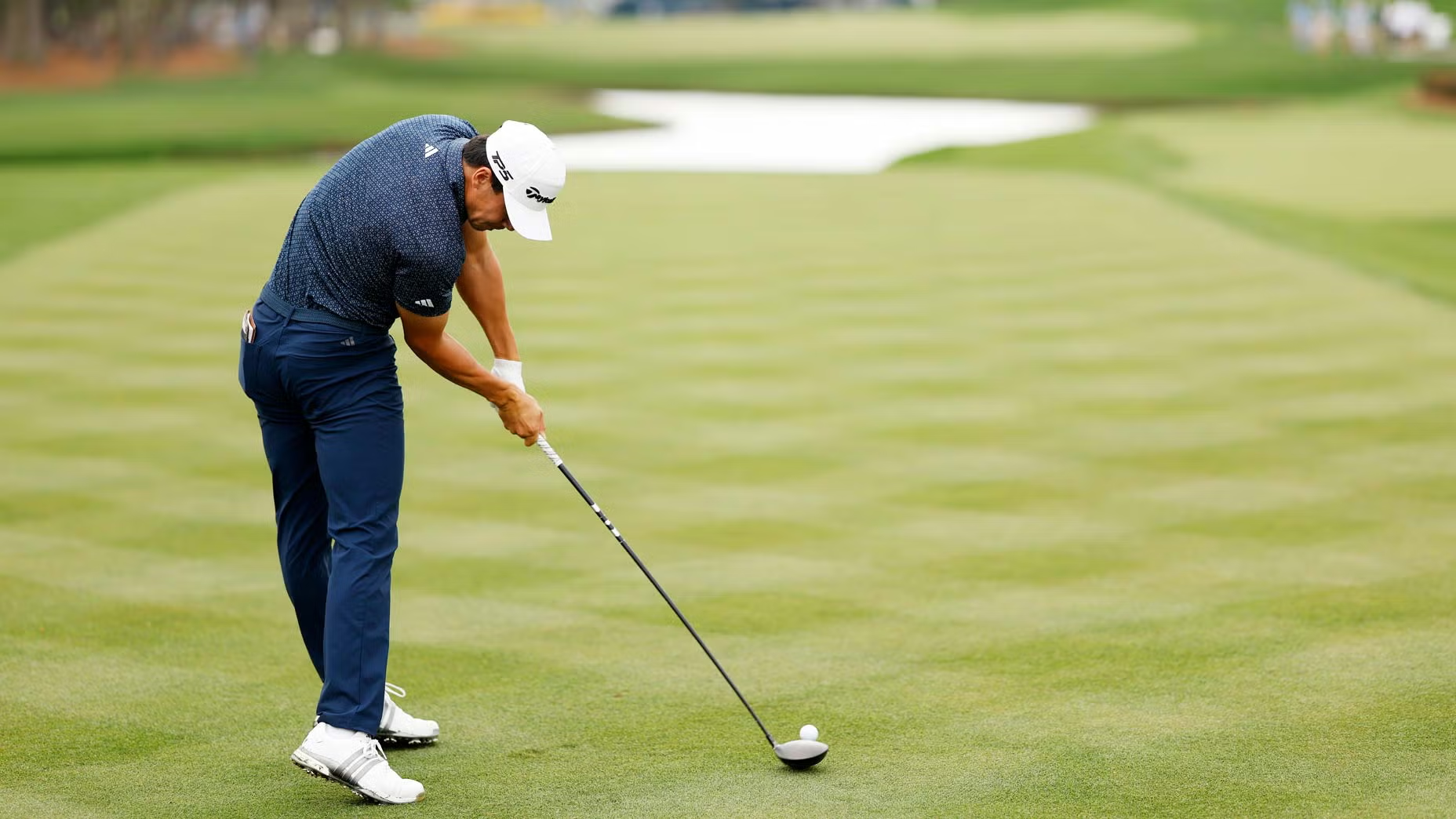

Alright, Daily Duffer faithful, Tyler Reed here, and today we’re not diving into a specific club or a new shaft technology. Instead, we’re looking at something I find equally fascinating: the evolving landscape of professional golf, specifically where the brightest young talents are choosing to ply their trade and hone their skills. The recent Players Championship offered a compelling snapshot, showcasing two rising stars, Ludvig Aberg and Michael Thorbjornsen, who represent a shift in the geographical epicenter of golf talent. This isn’t just a fun anecdote; it speaks volumes about where the cutting edge of player development is happening, and implicitly, what resources these top-tier athletes prioritize.
I’ve tested countless clubs, analyzed thousands of swings on the launch monitor, and fit hundreds of golfers, from weekend warriors to aspiring pros. What I’ve seen consistently is that top performance isn’t just about the equipment in your bag; it’s about the environment you train in. These guys, Aberg and Thorbjornsen, are making a very conscious decision about their “home base,” and it’s not the traditional Jupiter, FL, hub.
The source article highlights their connection and geographical choice:
“It’s interesting, then, that two top young pros have settled some five hours up the coast. It’s not random. This is where the PGA Tour is based and it’s home to TPC Sawgrass, whose facilities are fantastic and have only gotten better.”
From a technical perspective, this makes all the sense in the world. When I’m fitting a player, whether it’s for a driver to optimize ball speed and launch, or irons to maximize spin and dispersion control, the goal is always consistency and repeatability under pressure. Where do you achieve that? In an environment that encourages constant refinement. TPC Sawgrass isn’t just a pretty course; it’s a world-class training facility with state-of-the-art hitting bays, practice greens that mimic tournament conditions, and probably access to some of the Tour’s best data analytics teams.
Think about it: if you’re a professional golfer, your performance gains aren’t just coming from a new low-spin driver head that gives you an extra 2 mph of ball speed. They’re coming from dialing in your short game, perfecting your iron distances, and understanding how your swing interacts with different turf conditions. Having access to TPC Sawgrass year-round means these guys can test equipment, refine swings, and get invaluable feedback on a course that challenges every aspect of their game.
I’ve seen firsthand how a golfer’s data can transform when they move from a range with limited feedback to a facility with high-speed cameras, precise launch monitors, and expert coaches. Imagine that amplified a hundredfold for these pros. They’re likely logging hours on trackman or foresight units, tweaking lie angles, shaft flexes, and swing weights to ensure every club in their bag is perfectly optimized. The proximity to PGA Tour headquarters also suggests seamless access to a multitude of resources, from physical trainers to club reps who can deliver and test new gear on demand. This isn’t just convenience; it’s a competitive advantage.
Aberg’s rationale further solidifies this point:
“I just liked it. The first time I was here I played a Junior Players in 2018, 2017, and I remember saying then that this is a really nice place, and I knew the golf was really good,” he said. “I enjoy the little bit of seasonal change, not necessarily 85 degrees all year round as it is in South Florida. Then I naturally knew a lot of people here even before I moved. Yeah, at the end of the day, it was a pretty easy decision.”
While the “seasonal change” might seem like a minor point, for a European player like Aberg, it’s about comfort and familiarity. A comfortable player is a focused player. And in a game where margins are razor-thin, every ounce of focus matters. If a player feels at home, they’re more likely to dedicate themselves fully to their craft, which translates to better swings, more consistent launch conditions, and ultimately, lower scores.
What does this mean for the everyday golfer? While most of us won’t be moving next door to TPC Sawgrass, the takeaway here is the importance of your golfing environment. If you’re serious about improving, where you practice matters. A modern driving range with actual targets and good quality balls is better than a beat-up field. But if you can find a facility with launch monitor access, even for a periodic check-up, it’s invaluable. Understanding your ball speed, launch angle, spin rate, and attack angle can identify fundamental flaws that no amount of blind hitting will fix. I’ve seen golfers gain 10-15 yards purely by optimizing their launch conditions through a proper fitting, not just by buying the latest “hot” driver that marketing promised would add 20 yards. The data doesn’t lie.
These young guns are smart. They’re not just chasing good weather; they’re chasing optimal performance. They understand that proximity to top-tier facilities and a supportive network of peers (like Aberg and Thorbjornsen playing together) creates an incubator for success. As club fitters, we focus on the tools they use. But as observers of the game, we also need to recognize that the environment in which those tools are wielded is just as critical. This shift to the Jacksonville area by these up-and-coming stars is a testament to the value of genuine, data-rich training environments over just sunny skies and celebrity neighbors. It’s about optimizing every variable, not just the clubhead, and that’s a philosophy every golfer can learn from.
