

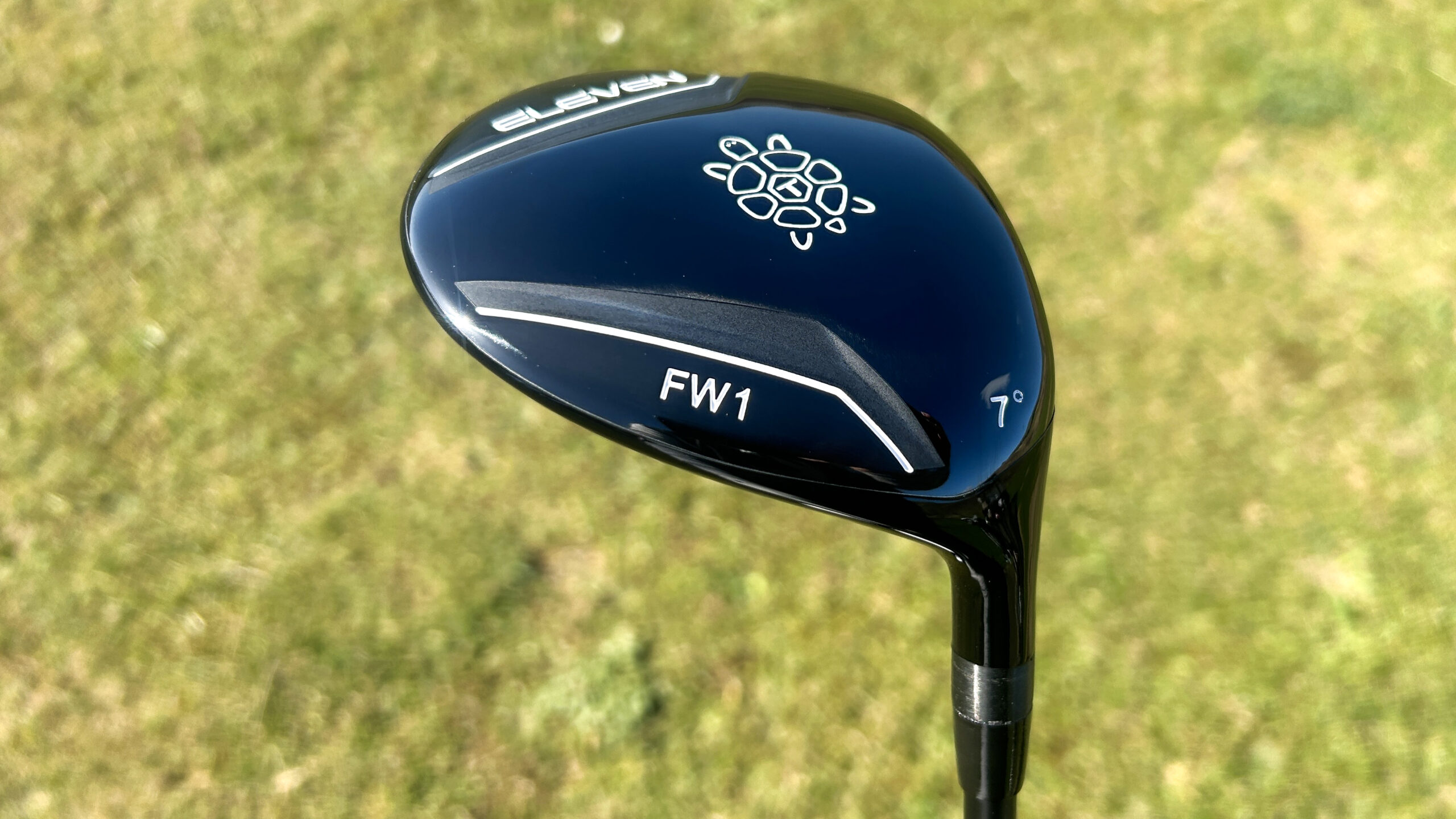

Alright, let’s talk about the Eleven Golf FW1 fairway wood. When I first saw the specs – 7 and 9-degree options in a fairway wood – my internal launch monitor immediately started flashing “Error 404: Launch Not Found.” In an industry constantly pushing higher launch and more forgiveness, a super-low-lofted fairway wood feels like a relic from a bygone era, or perhaps a daring, albeit crazy, experiment.
“In an era where manufacturers are constantly trying to help golfers get the ball higher into the air, Eleven Golf has gone in the complete opposite direction. It has produced a fairway wood with loft options as low as 7° and 9°!”
My initial thought was, “Who in their right mind needs this?”
Then I started digging into the origin story, and the “why” became a little clearer. A high-speed player, the owner’s son, was “ballooning” traditional fairway woods, meaning he was generating too much spin and too high a launch, causing the ball to hang in the air and lose valuable distance. This isn’t an uncommon problem for players with elite clubhead speeds (110mph+ driver speed, easily 100mph+ with a 3-wood). For these golfers, reducing spin and promoting a more penetrating ball flight is often the holy grail for maximizing carry and total distance, especially into the wind.

(Image credit: Future)
The Aesthetics and First Impressions
Visually, the FW1 is a bit of a mixed bag. The sole, with its somewhat “basic” look and a baffling turtle logo, doesn’t scream premium. It lacks the intricate carbon compositions or movable weights we see from the industry giants. Frankly, for a £195 club, some golfers might expect a bit more polish on the underside.

(Image credit: Future)
However, once you address the ball, the “looks” argument flips a switch. The classic, rounded 195cc head is genuinely stunning. It’s got that old-school vibe that just sits right. And the crown? Pure, matte black, devoid of a single graphic or alignment aid. This is a huge win in my book. It allows you to focus solely on the shot, without any visual distractions. While the reviewer noted his test model sat a fraction closed, that’s minor and often subjective to individual eye lines, easily adjusted in a proper fitting.

(Image credit: Future)
Performance: A Laser Beam, But For Whom?
Now, to the numbers. The reviewer noted ball speeds exceeding 161 mph, which is excellent, especially from a fairway wood. The core takeaway here is the low launch and significantly reduced spin. When hitting off a tee, the launch dropped even further, resulting in what was described as a “knuckle-ball” flight. This tells me a few things: the center of gravity (CG) in this club is likely very forward and low, effectively de-lofting the club at impact and minimizing dynamic loft. This design choice strips away spin, but it demands a certain level of ball speed and attack angle to get the ball airborne effectively.

(Image credit: Future)
My own experiences fitting high-speed players confirm this. For those who effortlessly generate 150+ mph ball speeds with a 3-wood, an incredibly low-spinning club like this can be a revelation. You gain penetration, which translates to more rollout and significantly better performance in windy conditions. The reviewer’s data, showing peak heights regularly sub-70 feet compared to a driver at 110 feet, perfectly illustrates this. It’s not about height; it’s about linear, piercing flight.

My data was gathered on the Foresight Sports GC3 launch monitor
(Image credit: Future)
The feel, described as “a touch tinny and hollow,” isn’t ideal but understandable for a smaller brand potentially cutting costs on acoustics compared to the R&D budgets of the “Big Five.” If the primary goal is a specific performance characteristic, some compromises might be made elsewhere. Ultimately, the reviewer found it “more than palatable” which is a fair assessment. Performance almost always trumps feel for serious players, especially when it comes to a very specific shot shape.


Who is this club for? Let’s Get Real.
This is where my experience as a club fitter comes in. The Eleven Golf FW1 is unapologetically niche. It’s not for the average golfer. It’s not for slower swingers who need help getting the ball in the air. In my fitting bay, if a golfer is struggling with launch or spin, I’m almost always adding loft, making the club more forgiving, or adjusting shaft profiles to increase dynamic loft. This club does the exact opposite.
“I would suggest that unless you are swinging your driver at a minimum of 105 to 110mph, you have almost no chance of making this club useful for your game; you simply won’t generate the lift required to keep it in the air.”
I agree wholeheartedly with this assessment. A player with a sub-105 mph driver speed trying to hit a 7-degree fairway wood off the deck is asking for trouble. The ball will likely launch too low, spin too little, and fall out of the sky well short of its intended target. The “knuckle-ball” effect the reviewer observed is great for high-speed players looking to penetrate the wind, but for others, it’s just a ground ball.
The target audience for the FW1 is distinct: high-speed, high-launch, high-spin players who require a “flighted” option. Think players who frequently compete in windy conditions, links golf enthusiasts, or those who simply hit their woods too high and want a penetrating flight for maximum run and control. It could also act as a driver alternative for exceptionally tight layouts or when precision off the tee is paramount.

(Image credit: Future)
The Verdict: A Specialist’s Tool
The Eleven Golf FW1 isn’t going to be a top-seller at your local big-box golf store, and that’s okay. Its strength lies in its unconventional approach and its ability to solve a very real problem for a specific segment of the golfing population. For £195, it’s not an exorbitant sum, especially considering the custom shaft options. If you’re a player with a driver clubhead speed consistently above 105 mph, frequently battling high winds or looking for a driving-iron alternative with more ball speed, this club merits a serious look.
“I love it when a manufacturer is willing to push the boundaries and ignore conventional wisdom to provide a specialized solution for a specific type of player.”
As a club fitter, I appreciate this kind of innovation. While mainstream brands cater to the masses, sometimes it takes a smaller company to address specific needs with a bold design. The FW1 is a perfect example of a purpose-built tool. It’s not about marketing hype promising universal distance gains; it’s about providing a verifiable, data-backed solution for a specific group of high-performance golfers. Just make sure you fall into that group before pulling the trigger, because if you don’t, this “missile launcher” might just feel like a rock.
