

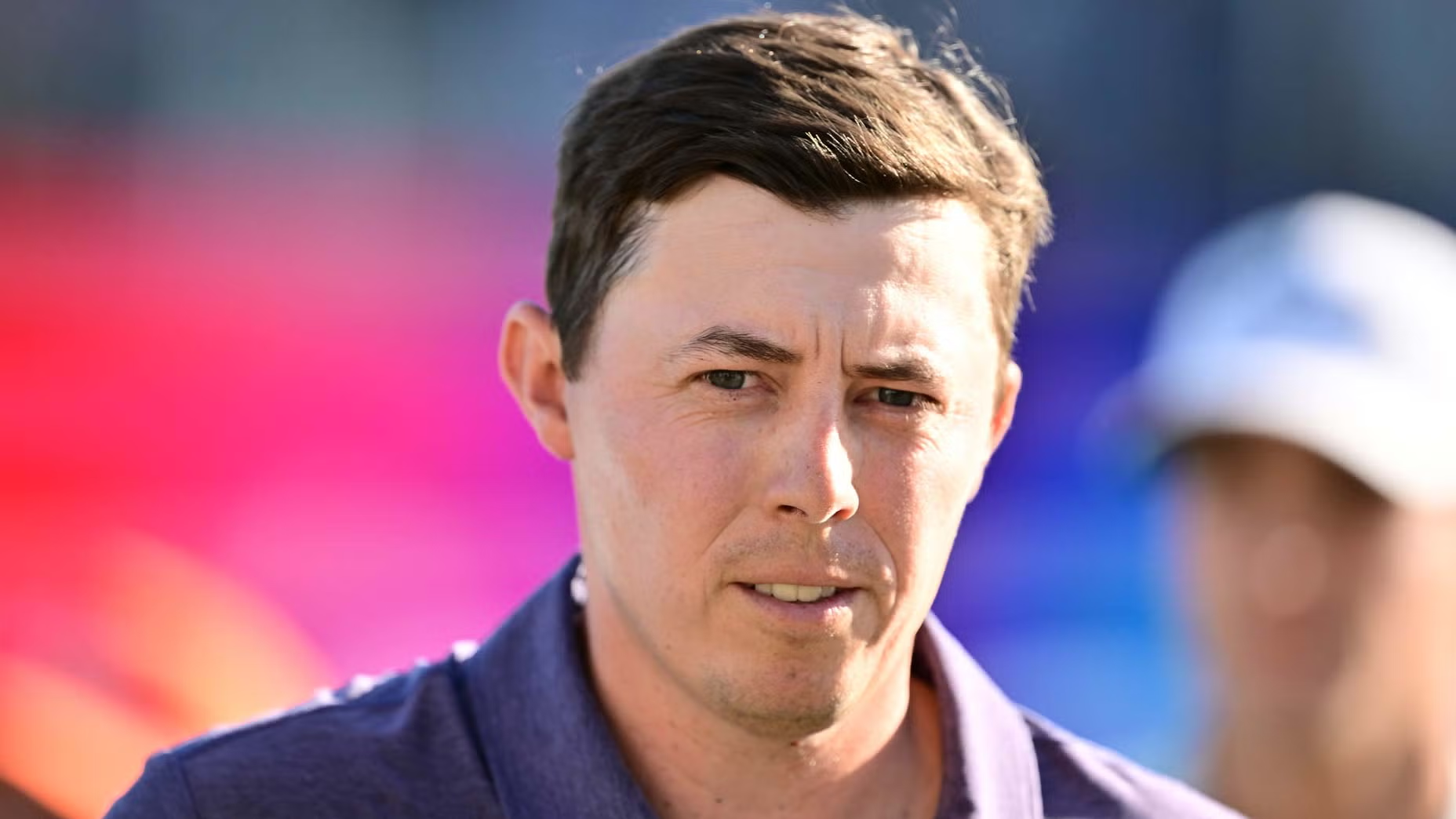

Hello, golf enthusiasts and lifestyle aficionados! Alexis Morgan here, your Lifestyle Editor for The Daily Duffer, diving deep into the fascinating world where golf meets real life. Today, we’re not just dissecting a fantastic win; we’re exploring something that often quietly, yet profoundly, impacts our enjoyment of the game: pace of play.
Matthew Fitzpatrick, fresh off his stellar victory at the Valspar Championship, served up a timely reminder that even at the highest levels, the human element of golf — and its challenges — are ever-present. While his three-under 68 was a masterclass in focus and execution, his experience on the course highlighted a familiar frustration for many of us: slow play. It’s a tension many of us can relate to, isn’t it? That internal battle between wanting to maintain your rhythm and feeling the drag of a leisurely (or perhaps, struggling) group ahead.
The Rhythm of Life, On and Off the Course
Fitzpatrick’s candor about his playing partner’s pace was eye-opening. He wasn’t just frustrated by the slowness, but by how it disrupted his flow, his personal rhythm. As he mused:
“When you’re not ready to play a golf shot it gets frustrating after awhile. Particularly when you playing well yourself or you’re in contention or whatever it is. It definitely knocks you out of your rhythm. Because you hit, you walk to it, you kind of think about it, you hit again, and you go.”
This “rhythm” isn’t just about golf; it’s a universal lifestyle concept. Think about your daily routine. Don’t you feel more productive, more engaged, and simply happier when you’re in a good flow, when tasks move smoothly? Conversely, unexpected delays, constant interruptions, or dawdling colleagues can throw your whole day off kilter. Just like Fitzpatrick, we crave that sense of momentum.
I’ve noticed golfers are increasingly seeking ways to optimize their time and experience, whether it’s on the course or in their demanding lives. This pursuit of efficiency and flow speaks volumes about our modern lifestyle. We want our leisure time to be truly restorative, not another source of stress.

A week after heartbreak, Matt Fitzpatrick roars to Valspar victory
Beyond the Scorecard: Reading the Human Story
The Valspar incident wasn’t an isolated one for Fitzpatrick. He’s been vocal about slow play for years, articulating a sentiment many everyday golfers share. As he once powerfuly stated:
“The problem is, though, this conversation has gone on for years and years and years, and no one has ever done anything. So I feel it’s almost a waste of time talking about it every time. I have my opinions — they’re probably strong opinions, but PGA Tour, DP World Tour, no one’s going to do anything about it.”
This isn’t just a golf problem; it’s a human one. It speaks to our desire for fairness, for mutual respect on the course, and for preserving the integrity of the game. It’s about the unspoken social contract we all enter into when we tee it up. We’re all out there to enjoy ourselves, and understanding how our pace impacts others is a key part of that.
NBC’s on-course reporter John Wood described Fitzpatrick as “perturbed” by his playing partner’s pace, calling it “glacial, to be kind.” This vivid description paints a picture we can all instantly relate to, whether it’s on the golf course, in a checkout line, or waiting for a meeting to start. That feeling of time slipping away, of an unnecessary impediment to progress — it’s a shared human experience.
Actionable Takeaways: Mastering Your Own Pace (and Dealing with Others’)
So, what can we, as everyday golfers and people navigating the rhythms of life, take from Fitzpatrick’s experience?
Be “Ready Golf” Ready: Fitzpatrick drew a distinction between making a high score (which happens to us all!) and playing slowly while doing so. The key? Be ready. Know your shot, choose your club, and be prepared to step up when it’s your turn. This isn’t just about speeding up; it’s about being present and focused, which often leads to better play anyway!
Cultivate Your Inner Zen (and Your Outer Game): When you’re in a situation with slow play, it’s easy for frustration to build. As Fitzpatrick noted, it “definitely knocked me out of rhythm.” This is where mental fortitude comes in. Use those moments to regroup, hydrate, plan your next shot, or simply appreciate the surroundings. Don’t let external factors completely derail your inner game. Practices like mindfulness or even just deep breathing can be invaluable here.
Open Communication (When Appropriate): While most of us won’t have a PGA Tour official to call on, discreetly and politely encouraging “ready golf” with your playing partners can make a difference. A simple, “Anyone ready to go?” can gently nudge things along without being confrontational.
Optimize Your Gear: In the spirit of efficiency, ensure your bag is organized. Know where your tees, balls, and rangefinder are. Small efficiencies add up to a smoother, faster round. This also applies to your everyday life – a well-organized workspace or routine can save precious minutes.
Embrace the Unexpected: Sometimes, slow play is unavoidable. Instead of letting it ruin your day, view it as an opportunity. Perhaps to converse more with your playing partners, to practice your short game strategy in your mind, or simply to enjoy being outdoors. It’s about adapting and finding the silver lining, a valuable life skill.
Ultimately, Fitzpatrick found a way to win despite the challenges of slow play. This is a powerful metaphor for life itself. We can’t always control the pace of those around us, or the unexpected obstacles that arise. But we *can* control our reaction, our preparation, and our ability to stay focused on our own goals. By embracing “ready golf” in our daily lives as much as on the course, we can all find a little more rhythm, a little more flow, and a lot more enjoyment.
