

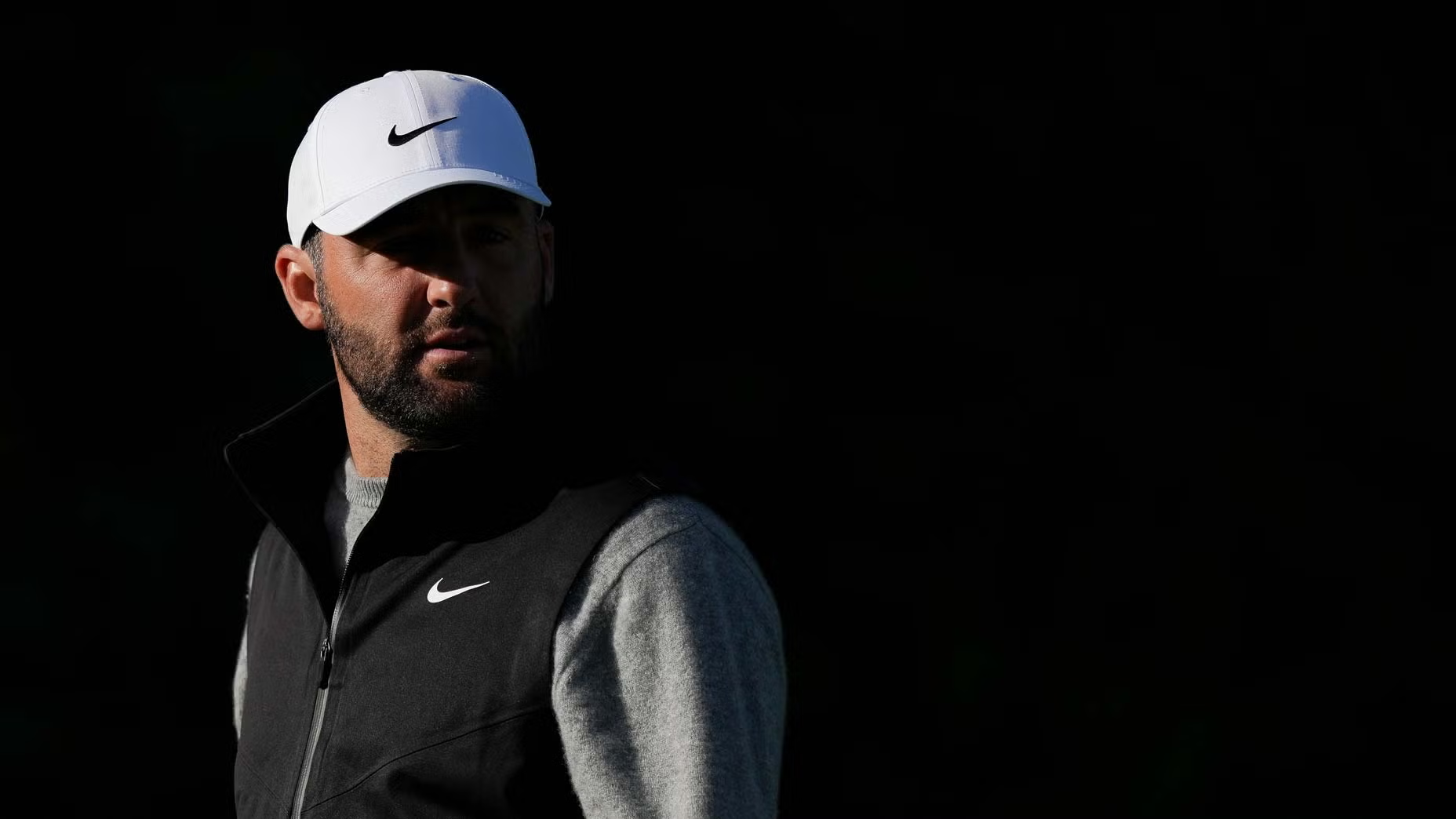

Sometimes, even the best of us find ourselves in a bit of a rut. Whether it’s a career setback, a less-than-stellar round on the course, or just a day where nothing seems to go right, that feeling of being “last place” can be isolating and, frankly, frustrating. But what if we told you that even the World No. 1 golfer, Scottie Scheffler, experiences these moments, and more importantly, what he does to climb out of them?
As Lifestyle Editor for The Daily Duffer, I’m always looking beyond the scorecards and delve into the human elements of golf. What drives these athletes? How do they navigate challenges? And what can we, as everyday golfers and people, take away from their journeys? Scottie Scheffler’s recent Genesis experience offers a powerful lesson in resilience, mental fortitude, and the unwavering commitment that defines a true champion—lessons that resonate far beyond the 18th green.
The Anti-Lead: A Universal Experience
Imagine this: you’re at the top of your game, the best in the world, and then suddenly, you find yourself at the very bottom of the leaderboard. This was Scheffler’s reality at the Genesis, facing what one reporter aptly termed the “anti-lead.” He wasn’t just struggling; he was, for a moment, in last place. It’s easy to dismiss this as a pro’s anomaly, but I believe it speaks to a universal truth: everyone, regardless of their skill level or success, will face moments of extreme challenge.
What I find fascinating is not just the stumble, but the response. It wasn’t about giving up or throwing in the towel. Instead, it was about a quiet, determined grind to reclaim momentum. For us, this might mean a project at work that goes sideways, a personal fitness goal that feels insurmountable, or a round of golf where you can’t hit a single fairway. The key isn’t to avoid these moments, but to learn how to navigate them.
“You’ve played golf before, right? Yeah, it’s frustrating.”
Scheffler’s candidness here is so relatable. Frustration is a natural human emotion. It’s what you do with that frustration that truly defines your mindset.
The Mind as Your Greatest Tool
One of the most striking insights from the coverage of Scheffler’s weekend at Riviera was his own reflection on his inner game:
“I may not be, like, the flashiest player, but I feel like my mind has always been my greatest tool, and I just try to use that to my advantage.”
This resonates deeply with the lifestyle approach I advocate for. Golf isn’t just about physical prowess; it’s a mental game, a challenge of strategy, focus, and emotional regulation. Scheffler’s ability to reset after a bad shot, to have “a 30-second, full-focus huddle-up with caddie Ted Scott before picking the correct shot,” even when far off the pace, is a masterclass in mental discipline. It’s a commitment to commitment, much like Tiger Woods, which means there’s “no pack-it-in option.”
Applying Scheffler’s Mentality to Your Game (and Life)
So, how can we translate Scheffler’s resilience into our own lives, both on and off the course? Here are a few actionable takeaways:
1. Embrace the “Reset” Button
Scheffler’s ability to reset after a double bogey or a flubbed chip is crucial. For us, this means not dwelling on past mistakes. Hit a bad shot? Take a deep breath, walk to your ball, and focus entirely on the next one. Had a tough morning at work? Take 5 minutes to clear your mind, grab a coffee, and re-engage with renewed focus.
2. Commit to the Process, Not Just the Outcome
Even when 12 shots off the lead, Scheffler wasn’t just trying to “make the cut” in a desperate scramble. He was committed to each shot, each decision. This unwavering focus on the process—the intention, the execution, the reset—is what ultimately allowed him to climb. In your own golf game, focus on good tempo, proper alignment, and a controlled swing, rather than fixating solely on the score.
3. Find Your “Fist Pump” Moments
That final fist pump on Friday, for a crucial par putt, wasn’t about winning the tournament. It was about grinding, battling, and keeping his streak of not missing a cut since 2022 alive. It was a victory in itself. As lifestyle editor, I believe in celebrating these small, hard-won victories. Made that difficult workout? Nailed a presentation? Sunk a tricky putt? Acknowledge it, celebrate it, and let it fuel your next challenge.
Scottie Scheffler finishes with a fist pump and a par save on 18 to make the cut on the number 👏 pic.twitter.com/I4j2Q8I98a
— GOLF.com (@golf_com) February 16, 2024
4. Acknowledge Frustration, But Don’t Let it Define You
Scheffler admitted that Riviera “gives him fits,” much like it did for Tiger Woods. It’s okay to acknowledge when something is challenging. But as he showed, even in moments of visible frustration—like dropping his driver after a bad tee shot—he still found a way back. This is about emotional intelligence on and off the golf course. Understand your emotions, but don’t let them derail your commitment.
Not ideal. pic.twitter.com/M7bLw1OQzJ
— GOLF.com (@golf_com) February 16, 2024
What we learn from Scottie Scheffler isn’t just about his swing mechanics or his putting stroke. It’s about his unwavering spirit, his mental resilience, and his commitment to his craft, even when facing the “anti-lead.” It’s a powerful reminder that in golf, as in life, it’s not about being perfect, it’s about being persistent. And that, my friends, is a lifestyle worth emulating.
