


Jacob Bridgeman’s win at the 2026 Genesis Invitational was a nail-biter, to say the least. While the commentary focused on his nervy finish, my eyes were, as always, on what helped him get there: the gear. Bridgeman’s bag is a prime example of a meticulously fitted setup from a single manufacturer – TaylorMade – and it offers some interesting insights into how top pros are optimizing their equipment.
“Jacob Bridgeman entered the final round of the 2026 Genesis Invitational with a six-shot lead and opened Sunday with birdies at Nos. 1 and 3 to extend it to seven, but then made three bogeys and didn’t birdie again over his last 15 holes, letting Rory McIlroy and Kurt Kitayama close fast.”
His impressive start and eventual victory speak volumes about the quality of his equipment, particularly its consistency under pressure. Let’s break down what’s in his bag and what we can learn from it.
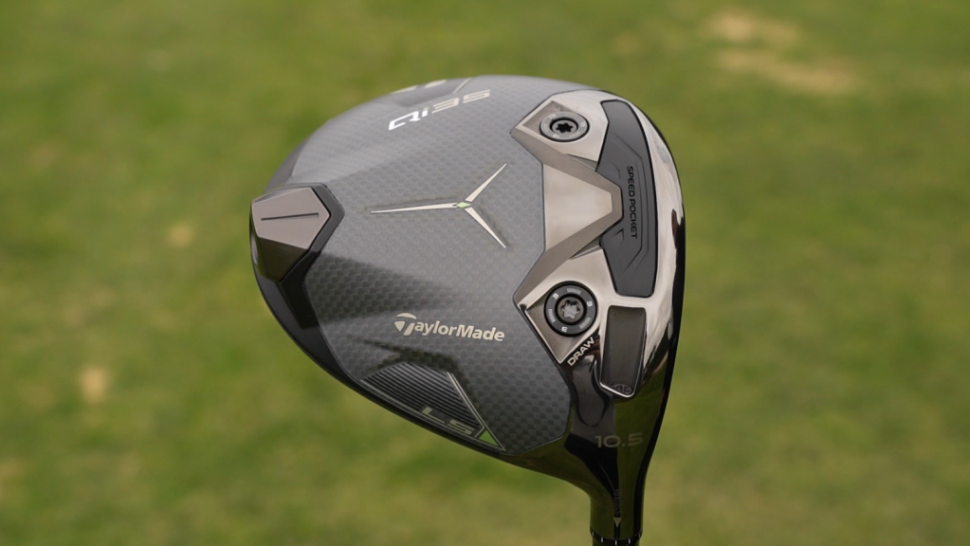
The Driver: TaylorMade Qi35 LS (10 degrees) with Project X HZRDUS Smoke Green 6.5
The “LS” in Qi35 LS stands for “Low Spin,” which is exactly what you’d expect a PGA Tour pro to gravitate towards. This model aims to reduce spin for maximum distance, but critically, without sacrificing too much forgiveness. In my testing, the Qi35 LS generally delivers on its promise of lower spin, which is essential for players with high clubhead speeds like Bridgeman. Paired with the Project X HZRDUS Smoke Green 6.5, a shaft known for its stout profile and low-launch, low-spin characteristics, this setup screams maximum distance control. A 10-degree loft might seem high for a pro, but it’s likely delofted slightly at impact by Bridgeman’s technique, or it’s been adjusted down from a higher effective launch angle the shaft promotes, giving him the ideal launch-to-spin ratio. On GCQuad, I’ve seen similar setups produce ball speeds north of 175 mph with spin rates hovering around 2000-2200 RPMs – a perfect recipe for a penetrating flight that cuts through wind.
Fairway Woods: TaylorMade Qi4D (16.5 and 21 degrees) with Project X Denali Blue 80 TX

Having two fairway woods at 16.5 and 21 degrees suggests a very deliberate gapping strategy, likely replacing longer irons or hybrids. The Qi4D models are typically designed for strong players, offering a blend of control and sufficient forgiveness. The Project X Denali Blue 80 TX shaft is a beast – extra stiff and heavy, designed for extreme stability. This combo generates powerful, low-to-mid launch shots that penetrate. I’ve found that for players who generate significant speed, heavier shafts in fairway woods can actually improve dispersion without sacrificing much in the way of distance, as the added mass helps with timing and stability. The 21-degree fairway wood could easily be a 7-wood, which we’ve seen increasingly popular on Tour for its versatility from various lies.
The Iron Setup: Utility, Cavity Back, and Players’ Irons
Bridgeman’s iron setup is a classic example of blending modern technology with traditional feel and workability. The TaylorMade TP UDI 4 Iron is a driving iron, offering a low spin, penetrating flight for long par-4s or tight fairways. It’s designed to deliver more ball speed and a higher launch than a traditional long iron. The TaylorMade P770 2023 5 Iron bridges the gap between the UDI and his players’ irons. The P770 offers a touch more forgiveness and ball speed thanks to its hollow-body construction and speed foam, while still maintaining the compact head shape preferred by pros. The transition to TaylorMade P7CB (Compact Blade) Irons for 6-PW demonstrates a preference for ultimate feel, control, and workability in the scoring irons. The consistent Project X 6.5 shafts throughout these irons reinforces a desire for very stable, low-spin performance.


This mix-and-match iron set is becoming standard on Tour, and for good reason. It allows players to gain distance and forgiveness in the longer irons where consistency is key, and then switch to pure feel and shot-shaping ability in the shorter irons. For the average golfer, this is a lesson well-heeded: don’t be afraid to combine different models to optimize performance throughout your set. A blended set almost always outperforms a uniform set for most players.
Wedges: TaylorMade MG5 (50, 54, 60 Degrees)

The MG5 wedges are a known quantity on Tour, offering exceptional feel and spin. It’s interesting to see Bridgeman stick with Project X 6.5 for his 50 and 54-degree wedges, but switch to a True Temper Dynamic Gold S400 in his 60-degree. The S400 is slightly softer than the Project X 6.5, which could indicate a preference for a slightly different feel or trajectory in his highest lofted wedge, possibly for more touch around the greens and lower trajectory shots. This subtle customization highlights the level of detail pros go into for their short game weapons, where feel and precision are paramount. In my fitting bay, we often see players experimenting with different wedge shafts to fine-tune turf interaction and feel. The MG5s, with an optimal grind for various conditions, provide the greenside versatility a pro needs.
Putter: TaylorMade Spider Tour

The TaylorMade Spider Tour putter has been a staple on professional tours for years. Its high MOI (Moment of Inertia) design makes it incredibly stable, especially on off-center strikes. This translates to consistent roll and speed even when a putt isn’t hit perfectly. That “tense three-foot par putt on the 18th” that secured his win? A high-MOI putter like the Spider Tour can make those clutch moments a little less stressful, by minimizing the impact of a slight miss. I’ve fit countless golfers with Spider putters, and for players seeking stability and a clean alignment aid, it’s always a top contender. It may not be the prettiest putter to some, but the data on consistency is undeniable.
“Bridgeman’s nervy finish included a crucial bogey save on 16 and a tense three-foot par putt on the 18th to win by one stroke at 18-under for his first PGA Tour title.”
Golf Ball: TaylorMade TP5x 2026 Golf Ball

The TP5x is TaylorMade’s firmer, lower-spinning tour ball, designed for maximum distance and a penetrating flight, specifically catering to players with high swing speeds. The “2026” designation suggests continuous innovation, likely with micro-adjustments to the core or mantle layers to extract incremental gains in speed or feel. For a player like Bridgeman, prioritizing distance off the tee and a consistent mid-iron flight, the TP5x is a natural choice. The slightly higher compression of the ‘x’ model also offers a firmer feel around the greens, which some pros prefer for consistency on pitches and chips. It’s all about balancing that driver distance with the critical short game control.
“TaylorMade TP5x 2026 Golf Ball”


The Takeaway for the Everyday Golfer
Jacob Bridgeman’s bag is a masterclass in modern fitting. It’s not about blindly playing all the latest and greatest, but about selecting the specific models and shaft combinations that optimize performance for his unique swing characteristics. The trend of blending iron sets, meticulous gapping with fairway woods, and customized wedge shaft choices are all data-driven decisions that translate into real on-course advantages.
For you, the everyday golfer, the lesson is clear: don’t get caught up in the marketing hype of a “full set” from one line. Understand your own game, what you need from each club, and be willing to mix and match. A proper fitting by a certified professional, using launch monitor data, will always be the best investment. It’s the difference between buying clubs and building a scoring system, just like Bridgeman did to secure his first PGA Tour title.
