


Alright, Daily Duffer faithful, Tyler Reed here, and today we’re diving into the bag of Jacob Bridgeman, a name you might be hearing more of soon. What’s immediately clear from his setup is a profound loyalty to TaylorMade, a brand that’s been pushing the tech envelope in golf for decades. But beyond the badge, what can we dissect about his club choices, and more importantly, what can you, the everyday golfer, learn from a pro’s meticulously fitted arsenal?
First up, the big dog:
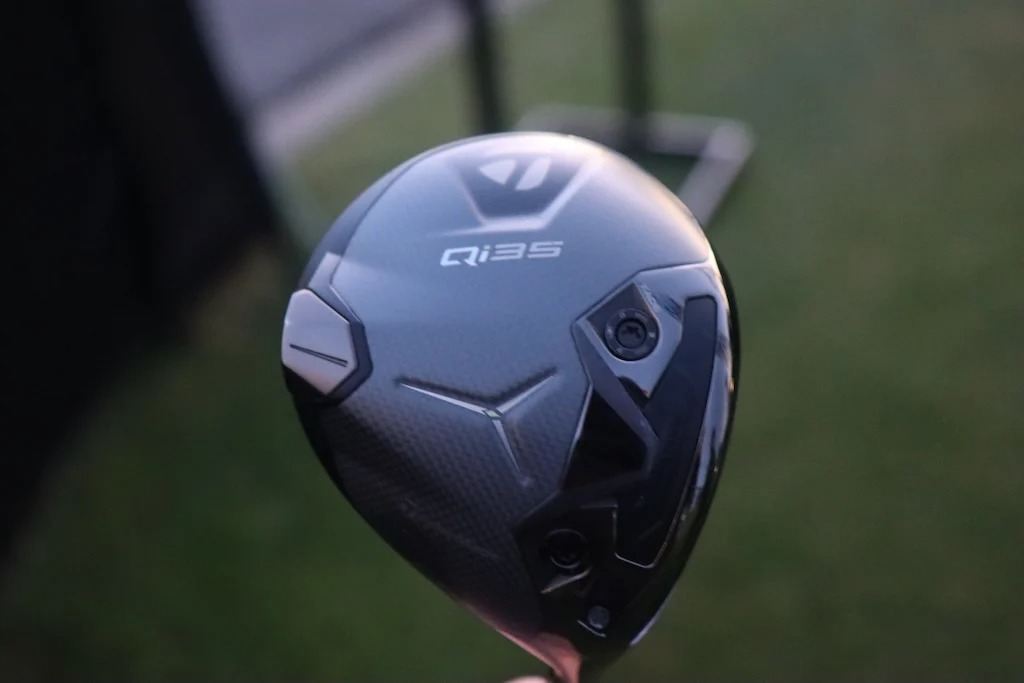
Driver: TaylorMade Qi35 LS – Is ‘Low Spin’ Always the Answer?
Bridgeman is rocking the TaylorMade Qi35 LS, set at 10.5 degrees, effectively played at 10. The LS, as many of you know, stands for Low Spin. For someone with Bridgeman’s swing speed, which I can only assume is considerable given the shaft choice, low spin is often the holy grail for maximizing distance. I’ve tested countless low-spin drivers on the Foresight GCQuad, and for high-swing-speed players, seeing revs drop into the 1800-2200 RPM range when paired with optimal launch can add significant carry and roll.


But here’s the reality check: low spin isn’t for everyone. In my fitting experience, many amateur golfers actually *need* more spin to keep the ball in the air longer and offer more forgiveness on mishits. The Qi35 LS, like its predecessors, is designed for those who generate ample ball speed and want to cut through the air. The Project X HZRDUS Smoke Green 60 6.5 shaft is a beast – extremely stiff, low launch, low spin. This setup screams “max distance, control for a powerful swing.”
For you, the weekend warrior, chasing “LS” numbers without the clubhead speed to back it up is a recipe for ground balls and lost yards. Focus on your optimal launch and spin, whatever that may be, rather than just the lowest number on the spin scale.
Fairway Woods: A Tale of Two TaylorMades (and Some Intriguing Shaft Choices)
Bridgeman opts for a TaylorMade Qi4D 3-wood at 16.5 degrees. This is interesting. The “D” in the Qi4D typically denotes a more forgiving, easier-to-launch profile compared to the “LS” counterpart seen in the driver. It suggests that while he wants low spin off the tee with the driver, he’s looking for a bit more help getting the 3-wood airborne and stable off the deck, or perhaps a more penetrating but still playable flight for longer approaches.
“3-wood: TaylorMade Qi4D (16.5 degrees) Shaft: Project X Denali Blue 80 TX”

The Project X Denali Blue 80 TX shaft is another heavy, extra-stiff, mid-launch profile. Again, this fits the mold of a strong swinger seeking control. What’s truly noteworthy, however, is his 7-wood:
“7-wood: TaylorMade Qi4D (21 degrees) Shaft: Graphite Design Tour AD XC 8 X”

A second Qi4D, this time at 21 degrees, effectively replacing a traditional long iron. This club, especially with the Graphite Design Tour AD XC 8 X shaft, suggests a desire for high launch and soft landing in that yardage gap. The Tour AD XC (Xtra Carry) line is renowned for its stability through impact and ability to produce a mid-high launch with moderate spin – perfectly suited for approaching greens with a long club. Many pros are moving to 7-woods over 3-irons or even 5-woods for their versatility and ease of use from various lies. It’s a smart play, and something I advocate for many mid-to-high handicappers struggling with their long irons.
Irons: A Blended Set for Precision and Workability
Bridgeman’s iron setup is a classic example of thoughtful optimization:
“Irons: TaylorMade TP UDI (4), TaylorMade P770 (5), TaylorMade P7CB (6-PW) Shafts: Project X 6.5”


The TP UDI 4-iron is a hollow-body utility iron designed for speed, lower spin, and a penetrating flight – perfect for stingers or reaching those long par-5s. It offers more forgiveness than a traditional blade-style 4-iron, crucial when you’re pushing the limits of carry distance.
Moving into the P770 (5-iron) and then the P7CB (6-PW) for his short irons is a classic modern pro setup. The P770 provides a little more forgiveness and speed in the mid-irons, while the P7CB (Compact Back) offers the feel, workability, and precise turf interaction that top players demand in their scoring clubs. The Project X 6.5 shafts across the board are extra-stiff, heavy steel shafts, indicative of a high-swing-speed player who values exact control and consistent trajectory.
This blended set approach is something I preach constantly in my fittings. Few golfers truly need or benefit from a full set of the same iron model. Matching the right head to the right part of your bag, based on your needs for launch, forgiveness, and feel, is how you optimize your game. Don’t be afraid to mix and match!
Wedges: Spin, Control, and a Split Shaft Strategy

Bridgeman uses TaylorMade MG5 wedges: 50-09SB, 54-11SB, and 60-08LB. The MG5s are renowned for their aggressive milling and raw finish, designed to maximize spin. The grind choices (SB for Standard Bounce, LB for Low Bounce on the 60-degree) show a player who understands how turf interaction impacts their short game, likely favoring the versatility of an SB for full shots and a lower bounce for delicate shots around the green, especially from tighter lies.
His shaft choice is particularly interesting here: Project X 6.5 in the 50 and 54, but then a True Temper Dynamic Gold Tour Issue S400 in the 60-degree. This highlights a common preference among pros. The S400, while still stiff, can feel a touch softer or offer a slightly different kick point compared to the Project X 6.5, potentially giving him a different feel or trajectory for his most-finesse club on touch shots. It’s a minute detail, but at the professional level, these subtle differences can be the difference between a save and a bogey.
Putter & Ball: Stability and Consistency

The TaylorMade Spider Tour putter with a SuperStroke Zenergy 2.0 PT grip is a classic choice for stability and ease of alignment. The multi-material design of Spider putters places weight at the perimeter, significantly boosting MOI (Moment of Inertia) and reducing twist on off-center strikes. This translates to more consistent ball speed and direction across the face – a huge benefit for anyone, pro or amateur. The SuperStroke grip further promotes a stable stroke by reducing wrist action.
Finally, the TaylorMade TP5x ball. This is a five-piece tour ball known for its slightly firmer feel, lower driver spin compared to the TP5, and penetrating flight. Paired with his low-spin driver and powerful swing, it’s designed to provide maximum velocity off the tee while still offering excellent short-game spin and control around the greens. The TP5x generally offers higher ball speed for those who can compress it, making it a natural fit for a professional.
The Takeaway for the Daily Duffer
Jacob Bridgeman’s bag is a masterclass in modern custom fitting. It’s not just about what brand he plays, but *how* he configures each club for a specific purpose. He blends forgiveness with workability, prioritizes low spin off the tee, and then seeks higher stability and control in his scoring clubs.
What can you learn? Don’t blindly buy what the pros play. Instead, understand their strategy. They’re fitting clubs to their unique swing characteristics, prioritizing specific performance attributes for different parts of their game. Analyze your own game: do you need more launch? Less spin? More forgiveness on long irons? Use your launch monitor data (or get fitted to generate it!) to make informed, data-driven decisions that cut through the marketing hype and genuinely improve your play. Sometimes the “latest and greatest” isn’t what’s best for *your* game; often, it’s about the right blend of technology and careful tuning.
