


As the Equipment Editor for The Daily Duffer, I’ve spent countless hours on the launch monitor, dissecting everything from driver faces to iron grinds. I’ve been a certified club fitter for over a decade, and I’ve learned one undeniable truth: performance isn’t about marketing buzzwords; it’s about verifiable data and how that data translates to real-world results for *you*.
Rory McIlroy’s recent run, culminating in that Grand Slam victory at Augusta, has everyone buzzing. And while the natural inclination is to look for the “secret sauce” in his equipment, I find myself drawn to something more fundamental, something that applies not just to Major champions, but to every golfer looking to improve their game and, yes, their equipment choices: decisiveness.
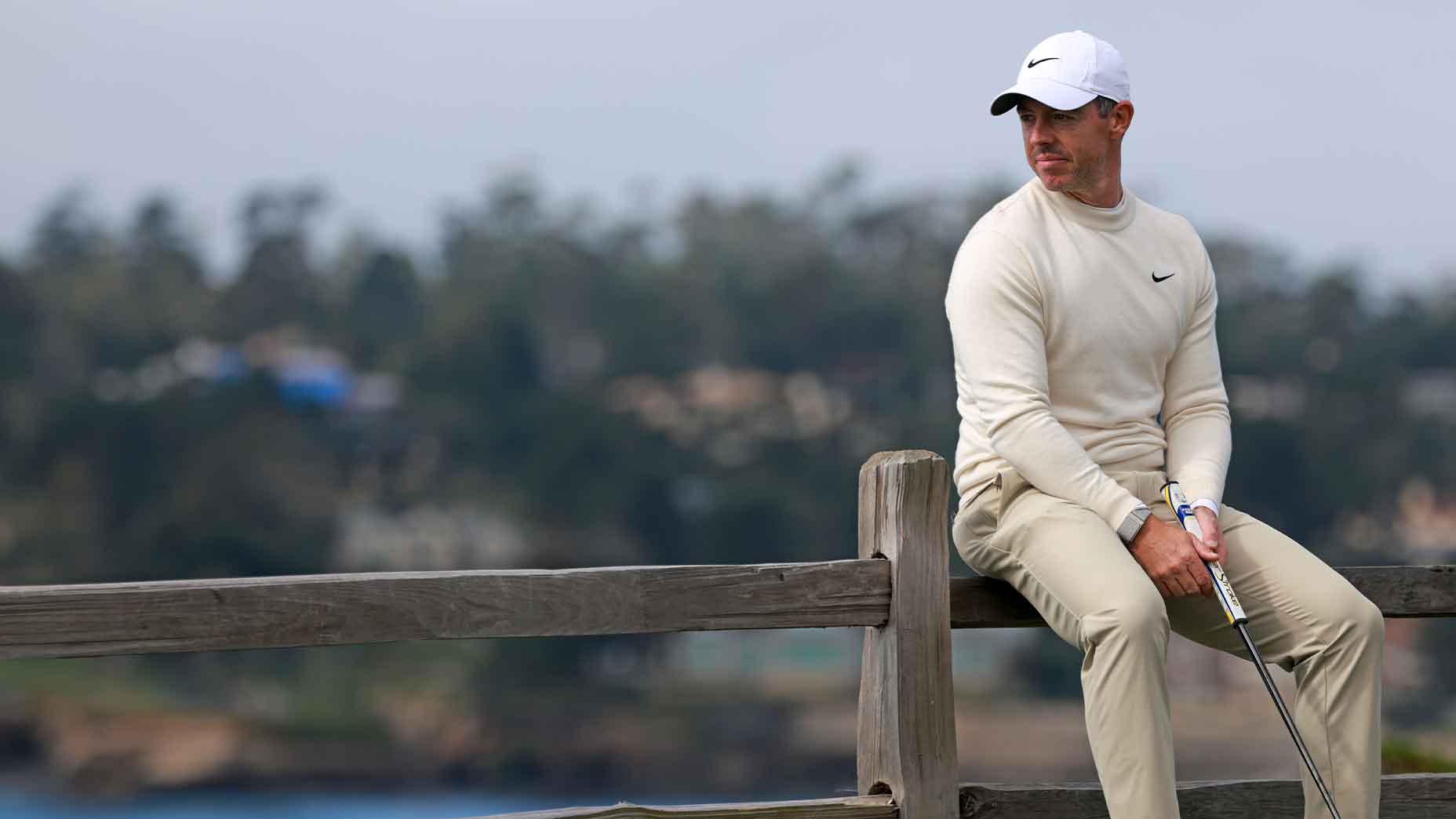
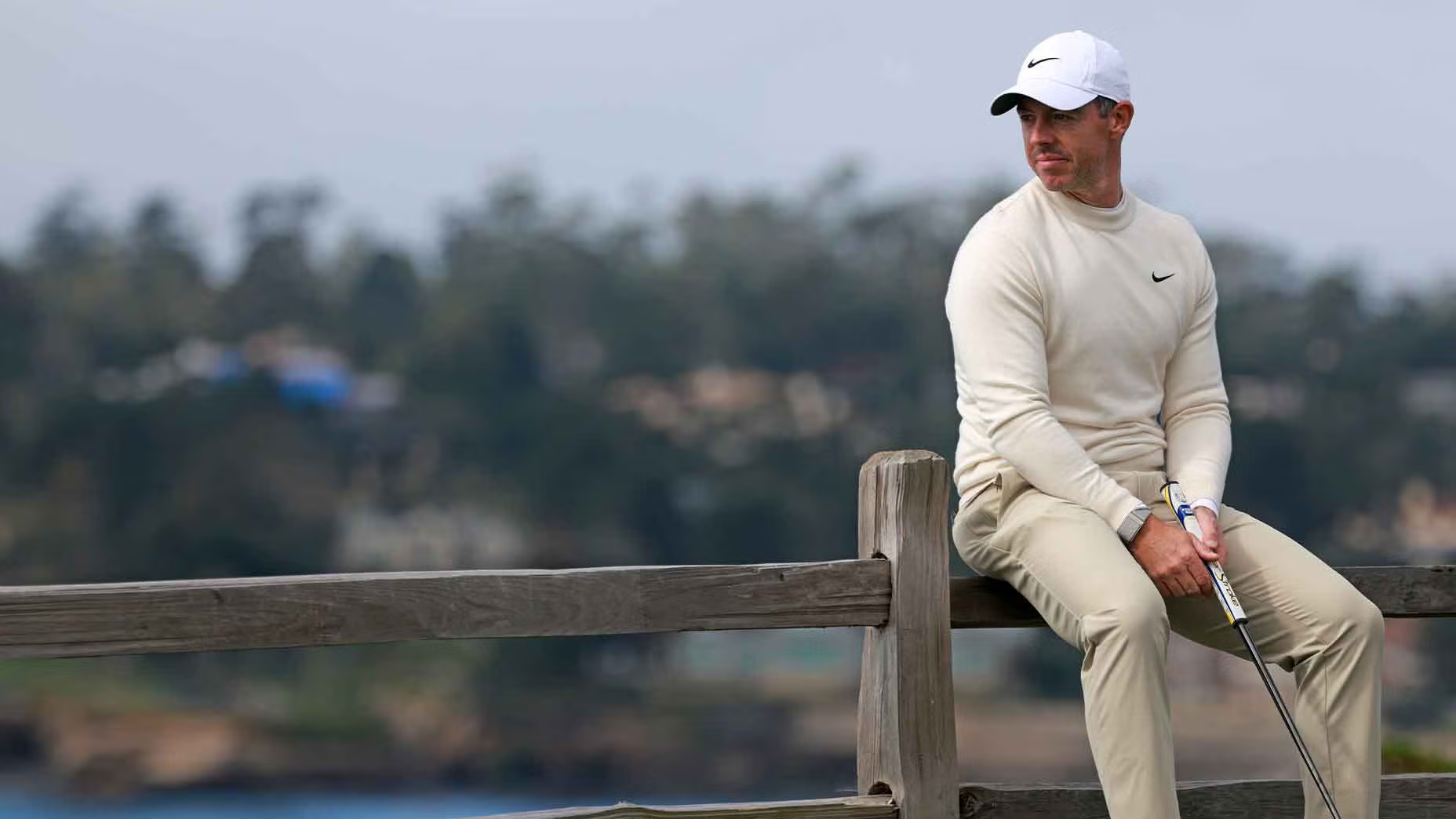
The source article highlights a warning sign at Pebble Beach: “NO SITTING ON FENCE.” This isn’t just course advice; it’s a metaphor for performance, both on the course and in the fitting bay. For too long, the golf equipment industry has thrived on ambiguity, on marginal gains presented as revolutionary breakthroughs. My job is to cut through that noise, and Rory’s recent success, ironically, highlights the clarity that comes from making definitive choices.
The Data vs. The Hype: Rory’s Cathedral Quest
Rory talks about his “cathedrals of golf” – Augusta, St. Andrews, Pebble Beach. These are places where indecision costs you dearly. In equipment, indecision takes the form of endlessly chasing the next “5 more yards” or a “game-changing” innovation that, under the cold, hard light of a launch monitor, offers no statistically significant improvement. I’ve seen golfers spend thousands swapping out drivers every year, only to find their clubhead speed, ball speed, launch angle, and spin rates remain stubbornly consistent, or worse, degrade due to constantly adapting to new profiles.
“There’s a few what I would call cathedrals of golf,” McIlroy said then. “Here, Augusta, St. Andrews — maybe a few more you could add in there. I had a big fat zero on all of those going in here. To knock one off at Pebble is very cool.”
This pursuit of conquering “cathedrals” is a metaphor for a golfer’s pursuit of their own ultimate performance. For some, it’s consistent 250-yard drives with tight dispersion; for others, it’s reducing an iron miss by 10 yards. In my fitting experience, the path to these personal “cathedrals” isn’t about chasing every new technological iteration, but about understanding what *works* for your swing DNA.
MOI, Ball Speed, and Decisiveness in the Bag
When I fit a player, we look at several key metrics. Ball speed is paramount for distance, but it must be paired with optimal launch angle and spin rate. A driver that gives you an extra 2 MPH ball speed but balloons it with 3,500 RPM of spin is a net negative. Similarly, a high MOI (Moment of Inertia) iron might offer more forgiveness on off-center hits, preserving ball speed and tighter dispersion, but if the feel or turf interaction doesn’t suit your swing, that benefit is lost.
Rory’s recent consistency suggests he’s found a setup that delivers predictable numbers on crucial shots. Think about the pressure of Augusta, hitting a draw around Amen Corner, or a fading 3-wood off the tee at Pebble’s 18th. These aren’t moments for equipment uncertainty. His success validates a principle I preach: once you find a club or combination of clubs that consistently delivers your optimal launch, spin, and ball speed windows, be decisive. Stick with it. Fine-tuning a known quantity is often more effective than jumping to the next untested promise.
“There’s places I haven’t won that I would love to,” McIlroy said. “St. Andrews being one of them. Riviera next week would be another. Riviera and Muirfield Village are two. They’re wonderful golf courses but who hosts the events as well. You know, Tiger and Jack.”
This echoes the idea of finding your optimal equipment “places.” Not every golfer needs the absolute lowest spin driver. Some moderate swing speed players, for example, might actually gain distance and optimize carry with a slightly higher spinning head that elevates the ball more. The data from hundreds of fittings have shown me that a 13-degree launch with 2,200 RPMs at 100 MPH clubhead speed is often better than a 10-degree launch with 1,800 RPMs if the latter doesn’t get the ball high enough to maximize carry. It’s about finding *your* specific ideal window, not just chasing a number.
Practical Buying Advice: Don’t Sit on the Fence, Get Fit
So, what’s the takeaway for the average golfer? Don’t be a fence-sitter when it comes to your equipment. But don’t confuse decisiveness with impulsivity. True decisiveness in equipment comes from informed choices, and that means a proper fitting. Here’s why:
- Objectivity: A fitter uses launch monitors to provide undeniable data. Your ball speed, launch angle, spin rate, and dispersion are measured. This cuts through marketing fluff about “revolutionary sweet spots” or “unprecedented forgiveness.” We see if it actually delivers for *you*.
- Optimization: I’ve seen golfers gain 10-15 yards simply by adjusting loft, lie, or shaft flex in their existing club. Sometimes, the solution isn’t a new club, but a perfectly optimized old one.
- Consistency: The goal of fitting isn’t just distance; it’s consistency. Reducing your left-to-right dispersion from 30 yards to 15 yards is often more impactful than an extra 5 yards off the tee. The MOI, CG placement, and even sole grind of an iron can drastically affect how consistently you strike the ball and how it reacts with the turf.
- Investment Protection: A good fitting ensures you’re investing in equipment that truly complements your swing. It’s a strategic decision, not a speculative one.
“McIlroy will likely have at least one more chance to close out a major victory at the Old Course in the prime of his playing career. That will arrive in 2027, when the golf world returns to St. Andrews for the 155th Open shortly after his 38th birthday.”
Rory is looking toward future challenges, confidently identifying the next “biggest one on the list.” You, too, should approach your game and your gear with similar clarity. Are you a high-handicapper struggling with consistency? Look for clubs with high MOI and low, deep CG to maximize forgiveness. Are you a mid-handicapper looking for more control? Consider a player’s distance iron with slightly less offset and a stronger loft package, but make sure your spin rates are optimal to hold greens. For single-digit players, the nuances of grind, bounce, and precise CG location become paramount. The data doesn’t lie, and neither should your approach to buying equipment.
In a world of constant equipment upgrades, Rory McIlroy’s story reminds us that true progress often comes down to clear objectives and a decisive, data-driven approach. Don’t sit on the fence with your golf game, or your equipment. Get fit, understand your numbers, and choose wisely.
