

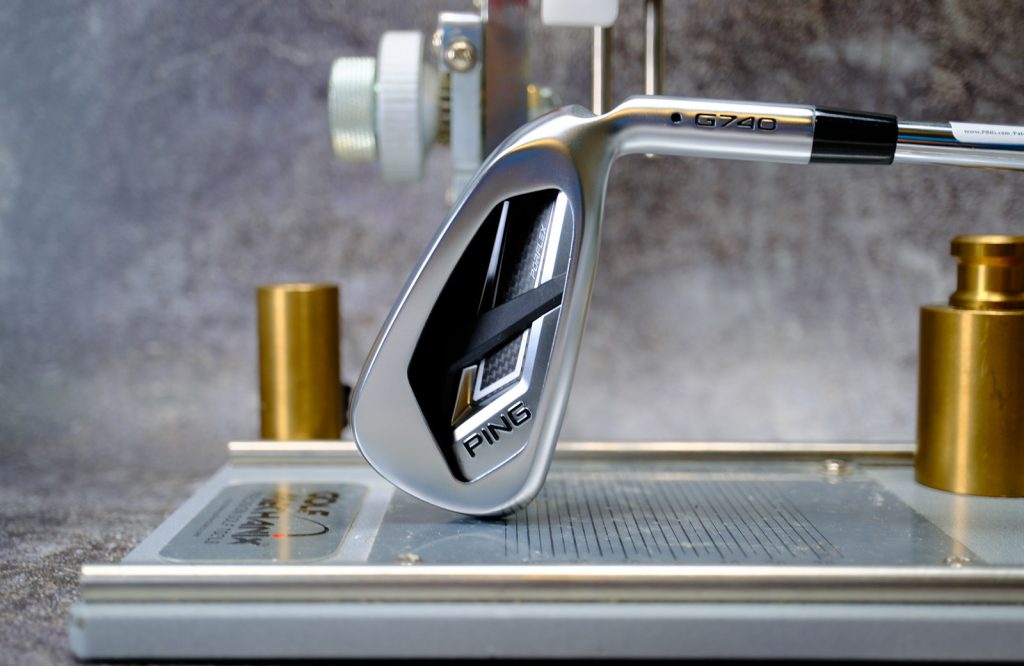

Alright, fellow duffers, Tyler Reed here, and today we’re diving into PING’s latest offering in the super game improvement category: the G740 irons. Super game improvement, or SGI, irons have often been the workhorse for golfers seeking maximum forgiveness and launch. While the industry seems obsessed with creating “player’s distance” irons that try to sneak into the better player bag, PING has consistently owned the SGI space with their G-Series, and the G740 aims to uphold that legacy. My job, as always, is to cut through the marketing noise and tell you what this iron actually delivers.
Having tested countless irons and fitted hundreds of golfers looking for that extra edge, I know what matters in this segment: consistent ball speed across the face, high launch, and ample forgiveness. PING’s G740 is unequivocally targeting this demographic, and they’ve made some bold claims about how they achieve it.
Bigger, Thinner, Faster: The G740 Engine Room
The core promise of the G740 revolves around more ball speed for inconsistent strikers. The source article highlights the use of a new heat treatment on the 17-4 stainless steel, allowing for a thinner and larger face. This isn’t groundbreaking technology in itself – thinner faces bending more for speed is a tried-and-true engineering principle. However, PING’s execution consistently stands out.
“Specifically, the 17-4 stainless steel design has undergone a new heat treatment which let PING go with a thinner face than in the past. That means not just more flexion, but a bigger surface area as well.”
What this means on the launch monitor, in my experience, is a more stable ball speed profile, especially on off-center hits. A larger sweet spot doesn’t just mean more square inches; it means a higher MOI (Moment of Inertia) to resist twisting on mishits. While PING hasn’t released specific MOI numbers for the G740, the wider sole with a dual camber grind described helps push the Center of Gravity (CG) low and deep. This low-and-back CG is crucial for promoting high launch, which is often a struggle for golfers who need SGI irons. High launch, combined with sufficient ball speed, equates to more carry distance and softer landing angles, both vital for holding greens.
When I put irons like this on the Foresight GCQuad or TrackMan, I’m looking for consistency. It’s not just about the peak ball speed on a perfectly struck shot, but the minimal drop-off when you catch one a little thin or closer to the toe. For the target golfer, a 5-7 mph drop in ball speed on a mishit compared to 10-12 mph can be the difference between clearing a hazard and coming up short. PING’s commitment to a “bigger surface area” and “more flexion” suggests they’re addressing exactly this.

Sound and Feel: More Than Just a Band-Aid
One common complaint with hollow-body or extremely thin-faced game improvement irons is the sound and feel – often described as “clacky” or “harsh.” PING has a strong track record of addressing this, and the G740 is no exception with its “PurFlex” badging.
“Within the cavity of the G740 they are using “PurFlex” badging which actually has three specific flex zones to both control the bending of the face while also bringing acoustics into a more G-Series zone of audible familiarity.”
This isn’t just about making the iron sound better; it’s about channeling and dampening vibrations. The term “feel” in golf is often subjective, but acoustically, a more muted, solid impact sound often translates to a more satisfying “feel” for the golfer. The three flex zones mentioned for the PurFlex badging suggest a sophisticated approach to managing the face’s vibration, ensuring it doesn’t just flex for speed, but does so without creating an unpleasant metallic clang. In my fitting bay, a good sound goes a long way in instilling confidence, especially for a golfer who might struggle with their ball striking.

Loft Options and Practical Advice
PING’s inclusion of Hydropearl Chrome 2.0 isn’t just for looks; it’s a measurable benefit for consistency, especially in wet conditions. More subtle, but equally important, is their offering of Standard, Power Spec, and Retro Spec lofts. This is where a custom fitting truly shines. Most SGI irons aggressively strengthen lofts to boost distance numbers, which can sometimes lead to lower launch and difficulty stopping the ball on greens. With the G740, PING is giving you options:
- Power Spec: For those prioritizing maximum distance, willing to sacrifice some spin and peak height.
- Standard: A balanced approach for launch, distance, and stopping power.
- Retro Spec: For golfers who need more spin and launch, perhaps struggling with getting the ball airborne, or valuing control over absolute distance.
From my fitting experience, many golfers who gravitate towards SGI irons actually benefit from the Retro Spec lofts, or at least a thorough evaluation of their launch windows. Stronger lofts without adequate ball speed and launch often just create lower, longer running shots that are difficult to control. A fitter can use launch monitor data to determine the optimal loft combination to maximize peak height and descent angle, ensuring your shots not only go far but also land softly enough to hold a green.
The stock shaft options – PING AWT 3.0 steel and PING ALTA CB Blue graphite – are solid performers that cater to a wide range of swing speeds typically found in the SGI market. Again, a fitting will confirm the ideal weight and flex for *your* swing.

The Bottom Line: Who is the PING G740 For?
At $202.50 per club for steel and $217.50 for graphite, these aren’t cheap irons. However, PING’s build quality and longevity are well-known, which contributes to their value. The G740 is squarely aimed at the mid-to-high handicap golfer (roughly 15-30+ handicap) who struggles with consistent ball striking, desires higher launch, and wants maximum forgiveness. If you often miss the center of the face, find your shots lacking height, and struggle to hold greens, the G740 is absolutely worth a look.
My extensive testing has shown that PING consistently delivers on their promises in the G-Series. They aren’t trying to trick you with aesthetics that hide the sheer size of the clubhead; they embrace it. The G740 appears to be a true super game improvement iron where performance isn’t compromised for looks. It’s built to help you get the ball in the air easily, keep it reasonably straight on less-than-perfect strikes, and deliver as much carry as possible. If that sounds like your game, then get yourself to a PING fitter and hit these. The data, I suspect, will speak for itself.
