



When PING first introduced the i500 series back in 2018, they made a clear statement: they were serious about the player’s distance iron category. Now, with the new i540, it’s clear they’re honing in on what truly matters to golfers in this segment: consistency, without sacrificing the explosive distance we’ve come to expect.
As the Equipment Editor for The Daily Duffer and a certified club fitter who’s logged countless hours on launch monitors, seeing a brand reiterate their commitment to a specific category is always intriguing. PING’s approach with the i540 isn’t just about raw speed; it’s about making that speed more predictable and playable. And honestly, for a player’s distance iron, that’s where the real challenge lies.
The Pursuit of Consistent Rockets: Lower CG and the “Consistency Parallax”
Let’s cut through the marketing jargon. What PING is trying to achieve with the i540 is a holy grail for many golfers: high ball speed that stays consistent across the face and from various lies. PING’s Design Manager Travis Milleman highlights this perfectly:
“Our desire to lower the CG in the i540 is to make the average impact more even with the CG. We’re trying to lower the CG to where it’s in perfect alignment with the golf ball at impact.”
This isn’t just theoretical; it has tangible impacts on the course. In my fitting experience, one of the biggest complaints from golfers with stronger-lofted irons is the wild variability in distance when they don’t catch it perfectly. You hit one thin off the turf, and it goes nowhere, but catch one a hair fat, and it flies the green. This often comes down to CG placement relative to impact. The higher the CG, the more discrepancy you see in spin and ball speed based on where the ball is struck vertically.
PING states they’ve lowered the CG by 2.4% compared to the i530, which itself was 10% lower than the i525. That compounding effect is significant. What does this mean on the launch monitor? Hypothetically, we should see tighter dispersion numbers, especially from a front-to-back perspective. The goal is to minimize those fliers from higher impacts (like from the rough) and reduce the significant energy loss from lower impacts (like a thin strike off the turf). As Milleman notes:
“The most efficient impact is in the center of the face at CG level. The reason we have VFT (variable face thickness) is to make the heel and toe hotter. We’re making those areas thinner to have a more efficient impact.”
The combination of a lower CG and a thinner, more flexible C300 maraging steel face (9% thinner than the i530!) aims to provide that metalwood-like ball speed across a larger portion of the face. This isn’t just marketing hype; a thinner face with a lower CG generally translates to higher ball speeds and more consistent launch conditions. However, the true test will be how well it maintains spin at those higher ball speeds to ensure greens can still be held, relying heavily on descent angle, as is common in this category. The stated 100 rpm more spin and five-foot higher max height are promising indicators.
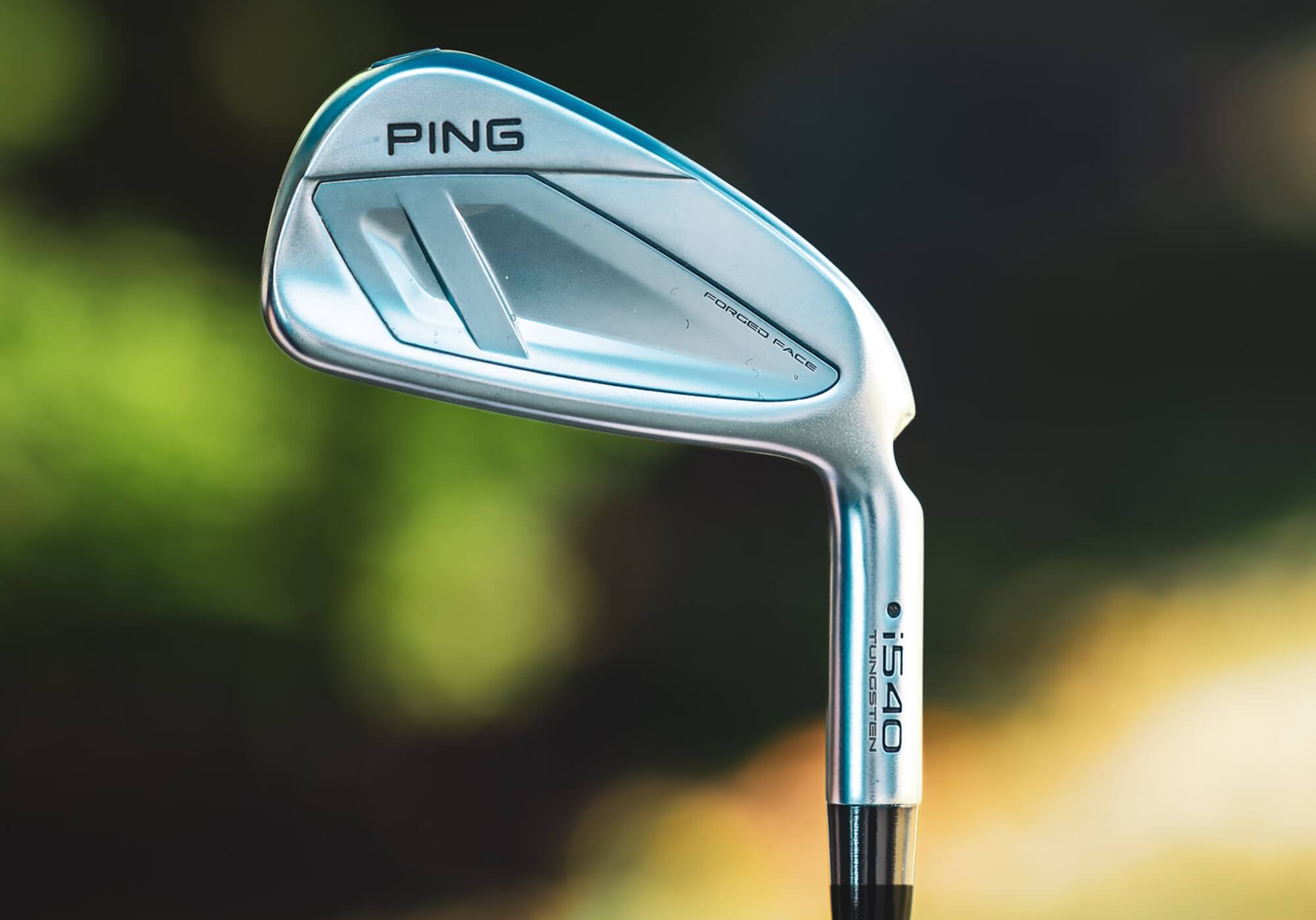
inR-Air: Innovation or Over-Engineering?
This is where things get truly interesting. PING’s introduction of “inR-Air”—a pressurized air pillow inside the cavity—to dampen vibrations and improve feel is a bold move. My first thought, as someone who sees clubs come back with all sorts of mysterious rattles and dents, was “What happens when it inevitably loses pressure?”

PING, to their credit, has seemingly done their homework. They subjected these inserts to extreme temperature tests (0°F to 160°F), multiple club impacts, and even global shipping to test durability. The notion that the insert is made of material with molecules smaller than oxygen to prevent diffusion, much like nitrogen in tires, is a clever engineering detail. However, the most critical piece of information for the average golfer comes from their “deflated insert” test:
“Of the 20 players who tested all the clubs, only one noticed any kind of a difference and that was the same guy who measured every single test insert at his desk. He only knew because he had personally hit thousands of these clubs during development. But even then, he wasn’t 100 percent sure.”
This is a refreshing dose of reality. While the inR-Air dramatically changes the feel internally for PING’s engineers, for the vast majority of golfers, its impact on performance and feel, even if it were to theoretically fail, seems minimal. This suggests it’s more about fine-tuning an already robust structure for optimal sound and initial feel perception, rather than being a critical component for ball speed or launch characteristics. It’s an innovative solution to the common “clanky” feel of hollow-body metalwood construction, but perhaps not as do-or-die as some might fear. It saves some internal weight and clearly addresses an engineering challenge PING faced with previous dampening methods.
Who are the PING i540 irons for, and are they worth it?
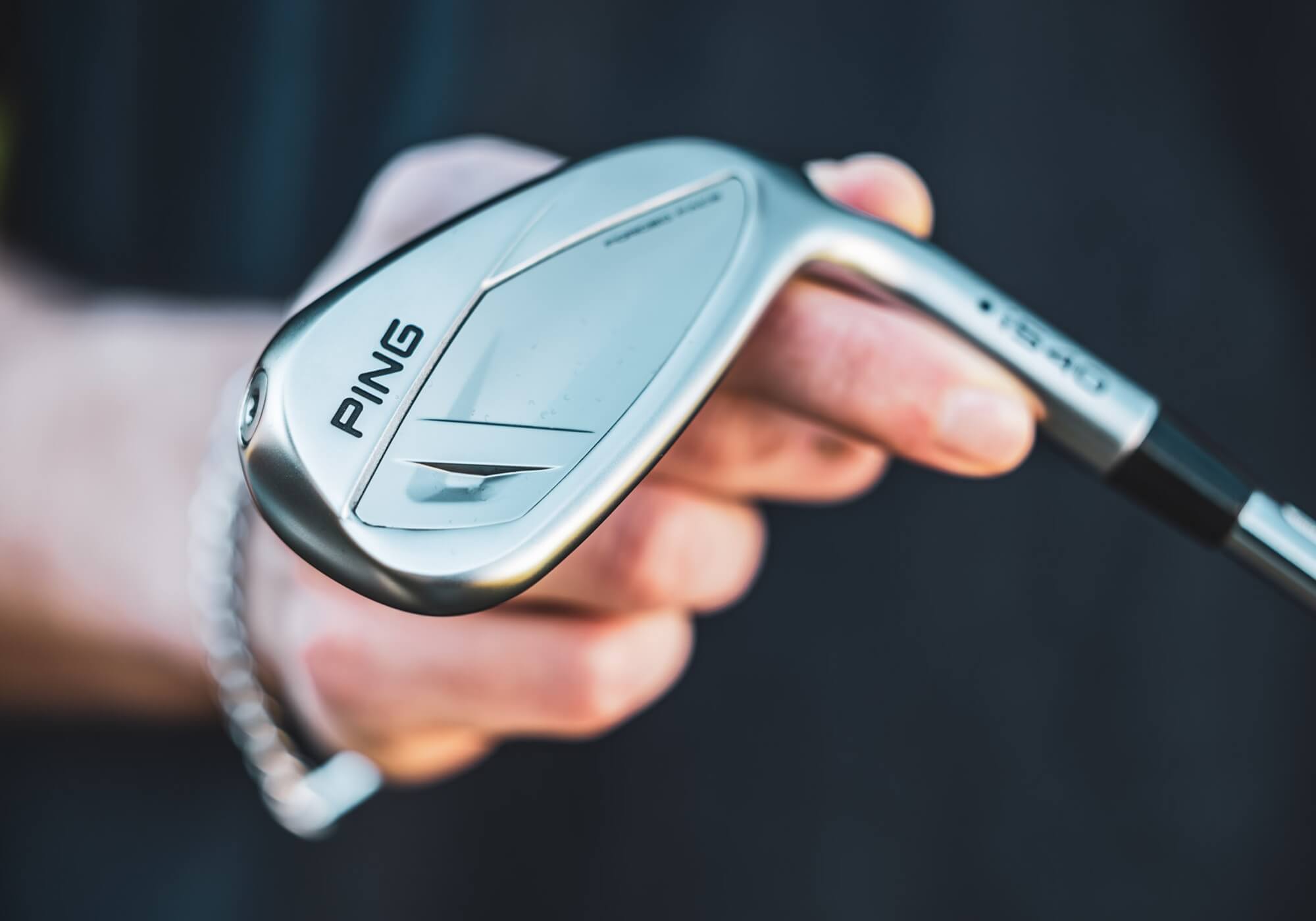
The i540 continues PING’s journey in the player’s distance category – clubs that bridge the gap between traditional player’s irons and game-improvement models. With a 7-iron loft of 29 degrees, these are definitely on the stronger side, designed for distance. The reported 0.6 mph ball speed increase and 1.4 yards of carry over the i530 are modest but noteworthy. For golfers seeking to upgrade from much older sets, this will be a significant jump in both speed and forgiveness.
The target golfer likely falls in the 5-15 handicap range, someone who appreciates a compact, player-preferred look at address but needs a boost in ball speed, launch, and stopping power to hold greens. In my fitting bay, I see countless golfers who want the look of a blade but the performance of a cavity back. The i540, with its slightly longer blade length to boost MOI, fits this “tweener” description well.
The price point at $225 per club (steel) is premium, but PING’s commitment to extensive shaft options at no upcharge is a massive plus. Proper shaft fitting is paramount, especially in player’s distance irons where launch and spin are finely balanced. My advice: don’t just buy off the rack. Get fitted. See how those 29-degree 7-irons behave on the launch monitor for YOUR swing. Check the consistency – that’s the real metric PING is chasing here.
If you’re already playing the i530, the incremental gains might not justify an immediate upgrade unless you’re struggling significantly with consistency. However, if you’re rocking older player’s irons and find yourself consistently short or lacking forgiveness, the i540 certainly deserves a serious look. PING has proven they’re not just chasing distance; they’re chasing smart distance – distance that works on the golf course, not just on the spec sheet.
