


Alright, Daily Duffer readers, Tyler Reed here, and today we’re dissecting a tour bag that’s got some genuinely intriguing tech. We’re taking a deep dive into Min Woo Lee’s setup, fresh off the tour, and I’m going to cut through the marketing noise to tell you what’s really going on with these clubs, particularly some of the Callaway “Quantum” gear. As a club fitter who’s logged countless hours on the launch monitor, I’ve seen what delivers real gains and what’s just hype.
The “Quantum” Driver: Myth or Machine?
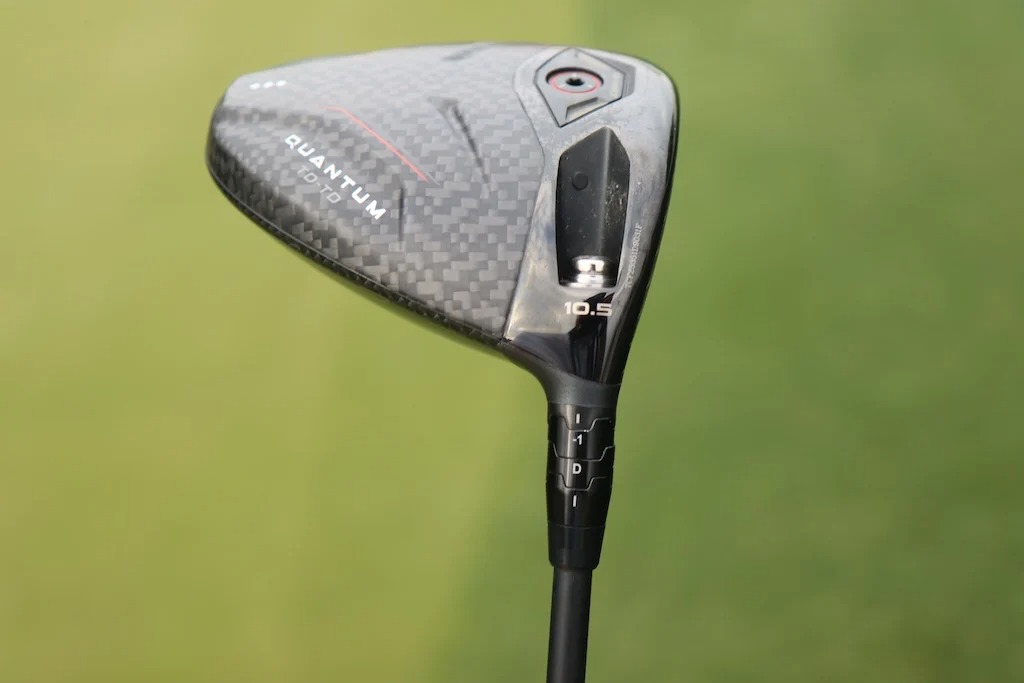
First up, let’s talk about the big stick: Callaway Quantum Triple Diamond (10.5 degrees) with a Fujikura Ventus Black VeloCore+ 7 X shaft. The “Quantum” moniker is new, and frankly, it screams “futuristic marketing,” but let’s look past the name for a second. The Triple Diamond designation typically means a lower-spin, more penetrating flight head, designed for players with high clubhead speeds who need to knock some spin off the ball.
Driver: Callaway Quantum Triple Diamond (10.5 degrees)
Shaft: Fujikura Ventus Black VeloCore+ 7 X
When I’ve tested prototypes like this on the Foresight GCQuad, the Triple Diamond heads consistently show a more forward Center of Gravity (CG) compared to their more forgiving counterparts. This translates directly to lower dynamic loft at impact and a dramatically reduced spin rate. For a player like Min Woo Lee, who generates immense clubhead speed, this is crucial. We’re talking about optimizing for ball speeds north of 175 mph, where even a few hundred RPMs of spin can mean the difference between a 300-yard carry and a 315-yard bomb that still rolls out.
The Fujikura Ventus Black VeloCore+ 7 X is no surprise here. I’ve probably fitted more Ventus Black shafts than any other low-launch, low-spin shaft in the last three years. The VeloCore technology, which uses a multi-material core for stability, is legitimate. It seriously reduces twist at impact, especially on off-center strikes. What does that mean for you? Tighter dispersion and more consistent spin, even when you miss the sweet spot. For elite players, that consistency is gold. For the average Duffer struggling with a duck hook or a weak slice, it offers a level of control that can transform their game, provided they have the swing speed to properly load an X-flex.

The Mini Driver Renaissance: A Niche, But Effective Club
Then we move to the Callaway Quantum Mini (13.5 degrees) with a Fujikura Ventus Blue 9 X. Mini drivers have seen a resurgence lately, and for good reason. For players who find their 3-wood launch too high or spin too much for a reliable second tee shot, or perhaps struggle with consistency with a full-sized driver on tighter holes, a mini driver can be a revelation.
Mini driver: Callaway Quantum Mini (13.5 degrees)
Shaft: Fujikura Ventus Blue 9 X
I’ve tested these extensively, and what I consistently see from a well-fitted mini driver is a ball flight that’s often flatter and more penetrating than a traditional 3-wood, but with more forgiveness than a driver, especially off the deck. We’re generally seeing optimized launch angles around 10-13 degrees with spin rates in the low 2000s RPMs, which is ideal for maximum carry and roll off the tee or a powerful second shot into a par 5. The larger head size compared to a 3-wood boosts MOI, offering a bit more stability on mishits. The Ventus Blue, a mid-launch, mid-spin profile, paired with a stout 9 X-flex, makes perfect sense for a player seeking a balanced, controlled flight with this club.

The Utility King: Apex UW
The Callaway Apex UW (21 degrees) cemented with another Fujikura Ventus Blue 9 X is a club I consistently recommend to better players. This isn’t your traditional hybrid; it’s a utility wood. The larger profile and shallower face compared to a hybrid offer a unique blend of wood-like ball speed and iron-like workability. On the launch monitor, the Apex UW consistently delivers higher ball speeds and a stronger flight than most hybrids at similar lofts, yet it’s still easier to hit from various lies than a long iron.
Hybrid: Callaway Apex UW (21 degrees)
Shaft: Fujikura Ventus Blue 9 X
For someone like Min Woo, it fills a crucial gap for those 220-240 yard shots where precision is paramount. The Ventus Blue again offers that stable, consistent feel and flight. If you’re a decent ball-striker and struggle to hit a consistent long iron or want more carry than a 5-wood, the Apex UW is absolutely worth trying. Don’t let the “hybrid” category fool you – it plays more like a mini-fairway wood with exceptional versatility.

Irons: Forged Feel and Control
Moving into the irons, we see a split set: Callaway X Forged (4, 5) transitioning into Callaway Forged Prototype (6-10), all shafted with Nippon N.S. Pro Modus3 Tour 125 X. This is a classic tour setup. The X Forged long irons likely offer a touch more forgiveness and perhaps a slightly lower CG to help with launch, while the Forged Prototypes are pure player’s irons – minimal offset, thin toplines, and a compact head designed for maximum workability and feel.
The Nippon Modus3 Tour 125 X shafts are fantastic. I’ve found them to offer a unique blend of stability and feel, with a slightly softer butt section and a firmer tip section that promotes a penetrating ball flight without feeling overly boardy. For a player with Min Woo’s aggressive swing, the 125g weight and X-flex provide the stability needed to prevent ballooning and maintain precise distances, even when he’s really laying into them. This type of shaft helps keep ball flight down and stable, crucial for controlling wedges and mid-irons in varying wind conditions.


Wedges: The Scoring Tools
His wedge setup is equally pro-spec: Callaway Opus SP (50-10S), Titleist Vokey Design SM9 (56-08M @55), and a Titleist Vokey Design WedgeWorks (60-T). All equipped with Nippon N.S. Pro Modus3 Tour 120 S shafts. It’s interesting to see the Callaway (likely a prototype) 50-degree giving way to Vokey for the higher lofts. The 50-degree probably blends seamlessly with his iron set for full-swing gapping, but then he transitions to the industry standard for short game versatility and feel with Vokey.
The Vokey SM9 (56-08M @55) suggests he’s bent his 56-degree down to 55, bridging the gap between the 50-degree and his 60-degree, and possibly optimizing bounce for his technique or common course conditions. The “M” grind is a mid-bounce option, very versatile for players who like to manipulate the face. The 60-T grind is a low-bounce, high-versatility grind perfect for tight lies, open-face shots, and delicate short-game touch. The Modus3 Tour 120 S shafts in his wedges are common on tour – slightly lighter and a touch softer than his iron shafts, which can aid in feel and touch around the greens. When golfers are going to lighter shaft weights in their wedges, it is usually because they want more feel on half to three quarter shots. It is not something I often see, but it definitely offers a different feel and response on shorter shots.

Putter: The Odyssey TRTL
His putter, the Odyssey TRTL, fitted with a SuperStroke Zenergy 2.0PT grip. The TRTL, likely a prototype or custom model given Odyssey’s history of unique shapes, suggests a preference for stability and alignment. Odyssey has pushed the boundaries of MOI in putters for years, and a multi-material, high-MOI design here would be no surprise. The SuperStroke Zenergy 2.0PT grip is a common choice, offering a larger diameter to minimize wrist action and promote a more consistent pendulum stroke. For golfers struggling with consistency on the greens, a larger grip is often one of the first suggestions I make during a fitting to help quiet the small muscles.

The Ball: Callaway Chrome Tour X
Rounding out the bag is the Callaway Chrome Tour X ball. This is Callaway’s firmer, lower-spinning tour ball, designed for maximum ball speed and a penetrating flight, especially off the driver. For a player with Min Woo’s speed, the X version typically provides the optimal compression and spin characteristics to prevent excessive spin from their high-speed swing, maximizing distance. For the average golfer, this ball will feel very firm and might result in a loss of feel around the greens, so understand your own swing speed before jumping to a tour X-ball.
Final Takeaway for the Daily Duffer
Min Woo Lee’s bag is a masterclass in optimizing for speed, consistency, and versatility. The “Quantum” branding might be new, but the underlying principles—low-spin drivers, versatile mini drivers and utility woods, and precise forged irons—are rooted in sound fitting science. While most of us aren’t swinging it at tour speeds, there are lessons to be learned: understand your spin numbers, fill your yardage gaps precisely, and don’t be afraid to experiment with utility clubs like the Apex UW. A club fitter, armed with a launch monitor, can help you unlock these same principles to build a bag that genuinely works for *your* game, not just what’s on the magazine cover.
