


As the Equipment Editor for The Daily Duffer, my inbox is constantly inundated with press releases touting the “next big thing” in golf equipment. From drivers promising 20 more yards to irons guaranteeing pinpoint accuracy, it’s my job to cut through the marketing noise and tell you what actually moves the needle.
Which is why, when I first read about 7 Mile Beach, my initial reaction wasn’t about clubheads or shaft flex. It was about *context*. Think about it: golf courses, at their core, are the ultimate “equipment” we interact with. They dictate strategy, demand specific shot types, and highlight the strengths and weaknesses of our current bag setup. A truly exceptional course, especially a links, is like a master club fitter – it exposes flaws, reveals potential, and ultimately, helps you understand your game better.
For years, when folks talked Tasmania, I pictured looney tunes rather than launch monitors. The article articulates this perfectly:
“Time was when Tasmania was better known for caricatures than courses. Mention of it conjured thoughts of a cartoon devil on a far-flung island with a penal colony past.”
But then Barnbougle Dunes arrived, followed by Lost Farm, and suddenly, the golf world’s collective MOI shifted. The perception of Tasmania as a golf destination, much like a driver’s center of gravity, adjusted dramatically.
“That perception began shifting in 2004 with the opening of Barnbougle Dunes, a Tom Doak design that soon gained a sibling in Lost Farm by Bill Coore and Ben Crenshaw. With that one-two punch, Australia’s smallest state became the antipode’s answer to Bandon, Ore., a remote-golf must.”
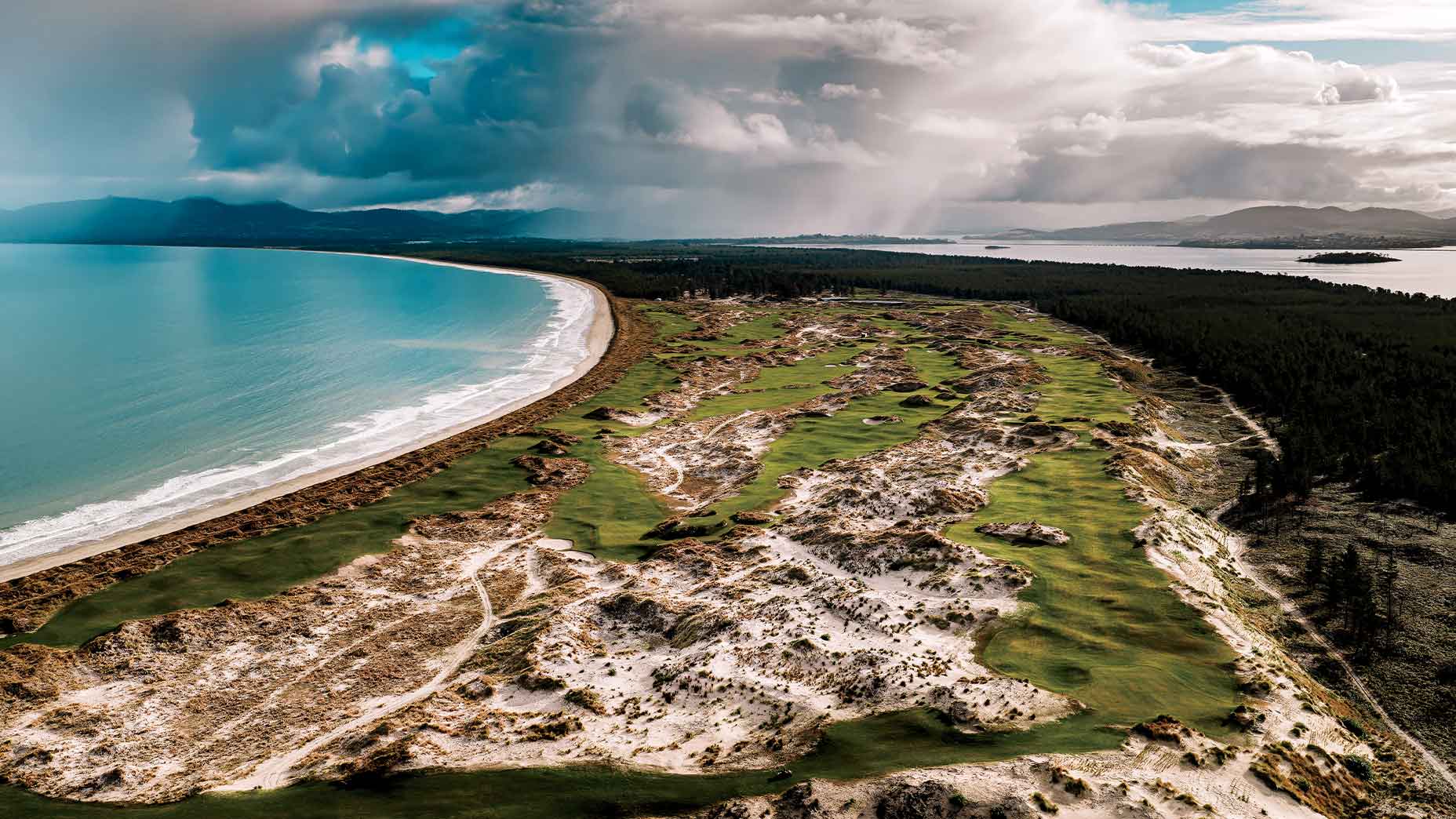
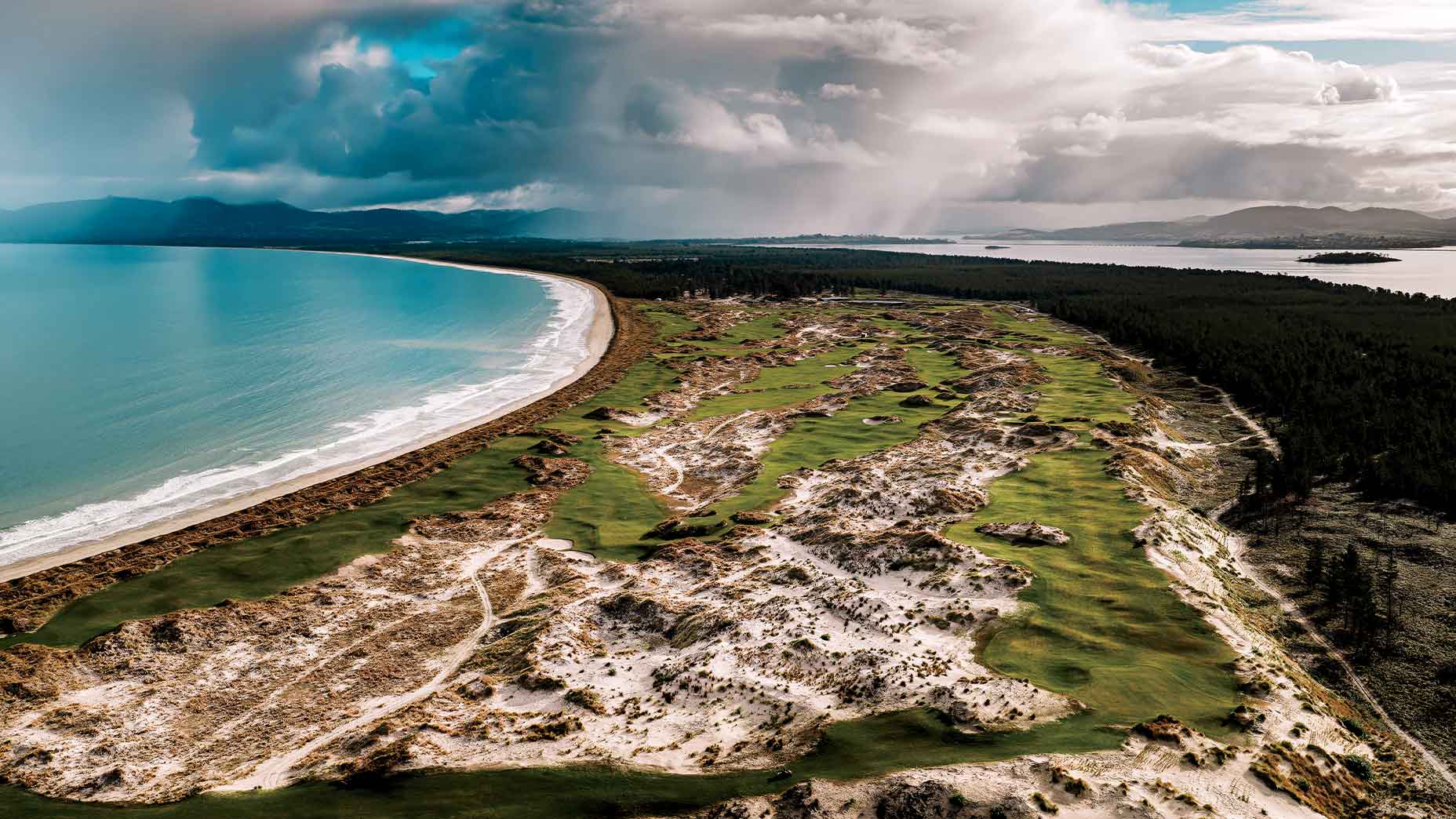
Now, with 7 Mile Beach, there’s an even clearer case for golfers to consider a trip that will undoubtedly challenge their equipment setup and shot-making ability. This isn’t just another parkland course where you can blast a high, soft draw with your low-spin driver and expect it to land gently. The description of 7 Mile Beach as a “true links, with fast-running fescue fairways, wispy grasses and water views from every hole” immediately sets off my internal equipment alarm bells.
The Equipment Demands of a True Links
From a technical standpoint, a links course like 7 Mile Beach is the ultimate field test for your bag. My experience fitting hundreds of golfers across all skill levels has taught me one absolute truth: golfers rarely test their equipment effectively in windy conditions. We chase peak ball speed and optimal launch angles on calm ranges, but those numbers can become liabilities when a 20 mph crosswind enters the equation.
On a links course, controlling spin is paramount. That super-low-spin driver you love for massive carry distances on serene days? It might be a nightmare on 7 Mile Beach. A moderate to slightly higher spin driver, sometimes even a touch older model with a more forward CG that promotes penetration, could actually yield better, more controlled results into a headwind. I’ve seen countless golfers, chasing that maximum ball speed number of 170 mph+, get airborne with a driver into a stiff breeze, only to watch it balloon or curve violently offline. The data shows that a slightly lower launch, higher spin profile often maintains a more stable flight in adverse conditions – even if the peak ball speed isn’t as eye-popping on the launch monitor.
The same applies to irons. Those high-launching, perimeter-weighted game improvement irons are fantastic for forgiving mishits and getting the ball up quickly. But on a firm, fast-running fescue links, you’ll need versatility. Think about the shot demands: low-flighted stingers, bump-and-runs, and controlled trajectories into greens that repel rather than embrace incoming shots. My fitting data routinely shows that players with a flatter angle of attack benefit more from a slightly more compact iron head with a higher CG and less offset, allowing for better turf interaction on firm lies and more control over trajectories, especially with the wind.
“The wind is no cartoon. It’s real, often frisky and central to a course with a vivid sense of place.”
This statement reinforces my point. “Frisky” wind isn’t just about losing distance; it’s about altering spin axes, inducing sidespin, and demanding a different kind of precision. On my Trackman, I can simulate 20 mph winds, and the difference in dispersion patterns between an optimized shot and a wind-vulnerable one is staggering. Your standard 7-iron that carries 160 yards on a calm day might only carry 140 yards into a stiff headwind, and that’s *if* you hit it well. The real challenge is managing the effective distance and keeping the ball in play.
Who is 7 Mile Beach For?
This course, like certain golf clubs, isn’t for everyone. If your game relies solely on towering drives and soft-landing approaches, 7 Mile Beach will likely be a humbling experience. But if you’re a golfer who appreciates the strategic nuances of links golf, enjoys creatively shaping shots, and wants to truly test the versatility of your equipment, then this destination is calling your name. It will force you to consider every club in your bag, from your driving iron with its low spin and penetrating flight, to a pitching wedge you might use for a delicate putt-chip from off the green.
The value proposition here isn’t about bragging rights over how far you hit your latest driver. It’s about a deep, immersive golf experience that will improve your understanding of shot-making in challenging conditions. It’s the kind of golf that makes you appreciate the subtle differences in your wedges, the forgiveness of your putter on bumpy greens, and the absolute necessity of course management. This isn’t just a trip; it’s a recalibration of your golf game, offering insights that no artificial range environment or launch monitor session alone can provide.
