

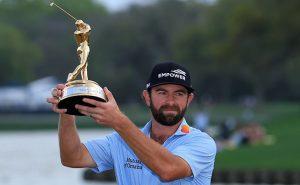

Hello, Daily Duffer readers! Sarah Chen here, and what a week it was at TPC Sawgrass. Cameron Young’s victory at The Players Championship wasn’t just a highlight reel of incredible shots; it was a masterclass in mental fortitude and strategic execution under immense pressure. We can all learn a tremendous amount from watching how he navigated one of golf’s most daunting courses a tournament that truly tests every part of a player’s game.
For years, Cameron Young carried the label of “the best player without a major,” a narrative that, as the article points out, had become exhausting. But on Sunday at Sawgrass, he shed that weight with a performance that was as much about inner belief as it was about pure ball-striking. This is a crucial lesson for every golfer, from tour pros to weekend warriors: your mindset can make or break your game.

Pressure Performance: The Mental Edge
Think about the pressure cooker situation on Sunday. The air at TPC Sawgrass, especially on Championship Sunday, is described as having “a way of thickening when the sun begins to dip behind the moss-draped oaks.” This isn’t just poetic language; it’s a real feeling. The mental game often separates good from great, and Young’s ability to stay focused and aggressive when others faltered was truly inspiring.
In my teaching experience, I’ve seen countless golfers with technically sound swings crumble under pressure, while others with less “perfect” mechanics rise to the occasion. Why? Often, it comes down to a clear mind and a commitment to their process, not just the outcome.
“Young’s raw, explosive power against Fitzpatrick’s meticulous, grinding precision.”
This quote perfectly illustrates the clash of styles between Young and Fitzpatrick. While their paths may differ, both required immense mental strength to perform at that level. Young, with his powerful game, still needed control, especially on those treacherous closing holes.
Mastering the Moment: Aggression with Control
Let’s look at two incredible examples of Young’s controlled aggression:
The 17th Hole (Island Green): This par-3 is less a golf hole and more a psychological experiment. With the tournament on the line, Young hit a “57-degree wedge and played a shot so aggressive it silenced the gallery. The ball skipped twice and checked up just six feet from the hole.” This wasn’t a safe shot to the middle of the green; this was a confident, aggressive shot aimed to win. He knew his yardage, trusted his swing, and executed.
The 18th Hole Drive: The final tee shot at Sawgrass demands a draw over water. Most players aim for safety. Young? He unleashed a drive “that registered 124 mph of clubhead speed. The ball tracked perfectly over the corner of the water, catching the downslope of the fairway and rolling out to a staggering 375 yards. It was the longest drive on the 18th hole in the history of ShotLink tracking.” This wasn’t just power; it was calculated power, turning “the hardest par-4 on the course into a pitch-and-putt.”
These moments highlight a critical balance: being aggressive doesn’t mean being reckless. It means having confidence in your ability to execute a challenging shot and committing to it fully.
“I think I just proved to myself that I belong.”
This is the ultimate takeaway. Confidence is earned, not given. Every time you commit to a shot and execute, you build that self-belief. Cameron Young earned his confidence, and you can too.
Actionable Drills to Build Your Inner Cameron Young:
Drill 1: The “Commitment to Contact” Drill
This drill helps you practice committing fully to your swing, even when there’s an element of risk, mimicking Young’s aggressive yet controlled approach.
- How to do it: Pick a target on the range, but instead of focusing on where the ball lands, focus intently on making crisp, confident contact with the ball. Imagine a small ‘bullseye’ on the back of the ball.
- Why it works: So often, indecision at impact leads to poor shots. By shifting your focus to solid contact, you teach your body to commit through the ball, just as Young committed to his lines on 17 and 18. This helps reduce hesitation and tension.
- Practice tip: Start with half swings, then gradually increase to full swings. Notice how much freer your swing feels when your focus is solely on hitting the ball cleanly.
Drill 2: The “Pressure Putt” Challenge
Young made crucial putts under immense pressure. This drill helps simulate that feeling.
- How to do it: Find three golf balls and pick a hole. Imagine your entire round comes down to these three putts. Putt each ball, but before you do, take three slow, deep breaths. Visualize the ball going in. Walk to the hole, mark a specific spot for your next putt (e.g., 6 feet away), and repeat.
- Why it works: The deep breaths calm your nervous system, allowing for better focus. Visualizing the shot programs your mind for success. By adding a small layer of “imagined” pressure, you train yourself to perform under duress.
- Practice tip: Don’t just go through the motions. Really commit to the scenario. Reward yourself (or create a consequence) for making (or missing) these putts.
Drill 3: The “Aggressive Target Practice”
Cameron Young didn’t just hit the green on 17; he hit it to six feet. This drill encourages you to pick smaller, more precise targets.
- How to do it: On the range, instead of just aiming for a general flag, pick a smaller, more specific target. This could be a specific branch on a distant tree, a ripple in a water hazard, or even a specific patch of grass near a flag. For irons, imagine a bucket, not just a green.
- Why it works: By focusing on a smaller target, your brain and body automatically become more precise in their movements. This encourages better alignment and a more committed swing path.
- Practice tip: If your ball doesn’t hit your micro-target, analyze why without judgment. Was your alignment off? Did you swing too fast? The goal isn’t perfection, but consistent improvement in targeting.
“Cameron won it. That drive on 18… I don’t know many people on the planet who can hit that shot under that kind of pressure.”
Matt Fitzpatrick’s gracious words really highlight the magnitude of Young’s performance. It wasn’t about Fitzpatrick losing, but Young winning with a truly exceptional shot when it mattered most. This is what we all strive for in our own games: to hit that “shot for the ages” when the pressure is on, whether it’s for a major championship or just to beat your buddies. You have it in you, so get out there and practice with purpose!
