


The Art of Letting Go: What Rory McIlroy’s Missing 7-Iron Teaches Us About Success
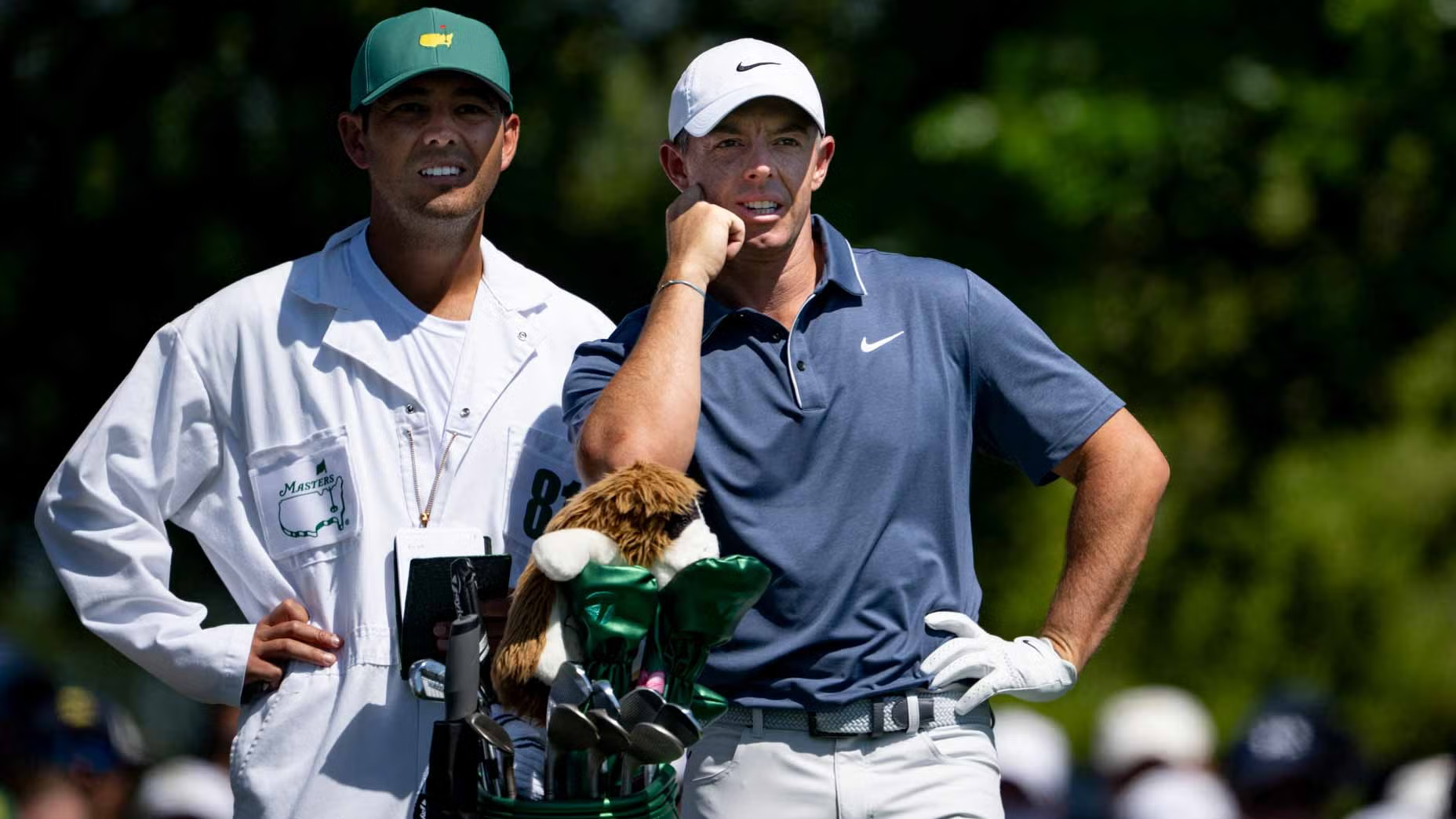
There’s a moment in every golfer’s life when you realize that holding on too tightly to your greatest achievement can actually hold you back. For Rory McIlroy, that moment came on a Monday after the 2025 Masters, when he discovered his championship-winning 7-iron was missing from his bag.
But here’s the thing—it wasn’t lost. It was deliberately kept at Augusta National, a tradition honoring historic victories. And when McIlroy learned what happened, his response wasn’t frustration or regret. It was acceptance, perspective, and a clear-eyed focus on what comes next.
That’s not just a golf story. That’s a lifestyle lesson wrapped in a minor logistical mishap.
The Hidden Art of Moving On
I’ve noticed something interesting in my conversations with golfers of all levels: we tend to get emotionally attached to our best rounds, our best clubs, even our best moments. That vintage putter that helped you break 80. The driver shaft that felt perfect that one time. The specific ball you were using when you shot your personal best.
We’ve created entire narratives around these objects, as if they hold some magic that we alone possess. And when they’re gone—whether through loss, replacement, or in McIlroy’s case, ceremonial donation—we panic. What if we can’t replicate that performance? What if we’ve lost our edge?
McIlroy’s manager Sean O’Flaherty made the call to give Augusta National the 7-iron for display without telling Rory first. It was a genuine oversight. But when McIlroy found out, he didn’t dwell on it.
“That’s fine, I’ll get a new 7-iron. If there was one I was going to give the club, it was probably going to be that one.”
That’s not just a gracious response. That’s someone who understands something crucial: the club doesn’t make the golfer. The golfer makes the club.
Think about this in your own game. How much mental energy do you spend searching for the “perfect” equipment, waiting for new gear to unlock your potential, or replaying that one magical round with that one magical club? What if you redirected some of that energy toward the actual mechanics of improvement—consistency, discipline, and the willingness to adapt?
Building Resilience Through Replacement
What’s particularly striking about McIlroy’s situation is what happened next. He had to get a replacement 7-iron before his next tournament, the Zurich Classic of New Orleans. Most of us would assume that would throw off his rhythm, especially so soon after his career Grand Slam victory.
Instead, he moved seamlessly forward. T12 finish at Zurich, T7 at the Truist Championship. Not spectacular, sure, but solid. Professional. Consistent.
This matters for anyone serious about their golf, whether you’re chasing scratch or just trying to keep your handicap stable. The equipment matters less than your ability to adapt. Your confidence shouldn’t be stored in your gear—it should be stored in your preparation and your mindset.
For everyday golfers, this is liberating. You don’t need to wait for the perfect clubs or the perfect conditions. You need to develop the kind of resilience that allows you to walk into any situation—with any equipment—and perform at your best level.
The Burden of Peak Performance
But perhaps the most revealing moment in McIlroy’s press conference at Pebble Beach wasn’t about the missing club. It was about what came after.
“If I had a critique of myself last year is that I didn’t bring the consistency that I maybe would have wanted post the Masters.”
The world No. 2 player in professional golf, fresh off completing the career Grand Slam, acknowledging that he struggled to maintain momentum afterward. He won three times early in 2025, but didn’t add another victory after the Masters despite eight more top-10 finishes.
This is something I don’t think we talk about enough in golf culture: the psychological toll of peak performance. When you play your best golf—whether it’s your best round ever or simply your best stretch of tournaments—there’s an invisible weight that comes with it. You’re suddenly aware of expectations, both internal and external. You start playing to not regress rather than playing to progress.
McIlroy’s remedy is actually humble and relatable. Rather than obsessing over that victory, he’s chosen to move forward with clear eyes.
“It’s done, it’s wonderful, I’m happy that it’s over in a way, but I want to move on and I’ve got more goals and there’s more things I want to try to accomplish and achieve.”
There’s wisdom in that “happy that it’s over” line. It suggests someone who refused to get trapped by achievement, who understood that dwelling on past success is a form of stagnation.
What This Means For Your Game
So what’s the lifestyle takeaway here? A few things worth sitting with:
First, loosen your grip on past achievements. Celebrate them fully, then release them. Your best round doesn’t define your potential—it documents your past capability.
Second, build resilience by staying adaptable. The golfers who thrive are the ones who can play well with different equipment, in different conditions, under different pressure. Develop your game, not your dependencies.
Third, understand that peak performance creates its own psychological pressure. Build mental strategies for navigating the space after your best rounds, not just reaching them. That’s where growth happens.
Rory McIlroy’s missing 7-iron isn’t really about a club at all. It’s about a champion’s willingness to let go, to adapt, and to keep moving forward toward the next goal. That’s not just professional golf. That’s a pretty solid way to live.
