


Alright, let’s talk mini drivers. For years, this category has been a bit of an enigma for many golfers. Is it a glorified 3-wood? A shrunken driver? A marketing gimmick? As the Equipment Editor for The Daily Duffer and someone who lives and breathes club fitting, I’ve seen countless variations of these clubs come across my launch monitor. The 2025 MyGolfSpy Mini Driver Test, which I’ve thoroughly reviewed, sheds some much-needed light on the real-world performance of these clubs, helping us cut through the noise and figure out if one of these beasts belongs in your bag.
My biggest takeaway from this detailed test, and something I consistently preach in my fittings, is that a mini driver isn’t a one-size-fits-all solution. Its utility is entirely dependent on the specific problem you’re trying to solve in your golf game. Forget the marketing hype about “ultimate versatility” – the data clearly shows different mini drivers are engineered for very distinct purposes.
The “Driver Replacement” Myth (and Reality)
Many golfers eye a mini driver as a replacement for their big stick, especially if they struggle with driver dispersion. The idea is alluring: slightly shorter shaft, slightly smaller head, but still plenty of pop. But does it actually deliver driver-like distance with more control? According to the test, one model really nailed this niche:
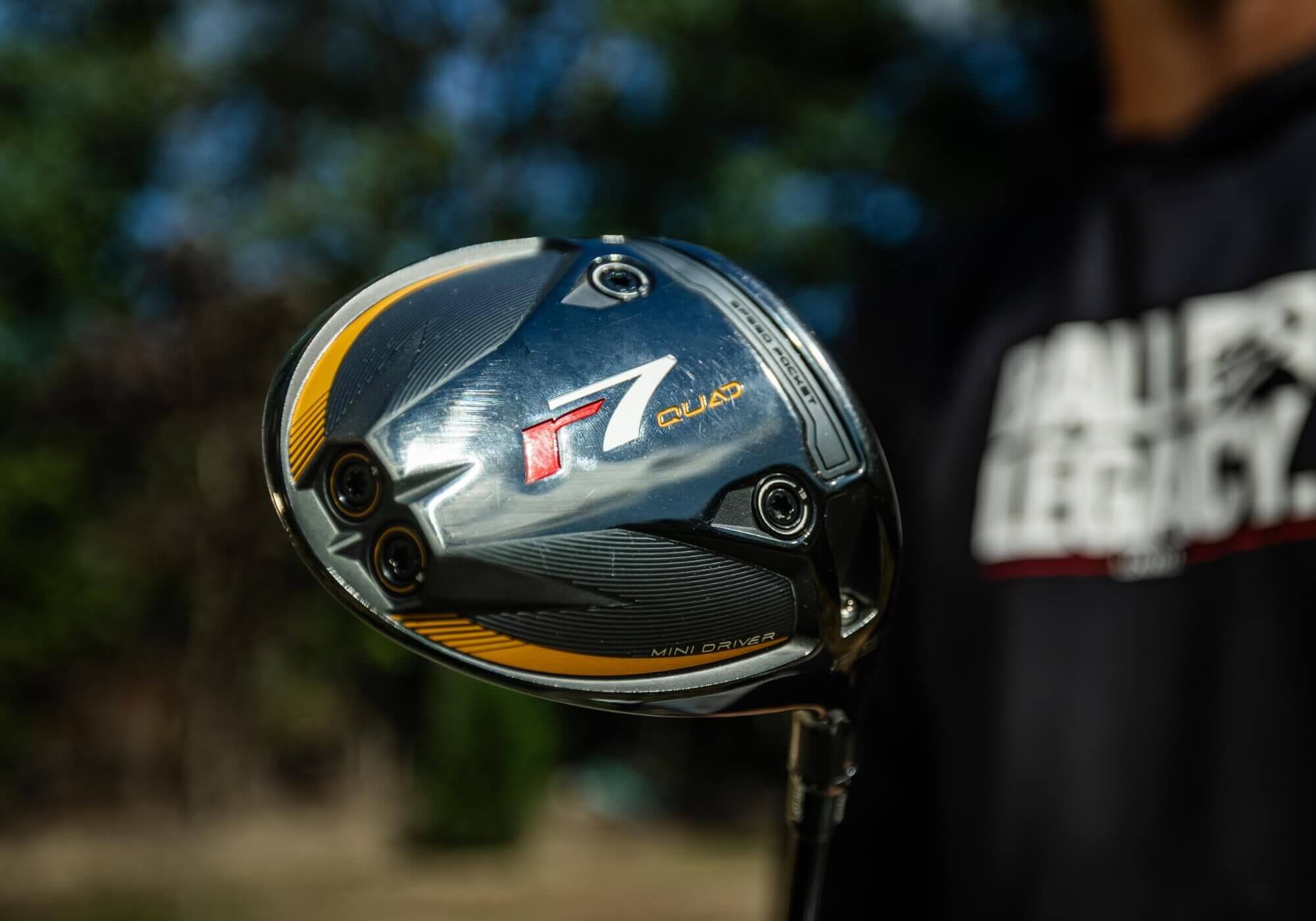
“TaylorMade R7 Quad was the clearest “driver replacement” in our test: longest total distance (268.01), lowest spin (2,866 rpm) and one of the tightest dispersions (shot area 3,881).”
This data aligns with what I’ve observed in fittings. The R7 Quad, with its larger profile (compared to other minis) and lower spin rates, is genuinely designed to maximize ball speed and carry distance while benefiting from the shorter shaft for improved control. The 2,866 rpm spin rate is still higher than what many tour pros would want from their main driver, but for the average golfer struggling to keep their 10.5-degree driver in play with 3500+ rpm of spin, dropping down to around 2800-3000 rpm is a significant win. The “shot area 3,881” is the real hero here – a testament to improved consistency.
When I’m fitting someone whose driver seems like a lottery ticket, but they still need distance, the R7 Quad’s characteristics – particularly that blend of distance and significantly better dispersion – make it a compelling option. It’s not just about reducing spin; it’s about optimizing launch conditions to produce a more predictable flight with a better smash factor on off-center hits due to the slightly more compact head.
Forgiveness Over Feverish Distance
Then there’s the golfer who just wants to find the fairway. Distance, while nice, takes a backseat to simply keeping the ball in play. For this player, the forgiveness profile of the club is paramount. The MyGolfSpy test highlighted a clear winner in this department:
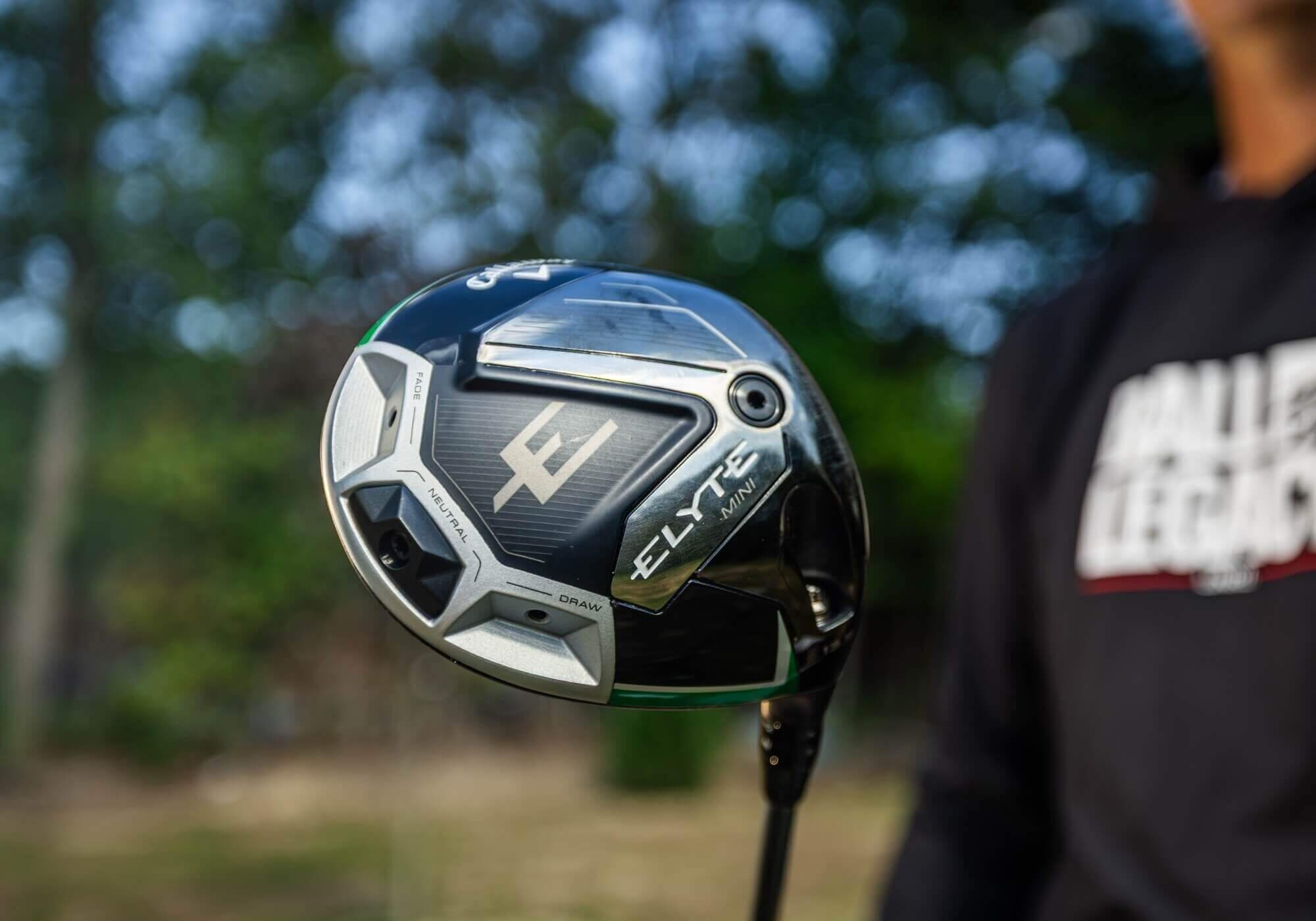
“Callaway Elyte Mini led the test for forgiveness (8.8) with strong accuracy (8.5) but it spun the most (3,136 rpm) which helps explain why it wasn’t the longest. This is the choice when “in play” matters more than squeezing out a few extra yards.”
This is classic engineering. A higher center of gravity (CG) and/or a more forward CG typically lowers spin, but often at the expense of MOI (Moment of Inertia) and forgiveness. Conversely, engineering for maximum forgiveness often involves a deeper and/or lower CG, which can increase spin. The Elyte Mini’s 3,136 rpm confirms this tradeoff. While not ideal for raw distance, that higher spin can be a blessing for golfers with lower clubhead speeds or those who struggle with excessive slice/hook spin, as it helps keep the ball airborne longer, resisting rapid directional deviation. When I’m fitting a golfer who is consistently missing fairways with their 3-wood or driver, presenting a club with an 8.8 forgiveness rating is a no-brainer. It effectively widens the “sweet spot” across the face, helping maintain ball speed and reducing directional error on less-than-perfect strikes.
The Accuracy-First Approach: A Niche, But Important Role
Some courses demand precision above all else. Think tight tree-lined fairways or penalizing hazards. For these scenarios, distance can be a detriment. The Titleist GT280 carved out its own niche here:
The GT280, with its near-top rankings for accuracy (8.6) and forgiveness (8.7), despite finishing last in distance, speaks volumes. This isn’t a club designed to chase yardage numbers. It’s designed to be a scalpel, not a sledgehammer. My experience with Titleist equipment is that they rarely compromise on feel and control, and the GT280 appears to embody that ethos within the mini driver category. For the golfer who consistently puts themselves in trouble aiming for the 250-yard mark, a club that consistently finds the 220-yard mark in the center of the fairway is going to shave strokes. It’s about effective distance – the one that stays in play.
Off the Deck: The True 3-Wood Alternative?
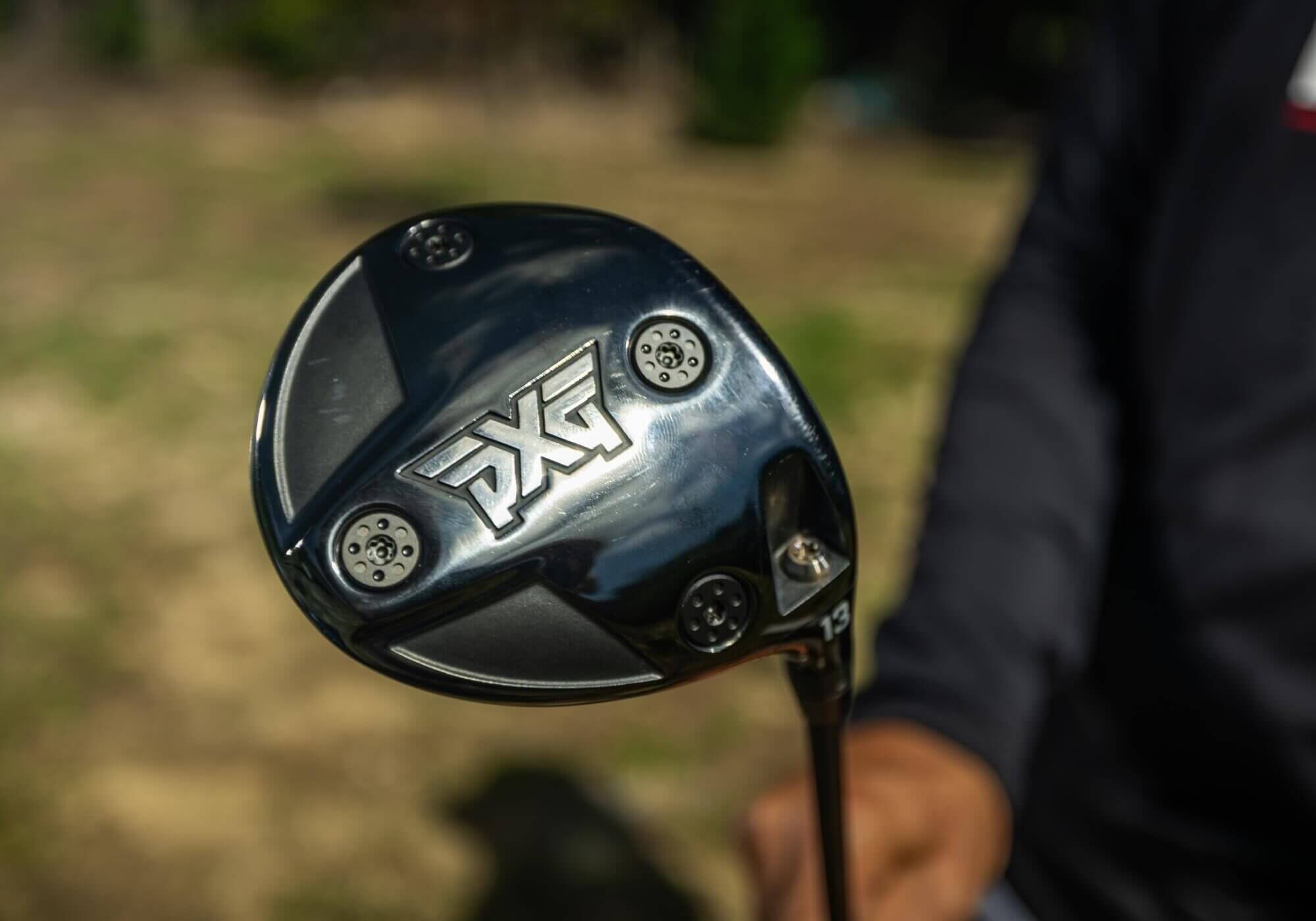
This is where the mini driver can truly distinguish itself from a traditional driver. Being able to consistently launch a large-headed club effectively off the turf for long par-5s or second shots is a game-changer for many. The test highlighted the R7 Quad (72%), PXG Secret Weapon (71%), and GT280 (70%) as top performers from the deck.
Achieving a high “playable” success rate off the turf requires specific design elements. A slightly shallower face profile, a strategically placed CG, and robust sole design all contribute. This is where I’ve seen many 3-woods fail for various golfers, either due to low launch or inconsistent strike. A mini driver, with its larger footprint, can offer a more confidence-inspiring look at address off the grass, and when designed correctly, can be incredibly effective. For golfers who struggle to hit their 3-wood consistently far enough or high enough off the deck, or who simply prefer the look of a larger head, these models provide a genuine alternative.
So, Is a Mini Driver for You?
The answer, as always, comes back to your game and your primary objective. This test powerfully reinforces my fitting philosophy: identify the problem, then find the club that solves it. Here’s how I break it down for golfers considering a mini driver:
- If your driver is causing more headaches than birdies: Look at the TaylorMade R7 Quad. It provides genuine driver-like ball speed and carry but with a significantly more manageable dispersion. You’re trading a few yards off your absolute best driver hits for a much tighter shot pattern.
- If high launch and maximum consistency off the tee is your holy grail: The Callaway Elyte Mini sounds like your best bet. The higher spin contributes to trajectory stability and a larger “in-play” zone, even if it sacrifices some distance.
- If you play target golf on tight courses and want to virtually eliminate big misses: The Titleist GT280 is designed for surgical precision. It’s not for the distance seeker, but for the strategizer.
- If you need a “swiss army knife” for both tee and turf: The R7 Quad, PXG Secret Weapon, or GT280 offer fantastic versatility off the deck, providing a powerful option for long par-5s or tight driving holes where you want a reliable long fairway finder.
The mini driver category isn’t just marketing fluff; it’s a legitimate tool in the bag, but only if you choose wisely based on specific performance needs, not just a vague desire for a “mini driver.” Don’t buy one because it’s new and shiny. Get on a launch monitor, analyze your current long game, and then use data-driven insights like those from this MyGolfSpy test to make an informed decision. That’s how you truly make smart buying decisions in golf equipment.
