

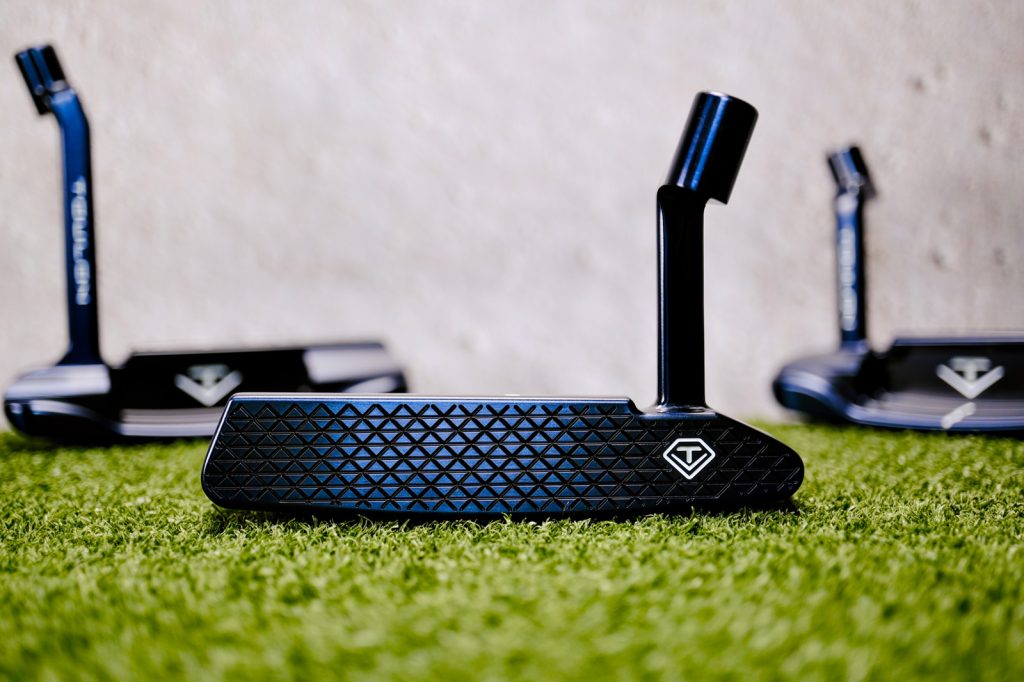

As the Equipment Editor for The Daily Duffer, I’ve had my hands on countless putters, put them through the wringer on launch monitors, and seen what truly makes a difference on the greens for golfers of all skill levels. So when Toulon Golf announced their 2026 Collection, marking a decade in the game, my ears perked up. They’re not billing it as a celebratory retrospective, but rather an “evolutionary step forward.” That’s a claim that always warrants a closer look – especially when it comes to putters, where feel and subtle engineering nuances can trump flashy tech.
My first impression, looking at the initial details, is that Toulon is doubling down on their heritage of exquisite craftsmanship. The new Midnight Blue finish, for example, is certainly striking. But what truly grabbed my attention was Preston Toulon’s candid admission:
“If there’s a mistake we’ve made in the past, it’s that we didn’t beat our chest enough about performance. These putters perform at an incredibly high level in addition to looking beautiful.”
That’s a refreshing take. For too long, premium putter brands have often leaned heavily on aesthetics and “artisan” appeal, sometimes to the detriment of objective, measurable performance. But let’s be clear: a putter that looks and feels good inspires confidence, and confidence is a huge data point in putting. However, genuine performance improvements are still critical.

Deep Diamond Mill: More Than Just a Pretty Face Pattern
The “continued evolution of Deep Diamond Mill” and its connection to Tour success (69 professional wins, including majors) immediately interests me. They’ve refined groove depth, shape, and added horizontal milling, drawing directly from Xander Schauffele’s tour-winning putter. On my Quintic Ball Roll system, face milling effectiveness is paramount for consistent launch, immediate forward roll, and minimal skid. An optimized Deep Diamond Mill should translate to a more predictable ball path off the face, which is key for distance control. When testing putters, I’m looking for a launch angle typically between 1.5-3 degrees, and the ball to achieve pure roll within 10-15% of the total putt distance. Any improvements to groove geometry that help achieve this are legitimate performance gains.
“We believe sound is directly linked to a golfer’s ability to control distance. When feel, sound, and speed are synchronized, putting becomes more predictable,” said Toulon.
This statement resonates strongly with my fitting experience. A putter’s sound and feel provide crucial sensory feedback, which directly influences a golfer’s ability to gauge touch and pace. If the sound and feel are inconsistent across the face, or simply disagreeable, it can lead to hesitant strokes and poor distance control. It’s not just about producing a good sound, but a consistent one that matches the ball speed off the face. Loud, tinny impact often feels fast, while a muted thud might feel slow. Getting that synchronization right is an underrated aspect of putter design that Tour players consistently emphasize.

Refinement: The Unsung Hero of Performance
The “refinement you can feel” philosophy, focusing on softened edges, smoother blends, and tighter tolerances, isn’t just marketing fluff. From a fitting perspective, these seemingly minor details contribute significantly to a golfer’s comfort and confidence over the ball. A putter that sits perfectly, feels substantial, and has no abrasive edges allows the golfer to focus solely on the stroke. I’ve often seen golfers instantly connect with a putter purely because of how it “fits” their hands and eyes, even before they hit a ball. This attention to tactile details is where Toulon has always excelled, and it’s good to see it emphasized. Preston Toulon highlights this beautifully:
“We are the people that build the putters. We interact with the putter heads. We touch them, feel them, and analyze them. That’s how we notice when something is sharp or when a transition isn’t quite right.”
That direct, hands-on approach is invaluable and distinguishes smaller, craft-focused brands from mass-produced lines.
Blades That Forgive and Mallets That Feel
Let’s talk about some specific models. The Austin H1, for example, is claiming a significant bump in MOI for a traditional blade, from under 3,000 to “closer to 4,500.” For a blade, that’s a serious increase. To achieve this without altering the classic proportions suggests clever internal weighting or strategic material distribution. On the launch monitor, a higher MOI means less twisting on off-center hits, resulting in more consistent ball speed and direction across the face. For the average golfer, this translates to fewer putts left short or pushed/pulled just off line from minor mishits. If I can show a golfer a tighter dispersion pattern on a blade like the Austin H1 compared to its predecessors, that’s a real performance benefit.
The Hollywood H1’s success, even in a mallet-dominated market, is intriguing. Its blend of classic aesthetics with “subtle structure that helps golfers square the face” speaks to the effectiveness of good visual cues. In my fittings, blade players who prefer a clean look often struggle with mallets that have too many alignment lines or busy aesthetics. The Hollywood sounds like it strikes that balance. The Boston H3 aims to bridge the gap between blades and mallets with its long neck and 30 degrees of toe hang. This is smart design. Many golfers struggle with mallets if their stroke has too much arc, and vice-versa. The Boston H3 offering a medium toe hang could be a sweet spot for those looking for more stability than a traditional blade but not the face-balanced, straight-back-straight-through feel of many mallets.

On the mallet side, the Alcatraz Mini’s “multi-material construction and dual milled 6061 aluminum sole plates” are the kind of technical details that lead to genuine performance. Using lighter aluminum for the sole plate allows mass to be strategically redistributed, pushing MOI higher. Higher MOI means greater forgiveness, particularly on heel and toe strikes, which is paramount for a mallet. The new Monaco, with its “crown and enclosed rear wings,” is another interesting concept. Reducing oscillation at impact points to improved stability and potentially a more solid feel. For golfers who prefer a mallet but want something “upscale” from past designs, this could be a winner. I’ll be keen to get this on the launch monitor to see just how much impact those enclosed wings have on dynamic MOI.

The $600 Question – Is it Worth It?
Starting at $600, the 2026 Toulon Collection firmly occupies the premium end of the putter market. For that price, golfers expect not just aesthetic excellence but measurable performance and impeccable feel. From the detailed breakdown, it seems Toulon is making a strong case for both. The emphasis on refined Deep Diamond Mill for better roll, the commitment to synchronized sound and feel for distance control, and demonstrable MOI improvements in models like the Austin and Alcatraz Mini, are all legitimate performance drivers.
Who is this for? Any golfer, from low handicappers to mid-handicappers, who demands precision engineering, exceptional feel, and a putter that delivers consistent ball speed and roll. If you’re a golfer who understands that putting is about consistency as much as artistry, and you’re willing to invest in a meticulously crafted instrument that supports that goal, the new Toulons warrant a serious look. The expanded retail presence in Golf Galaxy locations and fitting studios is a smart move, allowing more golfers to experience these refinements firsthand before making a significant investment. My advice: don’t just admire them, put them to the test on a launch monitor and feel the difference for yourself. Data, combined with personal preference, is always the best fitter.
