

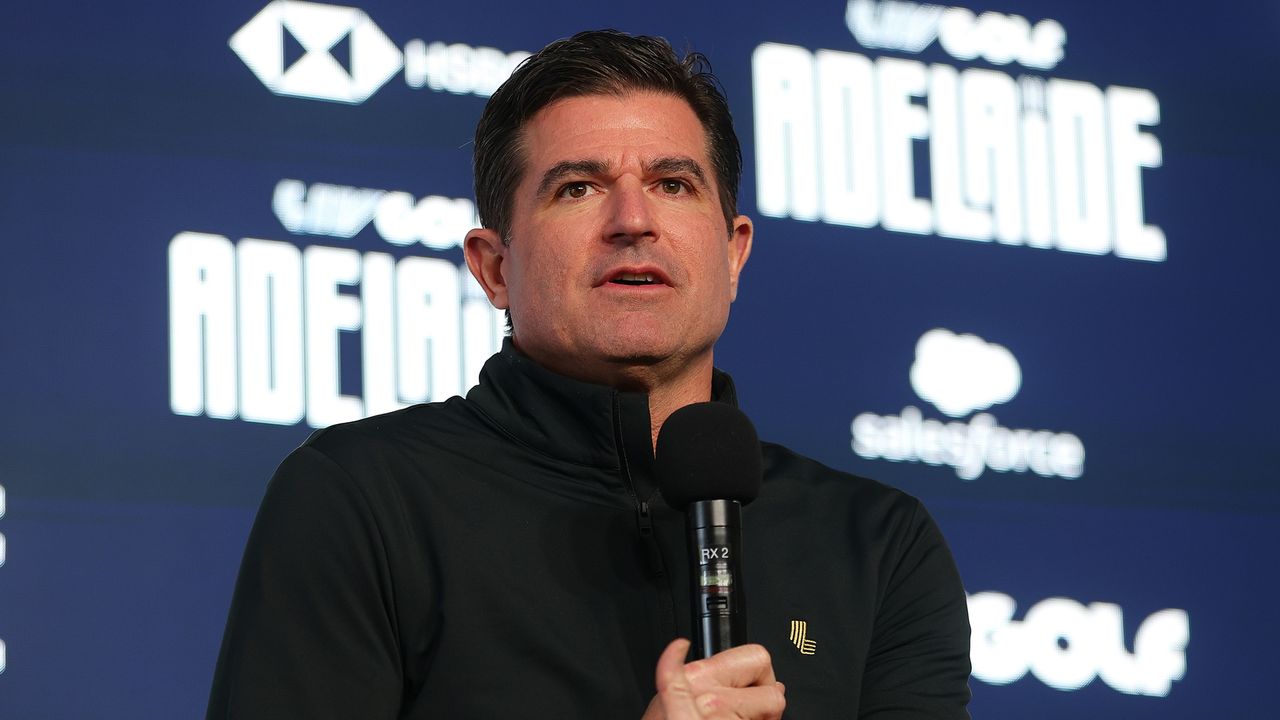

Scott O’Neil’s Charm Offensive Signals a Maturing LIV Golf—And Smart Negotiating
After 35 years covering professional golf, I’ve learned to read the room before the room reads itself. And right now, Scott O’Neil is reading it brilliantly.
What happened in Adelaide this week wasn’t just a CEO expressing gratitude for Official World Golf Ranking points allocation. It was a calculated recalibration—one that tells us LIV Golf has moved past the scorched-earth phase and into something far more interesting: strategic patience.
The Softening Was Strategic, Not Desperate
Let me be clear about what we’re witnessing. Just weeks ago, LIV Golf released stinging statements about the unfairness of receiving points only for top-10 finishers. Jon Rahm echoed those complaints. The rhetoric was combative, the tone unforgiving. It felt like the tour was gearing up for a prolonged battle with the OWGR board.
Then O’Neil arrived in Adelaide and essentially hit the reset button. He praised Trevor Immelman, called the points allocation a “tremendous nod,” and spoke about being “welcomed into the golf family officially.” The shift wasn’t subtle—it was deliberate.
Here’s what I think is actually happening: O’Neil realized that public pressure wasn’t going to accelerate the points conversation. In fact, it was probably slowing it down. The OWGR board includes PGA Tour Commissioner Jay Monahan and European Tour CEO Keith Pelley—two executives who, as O’Neil himself acknowledged, have legitimate competitive concerns about LIV’s rise. Antagonizing them publicly wasn’t going to loosen their grip on the points purse strings.
“We’re so grateful to be welcomed into the golf family officially. That’s first and foremost. It’s very nice, especially you have a board with two – the commissioner of the PGA Tour is on the board and the CEO of the European Tour is on the board.”
That’s not just diplomacy talking. That’s someone who understands leverage. And O’Neil just demonstrated he understands it better than the initial statements suggested.
What the Points Allocation Actually Means
Here’s where my three decades covering this tour matters: I’ve seen ranking points become currency in professional golf. They determine who plays in majors, who qualifies for world team events, who gets into the Olympics. They matter far more to players’ legacies than prize money does.
LIV’s top-10 allocation is, objectively, restrictive. But it’s also a foothold. In my experience, once you’re in the system—any system—you’re much closer to expanding within it than you are standing outside the door complaining. The conversation shifts from “should LIV get points?” to “how many points should LIV get?” That’s progress, even if it doesn’t feel like victory.
What’s particularly shrewd is O’Neil’s acknowledgment that bigger changes might be coming. When asked directly if he was aware of plans to increase the allocation, he essentially dodged—but not in a way that suggested he didn’t know.
“I’ve learned over time that sometimes the best negotiations are behind the scenes and not in front of the cameras. So we’re just at this point just publicly really grateful for where we are.”
Translation: We’re negotiating. We’re making progress. And you’re not going to hear about it on Twitter.
The Growth Mindset vs. The Scarcity Mindset
There’s also a philosophy shift worth noting. O’Neil explicitly contrasted his “growth mindset” with what he called a “scarcity mindset.” He said this multiple times—about life, about golf, about LIV’s expansion plans. Meanwhile, the PGA Tour has been preaching “less is more,” streamlining its schedule, consolidating its product.
It’s a fascinating divergence. The PGA Tour believes the way to maintain value is to limit supply. LIV believes it’s to expand reach. One tour is contracting; the other is expanding.
LIV’s South Africa event sold out so aggressively that the tour had to put tickets on hold four times. They’re capping attendance at 90,000. And they’re already fielding inquiries for 2027. That’s not the behavior of a struggling league scrambling for legitimacy. That’s a tour with genuine demand.
The move of LIV Adelaide from Grange Golf Club to Kooyonga, with a date shift to March 18-21, further underscores this ambition. These aren’t desperate moves; they’re refinements.
Why This Matters Beyond the Headlines
In my caddie days with Tom Lehman back in the ’90s, I learned that professional golf’s real currency isn’t money or even media coverage—it’s legitimacy. The majors represent that legitimacy. The OWGR represents that legitimacy. World team events represent that legitimacy.
By softening his public stance while clearly negotiating behind the scenes, O’Neil is signaling that LIV understands this. The tour is no longer just trying to be louder; it’s trying to be legitimate. That’s a maturation that matters.
Will we see expanded points allocation down the road? Probably. Will LIV players gain easier access to majors? Eventually, yes. But it won’t come from aggressive statements at press conferences. It’ll come from exactly what O’Neil is doing now: proving the tour’s worth, demonstrating its global appeal, and making it harder for traditional golf to justify keeping LIV players out of the tent.
The charm offensive isn’t weakness. It’s strategy. And after 35 years around this game, I recognize the difference.
