

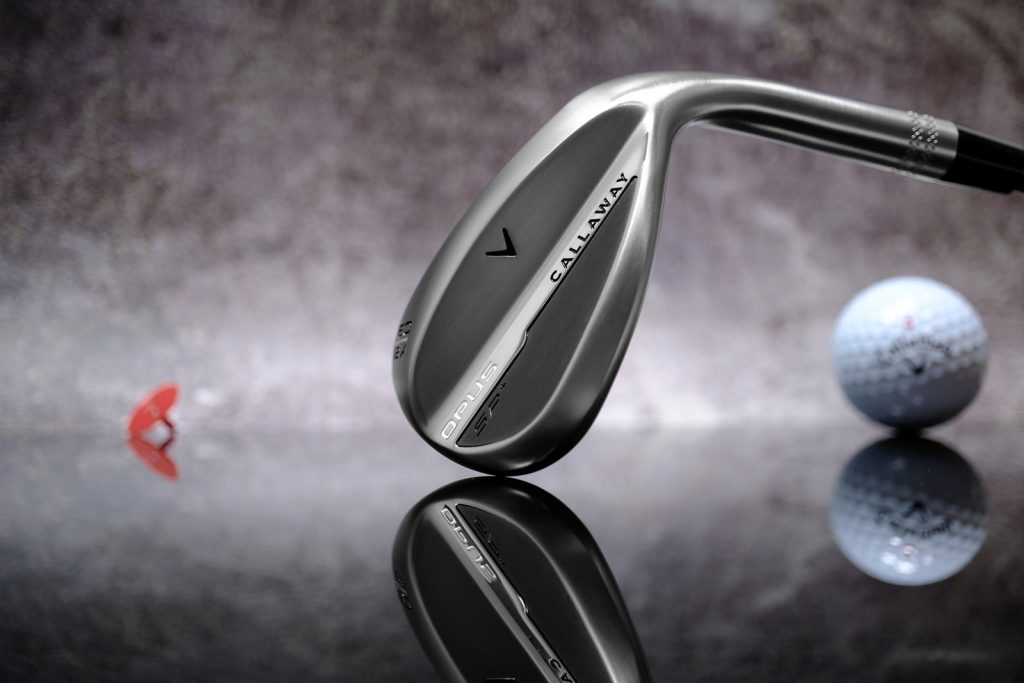

Callaway Opus SP+ Wedges: More Than Just a Plus Sign?
As the Equipment Editor for The Daily Duffer, I’ve seen countless new club releases. Every year, manufacturers roll out new lines, promising “more distance, more forgiveness, more spin!” Typically, the “plus” iterations are marginal tweaks, aimed more at keeping buzz alive than delivering genuine performance leaps. So, when Callaway announced their new Opus SP+ wedges, a mere blip after the original SPs, my immediate thought was, “Here we go again.” But after diving into the tech and considering its implications on the course, there might be more to this “plus” than meets the eye.
Callaway themselves claim the SP+ is the SP wedge “on steroids.” That’s a bold statement, and my job is to see if it holds up under scrutiny. The core narrative here, similar to the original Opus SP, revolves around Callaway’s proprietary “Spin Pocket” and the strategic use of tungsten. The big headline for the SP+ is a 25% increase in the Spin Pocket’s size, freeing up an additional 6 grams of discretionary weight. This, in turn, allowed them to bump up the tungsten content by 23%, placing a substantial 18 grams on the high rear pad.

My instant club fitter brain goes straight to Center of Gravity (CG). Moving weight high and rearward like this is a classic approach to achieve a lower ball flight and increase spin. On a launch monitor, this typically manifests as a slight reduction in peak height and a higher spin loft, translating to more consistent spin rates, particularly on partial shots. I’ve seen countless golfers struggle with wedges that launch too high, scrubbing valuable spin. The added tungsten should, in theory, help combat that without sacrificing feel, which is crucial in a wedge.
“With the larger Spin Pocket and additional tungsten weight, the Opus SP+ wedges are designed to produce a lower ball flight with enhanced spin and control compared to the Opus SP models.”
This claim aligns with the principles of weight redistribution. Lowering the effective CG relative to the impact point often leads to more controlled flight and increased spin. What this means for the everyday golfer is fewer flyers out of the rough and better stopping power on the greens. My fitting experience has shown that even a 200-300 RPM increase in spin on approach shots can be the difference between a ball rolling out to the back fringe and checking up near the pin.

One of the most interesting departures for the SP+ is the material change in the face. While the original SP featured a 1025 Form Forged Face, the SP+ opts for a new MIM (Metal Injection Molding) face. Callaway states this is to provide a “softer impact feel that many top players desire.” On paper, MIM can produce incredibly precise geometries, but whether it translates to a measurably “softer” feel than a premium forged offering remains to be seen. Feel is notoriously subjective in golf, and often, the sound-frequency interaction at impact plays a larger role than the material itself. I’ll reserve judgment until I get these on the range and hit them repeatedly. However, if they truly achieve a softer feel while maintaining the spin characteristics of the Spin Gen 2.0 face, that’s a win. The Spin Gen 2.0 face, with its 17° groove angle, tighter spacing, and deeper cross-hatch laser patterns, is a proven performer for enhancing spin from various lies. I’ve seen the data from the original SPs, and they consistently delivered good numbers, especially out of light rough, thanks to that aggressive laser etching.

The grind options are where the rubber meets the road for wedges. Callaway is offering three grinds: Z, X, and S, in lofts ranging from 54° to 60°. This is a somewhat limited selection, as Callaway readily admits, but focuses on their most popular tour-validated options. The Z-Grind, with 8° of bounce and heel/trailing edge relief, sounds like a true “shotmaker’s” wedge. For the golfer who likes to manipulate the clubface around the green, this low-bounce, relieved design offers maximum versatility for opening the face without the leading edge digging in. I often fit lower-handicap players or those with shallower attack angles into similar grinds.

Z Grind: This club is designed for golfers who enjoy getting creative around the greens and fancy themselves shotmakers.
With 8° of bounce, it features the lowest bounce in the SP+ line. The club features relief on the heel and trailing edge, offering characteristics similar to a C-grind but playing more forgivingly than a traditional C-grind.
The SP+ Z-Grind is available in lofts of 54°, 56°, 58°, and 60°.
Conversely, the X-Grind is the highest bounce option at 12°, featuring “ample heel and toe relief.” This is an excellent choice for golfers with a steeper angle of attack or those who play in softer conditions. Despite the high bounce, the relief should still allow for some versatility. It’s a common misconception that high bounce means less versatility; good grind designers know how to sculpt the sole to achieve both forgiveness and maneuverability. I’ve often seen improvements in short game consistency for steeper players when moving them into a higher bounce option.

X Grind: Contrary to popular belief, not every versatile wedge needs to have a low bounce.
With 12° of bounce, this grind is the highest bounce option available in the SP+ lineup. Featuring ample heel and toe relief, the X grind provides excellent versatility around the greens, especially for golfers who have a steeper angle of attack.
The decision to include the X grind in this release was influenced by the number of golfers that Callaway has fitted into this grind. Unlike the other two options, the X grind is offered in only three lofts: 56°, 58°, and 60°.
The S-Grind with 10° of bounce is the “utility player” of the bunch, designed for a “wide variety of swing styles.” This is often my go-to recommendation for mid-handicappers looking for a reliable, all-around performer. It’s less specialized than the Z or X, making it a safer bet for those who hit a variety of shots and play on diverse course conditions. For club fitters, having a solid medium-bounce option like this is essential.

S Grind: Known as a versatile option for all situations in Callaway’s lineup.
With a medium bounce design, it accommodates a wide variety of swing styles and is particularly effective for golfers who prefer a more straight-faced approach to short-game shots.
The S Grind is available in lofts of 54°, 56°, 58°, and 60°, each featuring 10° of bounce.
Now, let’s talk about the elephant in the room: pricing. At $229.90 per wedge, these are premium-priced clubs. The source article notes this is comparable to the original Opus Platinum at its launch. While the added tungsten and MIM face are presented as technical upgrades, the golfer needs to weigh if these translate to a tangible performance gain worth the significant investment. For a typical wedge set of three, you’re looking at nearly $700. In my experience, spin and control are paramount in wedges. If the SP+ truly delivers a noticeable improvement in these areas, particularly lower flight and enhanced spin consistency, then for the serious golfer, it could be a worthwhile investment. However, for a higher handicap player primarily looking for help getting out of bunkers, the performance bump might not justify the price over a slightly older, less expensive model with appropriate bounce.
“We are also seeing a price increase from the Opus SP, as the SP+ wedges will retail for $229.90, which is comparable to the original pricing of the Opus Platinum at its launch.”
Who is this for? Given the focus on “enhanced control and spin,” combined with the more targeted grind options, I’d say the Callaway Opus SP+ wedges are primarily aimed at mid-to-low handicap golfers who demand precise short game performance. Golfers who understand their attack angle and turf interaction preferences will appreciate the specific grind designs. If your current wedges are inconsistent in spin, or you struggle with a ball flight that’s too high on partial shots, the SP+ might offer a solution thanks to that re-tuned CG from the larger Spin Pocket and added tungsten. However, I’d strongly recommend a fitting to ensure you select the right grind for your swing and typical course conditions. Don’t just grab an S-grind because it’s “versatile.” Let the data from a launch monitor guide your decision. These wedges are designed to be dialed in, and a proper fitting will maximize their potential.
