


Gotterup’s Rise Signals a Shift in Tour Hierarchy—And That’s Good for Golf
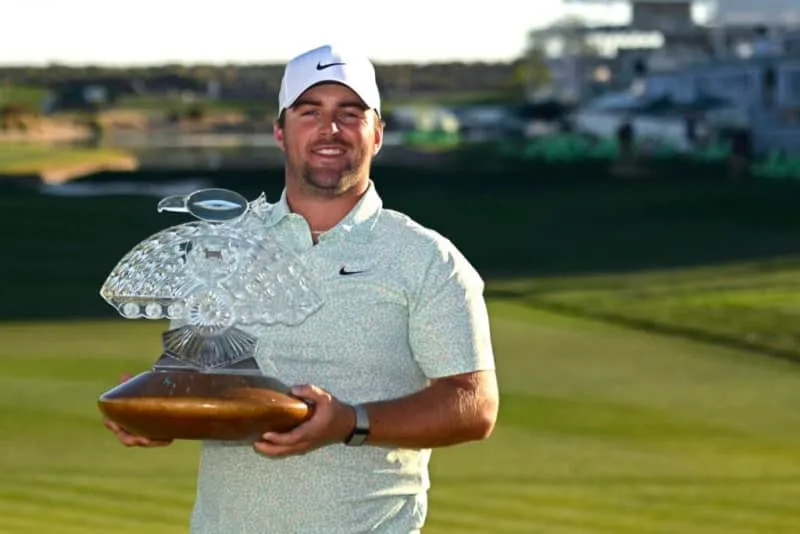
I’ve been covering professional golf for 35 years, and I’ve learned to spot the moments that matter beyond the leaderboard. Chris Gotterup’s back-to-back victories to start the 2026 season—capped by his playoff win over Hideki Matsuyama at the WM Phoenix Open—is one of those moments. Not because it’s shocking (it isn’t), but because of what it reveals about the current state of the PGA Tour and the man sitting atop the world rankings.
What strikes me most isn’t that a 26-year-old is winning tournaments. We’ve seen that script before. What’s fascinating is how Scottie Scheffler reacted to getting beaten by him—and more importantly, what that tells us about the competitive landscape right now.
The Scheffler Effect: Respect Instead of Dominance
Here’s something you won’t hear casual fans discussing: when the world’s best player respects his competition enough to study how they operate, you’re witnessing a turning point. Gotterup shared a telling anecdote about their time together in Phoenix: “Yeah, it’s been awesome. I think everyone understands out here how hard it is to win. We were joking around, Scottie was following me at lunch and he’s like, ‘I’m just going to eat what you’re eating’. I was like, yeah, he’s doing pretty good on his own so I’m not too worried about him.”
That’s not just locker room banter. That’s Scheffler—the four-time major champion, the guy who’s been lapping the field most weeks—taking genuine interest in understanding what works. In my experience caddying for Tom Lehman back in the ’90s, we saw this same behavior from the greats. They’re never satisfied. They’re always mining for insights, even from competitors half their age.
But here’s what’s really noteworthy: Scheffler finished just one shot out of the playoff. He was right there. Yet Gotterup still found a way to win, making five birdies in his final six holes to take the clubhouse lead. That’s execution under pressure against the best player in the world watching over your shoulder. That matters.
The Grind Reveals Character
What impressed me most from Gotterup’s reflection on Scheffler’s game wasn’t technical analysis—it was psychological insight. When asked what stood out, he zeroed in on something that separates good players from great ones:
“I think there’s a couple things, but I think for me, having played with him last week, the first round he struggled. And he would say that, too. But to go back out there the next round and know that he’s going to play well. This is what I’ve tried to do a much better job of, too, is wash the first round, don’t carry the first round into the rest of the week.”
Listen to that. Gotterup is identifying the mental fortress that Scheffler has built—the ability to compartmentalize, to reset, to treat each round as its own battle. That’s not something you’re born with. That’s something you develop through thousands of hours of competition, learning how to manage the noise in your head.
The fact that a 26-year-old is consciously working on that same skill set tells me we’re looking at a player who understands what it takes to stay relevant at the highest levels. He’s not just winning tournaments; he’s studying the blueprint of excellence.
What This Means for the Tour
Let me be clear: Scottie Scheffler is still the undisputed top dog, and rightfully so. A four-time major winner with his consistency and ball-striking doesn’t need anyone’s validation. But the emergence of players like Gotterup—who’s now fifth in the world rankings after two wins in three weeks—suggests the tour is developing the kind of competitive depth that’s been missing.
For too long, we’ve had a situation where one or two players dominate while the rest scrap for table scraps. That’s not sustainable for fan interest. The majors draw eyeballs because anyone in the field can win on a given week. The PGA Tour needs that same energy, and right now, Gotterup is providing it.
His trajectory this season—opening with a win at the Sony Open in Hawaii, then immediately backing it up in Arizona—shows a player with the mental resilience and technical skill to sustain performance. He didn’t have a letdown week. He showed up and delivered again.
The Optimism is Earned
After covering 15 Masters and watching countless promising young players flame out, I’m cautious about coronating anyone too early. But Gotterup’s composure, his willingness to learn from watching Scheffler grind, and his ability to execute in high-pressure situations at such a young age suggests we’re looking at someone who could be a fixture at the top of the game for the next decade.
The tour needed this reminder: Scheffler’s dominance is real and impressive, but it’s not suffocating the competition. If anything, it’s inspiring it. That’s the sign of a healthy ecosystem.
For Gotterup, the challenge now is consistency—proving these two weeks weren’t a flash in the pan. But based on what I’ve observed, both in his play and his mindset, I’d be surprised if they were.
