



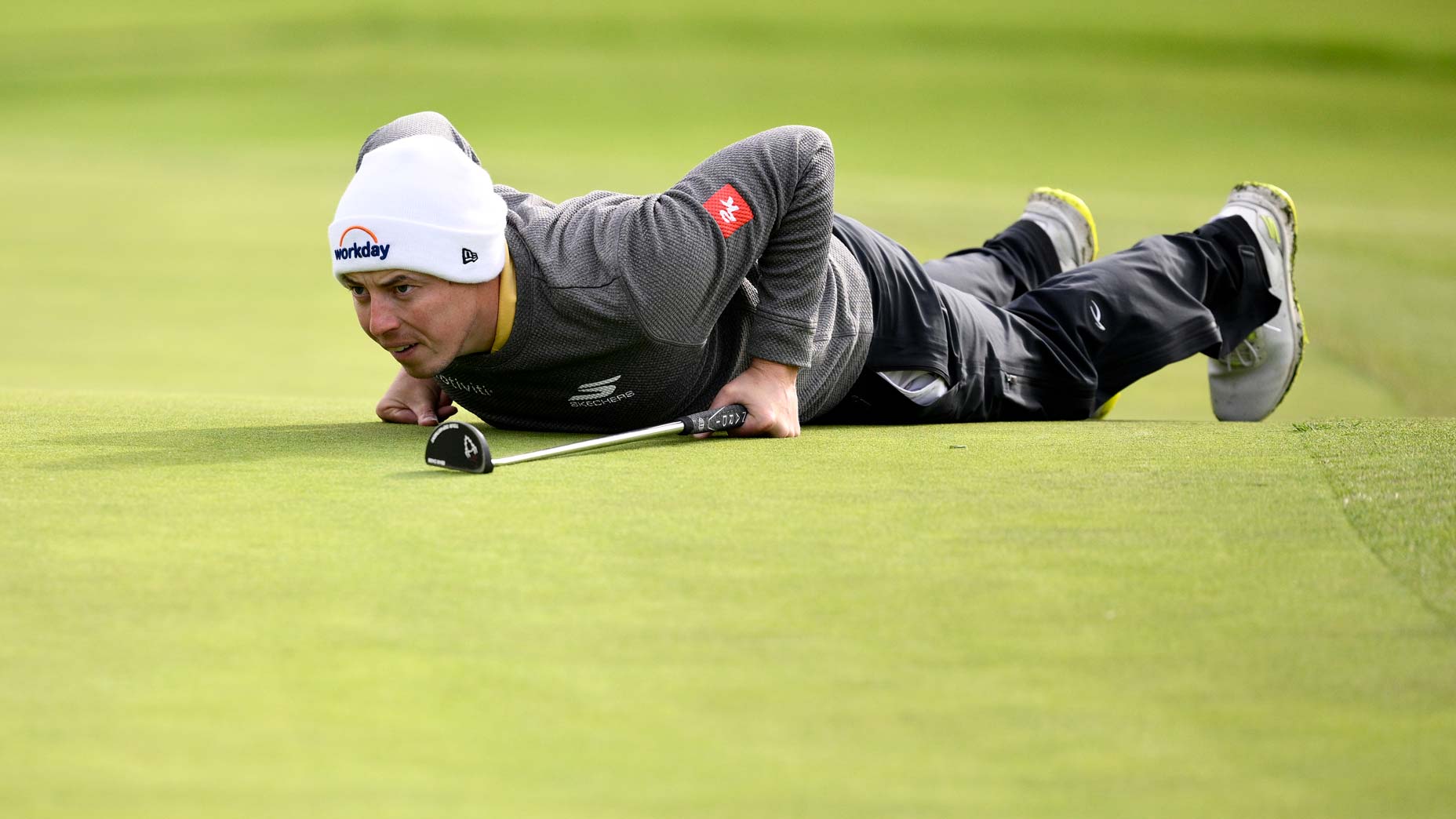
Welcome back to The Daily Duffer, where we cut through the marketing fluff and get down to what really matters on the course. This week, we’re not talking about the latest driver face tech or how a new iron set can magically add yardage. Instead, we’re diving deep into the often-overlooked, yet absolutely crucial, world of putting, specifically on greens that fight back. Riviera’s poa annua surfaces are legendary for a reason, and after witnessing some of the PGA Tour’s best struggle with short putts this past week, it’s clear these aren’t your average Sunday greens.
I’ve fitted hundreds of golfers in my career, from scratch players to weekend warriors, and one constant remains: putting is personal. However, even the most dialed-in stroke can be undone by external factors. When I see players like Xander Schauffele, Rory McIlroy, and even the tournament leader Jacob Bridgeman falter on putts that would normally be gimmes, it’s a red flag that something more than technique is at play. It’s a testament to the environment, and it offers valuable lessons for us all.
Let’s start with the hard data. Ron Klos’s analysis (referenced in the source article) paints a clear picture: "over the last five years, pros three-putt more regularly and make fewer putts from every distance at Riviera. The Tour average from four to eight feet is 69.2 percent; here it drops to 65.6. From outside 25 feet Tour pros three-putt at an average of 8.9 percent; at Riviera that spikes over 11 percent." These aren’t minor fluctuations; they represent a significant dip in performance even among the world’s elite. While we can’t all play Riviera every weekend, understanding these conditions helps us appreciate the nuances of different green types and how they impact ball roll.
The Poa Annua Predicament
What makes Riviera’s greens such a beast? It boils down to a cocktail of factors. Primarily, we’re talking about pure poa annua. As a clubfitter, I often emphasize consistency – in shaft flex, clubhead MOI, ball speed. Similarly, greens need consistency for predictable rolls. Poa annua, especially later in the day, is the antithesis of consistency. The article describes a "waffle-iron effect," and while that might sound amusing, it’s a nightmare for putting. This refers to the bumpy, inconsistent surface created by the poa blades growing at different rates and directions, causing putts to hop and skip.
Add to this the fact that these greens were "very soft, ridiculously fast, unpredictable poa annua greens with an unusual amount of subtle two-way breaks." Fast greens demand a delicate touch, and soft greens, while great for holding approach shots, can also exacerbate imperfections like spike marks. The unpredictable nature of two-way breaks means that even with perfect read and speed, a slight deviation can send the ball off course. This is where high MOI putters should theoretically help by resisting twisting on off-center strikes, but even the best tech can’t compensate for a significant surface imperfection.
Tour Pros’ Take: A Masterclass in Adaptability
It’s always insightful to hear directly from the players who are living through these conditions. Their observations often confirm what our launch monitor data hints at – that environment is a huge variable.
“Pebble was almost good prep for here being even sort of wetter and spongier [faster], this is a lot scarier. But in terms of like committing to putts that look dodgy, it was good preparation.”
Xander Schauffele’s comment about Pebble, another poa annua course, is telling. He notes the increased speed and "scarier" nature of Riviera’s greens due to their softness. This highlights the paradox: soft greens often mean approaches stick, leading to more birdie opportunities, but the same softness combined with extreme speed makes those birdies incredibly hard to convert. In my fitting bay, we focus on consistent roll off the face. But once that ball leaves the putter, the green becomes the dominant factor.
Scottie Scheffler’s perspective further reinforces this:
“The greens here have so much pitch, and as the day goes on, the greens continue to hold speed and they stay fast and they continue to get bumpier and bumpier just with the nature of poa annua … the greens are getting softer and they’re fast, which I think is a really good challenge. It’s kind of underrated how hard that is.”
He perfectly articulates the compounding effect: pitch, speed, and poa annua’s afternoon bumpiness. This isn’t just a mental game; it’s a physical challenge that even launch monitor data, which can measure initial ball speed and launch angle with incredible precision, can’t fully predict once the ball encounters the varied surface. For us amateur golfers, this means recognizing that even a putt struck perfectly might get a bad bounce. It’s not always about your stroke.
Rory McIlroy’s agony over the two-way breaks is relatable to anyone who’s played on such greens:
“There’s a lot of double breakers here, so my putt on 16 today was a great example. I had to hit it really soft. It was left to right early but the last half of the putt was right to left, but it went so far right early because I hit it so soft, it never had a chance to come back. It’s, yeah, it’s tough.”
This describes the ultimate test of feel and imagination. The more you "die" the ball into the hole, the more break it will take. On a double-breaking putt, this can be catastrophic. The challenge for these players, and for us, is finding the delicate balance between speed and line, knowing one directly impacts the other.
The Equipment Angle: What Can Help?
While no putter can magically eliminate a spike mark or an unforeseen hop, there are aspects of putter design that can offer a marginal advantage on these types of greens.
- High MOI Putters: Putters with a high Moment of Inertia (MOI) are designed to resist twisting on off-center hits. If the subtle bumps and breaks cause your putter face to twist even a fraction of a degree at impact, a high MOI design (often seen in mallet putters or perimeter-weighted blades) can help keep the face square for a more consistent roll, especially on imperfect surfaces. This isn’t a silver bullet for poa, but it’s about optimizing the variables you can control.
- Face Insert Technology: Softer face inserts can provide better feel and potentially a more consistent roll, especially on very fast greens where distance control is paramount. They absorb some of the impact vibration, which can lead to a slightly softer initial roll and better feedback. However, a "better feel" is subjective, and I always prioritize consistent ball speed delivery off the face in my fittings.
- Weighting: Adjustable weighting systems in putters aren’t just for changing head weight – they can influence feel and stability. On extremely fast greens, a slightly heavier putter head can sometimes promote a smoother, more pendulum-like stroke, making it easier to control speed. Conversely, some players prefer lighter heads for pure feel. My launch monitor data often shows that consistent face angle and path are more critical than head weight for initial roll, but many golfers feel more confident with a certain weight.
Practical Advice for Your Game
You might not be facing Riviera’s specific blend of torture, but chances are you occasionally encounter fast, bumpy, or challenging greens. Here’s what this week’s struggles at Riviera teach us:
- Accept Imperfection: Bridgeman, the tournament leader, summed it up perfectly: "I think I’ve accepted now that some of them are going to bump out. Like mine on the last hole, I hit a good putt, it just bumped left and it didn’t go in." This is huge. Don’t let a bad bounce on a short putt destroy your confidence. Focus on the quality of your stroke.
- Practice Speed Control: On fast, tricky greens, speed is king. Practicing long putts with a focus purely on distance, ignoring line initially, is invaluable. This builds the feel required for delicate putts that need to navigate multiple breaks.
- Understand Green Conditions: Pay attention to the time of day you play, the grass type, and recent weather. Morning dews, afternoon traffic, and recent rain all dramatically impact green speed and surface consistency. Adjust your expectations and stroke accordingly.
- Trust Your Putter (and Fitting): If you’ve been fit for a putter that delivers consistent ball speed and a square face through impact, trust it. The variables beyond that are often out of your control. My job as an editor and fitter is to equip you with the best tools, but also the knowledge to understand their limits.
Ultimately, while the PGA Tour pros had some frustrating moments this week, their ability to adapt and still post incredible scores on such demanding greens is what sets them apart. For us, it’s a reminder that golf is played on the course, not just on the perfect, flat surface of a launch monitor mat. Understanding the dynamics of challenging greens helps us appreciate the game’s complexities and, hopefully, play a little better ourselves.
