

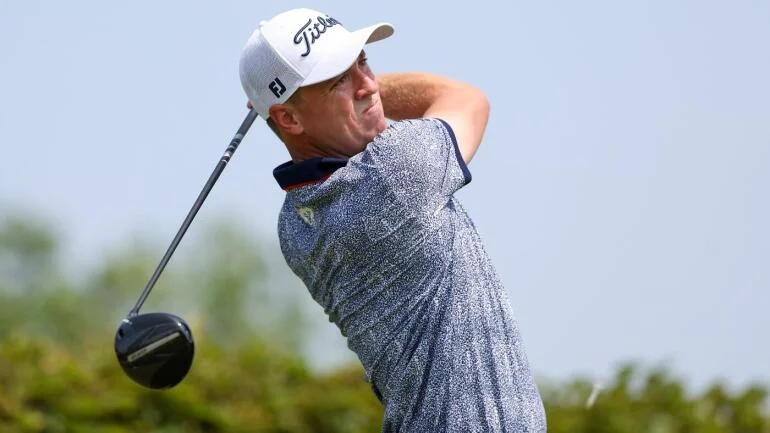

Justin Thomas’s Return to the Florida Swing: A Cautious Optimism for One of Tour’s Most Talented Competitors
I’ve been covering professional golf for 35 years now, and I’ve learned that comeback stories in this sport rarely follow a neat narrative. There are setbacks, false starts, and moments when a player’s body simply won’t cooperate with their competitive spirit. So when Justin Thomas announced Tuesday that he’s been cleared for all golf activity following a November microdiscectomy, my first instinct wasn’t unbridled enthusiasm. My first instinct was measured optimism—the kind you earn after watching Tom Lehman battle back injuries during his own career while I was on his bag.
That said, Thomas’s situation looks genuinely promising, and that matters not just for him personally but for the competitive landscape of the PGA Tour heading into what could be a pivotal stretch of the season.
The Right Kind of Surgery at the Right Time
Let’s start with what makes this different from other back injuries that have sidelined tour players. A microdiscectomy is a relatively targeted procedure—the surgeon removes a portion of a herniated disc that’s pressing on a nerve. It’s not a fusion, which would fundamentally alter a player’s swing mechanics. It’s not a vague “back issues” situation that drags on for months with no clear endpoint. Thomas had a specific problem, got it fixed, and now has medical clearance to resume competition.
What strikes me about his timeline is the patience shown. We’re talking about roughly three months from surgery to full clearance, with January updates about gym work and incremental progress with wedges and short irons. This is a guy who understands that rushing back from spinal surgery is a quick way to end up right back where you started. In my experience, that kind of discipline often separates players who successfully return from those who don’t.
Thomas is targeting the Florida Swing—likely events at PGA National, The Concession, or one of the other January or February tournaments in that corridor. That’s smart scheduling. He gets competitive reps in a region known for relatively modest travel demands, with several strong events to choose from rather than forcing himself into a specific tournament on an artificial deadline.
Building Back What Made Him Special
Let’s not forget what Thomas was doing before this injury. In 2025, he snapped a three-year winless drought—a period that would have crushed many players psychologically. But he responded by winning the RBC Heritage in a playoff against Andrew Novak, one week after competing in the Masters. The man was clearly in form, clearly hungry, and clearly capable of competing at the highest level.
His own words on Instagram perfectly captured the challenge ahead: “I’m working hard to build up my strength and stamina to get back into golf shape before competing on the PGA Tour.”
That’s the real battle now. Medical clearance to swing is one thing. Being tournament-ready is another entirely. Even with a microdiscectomy rather than a more invasive procedure, Thomas will need to rebuild core stability, rotational strength, and the explosive power required to compete with the best in the world. It’s not just about the back healing—it’s about the surrounding musculature responding to competition-level demands.
At 31 years old with 16 PGA Tour wins and two major championships under his belt, Thomas has the experience and mental toughness to navigate this. But he’ll also face the inevitable moments of doubt that come with any significant injury layoff. How will his back respond to 72 holes of pressure? How will it feel under the adrenaline of Sunday at a strong event?
The Tour’s Competitive Landscape Benefits
Here’s what matters beyond Thomas himself: the PGA Tour is genuinely better when its talented players are healthy and competing. Thomas is currently ranked No. 12 in the Official World Golf Ranking, and he’s the kind of player who elevates the quality of any field he enters. His ball-striking ability, his short game creativity, and his mental resilience have always made him a threat in major championships and signature events.
The tour spent much of 2024 and early 2025 dealing with the fallout from the LIV situation and trying to rebuild its narrative around championship golf. Having stars like Thomas available and competing helps that effort immensely. It’s not cynical to acknowledge that—it’s just acknowledging how the sports business works.
But more importantly, from a pure competitive standpoint, I think we’re looking at a player who has unfinished business. Three years without a win is a long time for someone of his caliber. Winning the Heritage was clearly cathartic, and it reset the narrative. Now he’s got a chance to keep building on that momentum—if his body cooperates.
What We Should Actually Be Watching
As Thomas begins his competitive return during the Florida Swing, the real test won’t be the first tournament back. It’ll be consistency over the next four to six weeks. How does he handle a missed cut or a disappointing finish? Does he stay patient with his game, or does the layoff frustration bleed into poor decision-making? How many tournaments does he need before the rust completely disappears?
Having caddied for a player who battled injuries, I can tell you that the mental side of the comeback often exceeds the physical challenge. Thomas seems to understand this already. His January update on X showed exactly the right mindset:
“Recovery has gone well. I’m slowly building back my strength and conditioning in the gym, and also hitting wedges/short irons. Little victories and patience have been the biggest part of the process. Taking it slow and listening to how I’m feeling each day!”
That’s a player thinking long-term. That’s a player who gets it.
Justin Thomas will be back. The question isn’t whether, but how quickly he rediscovers championship form. The Florida Swing will provide an excellent proving ground for a comeback that, if successful, could have significant implications for the tour’s biggest events down the stretch. Watch carefully.
